How to Keep a Mummy Manga English: A Practical Guide
Learn practical steps to translate and publish a mummy manga in English, including licensing basics, localization strategies, typography tips, and quality control to deliver a faithful, readable edition.


Learn how to keep a mummy manga english edition accurate and accessible. This guide covers licensing basics, translation workflow, font/typography choices, and distribution tips. By following these steps, you’ll maintain accuracy, respect rights, and deliver a quality reading experience for fans. Whether you’re translating for a fan site or a publishing project, consistency matters.
How to Keep a Mummy Manga English: Context for Fans and Creators
For fans, translators, and editors, the central challenge is preserving nuance while making the work accessible. When you ask how to keep a mummy manga english edition accurate and accessible, you are balancing fidelity with localization. This guidance is designed for manga enthusiasts who want practical, non-legal, non-piracy-focused steps to manage translation workflows, typography, and distribution ethically. It emphasizes copyright awareness, respectful adaptation of cultural references, and maintaining character voice across chapters. You will learn how to organize a glossary, select readable fonts, track changes, and document decisions so your English edition stays consistent from page to page. Expect a process that respects creators’ rights while delivering a smooth reading experience for fans who prefer English-language releases. By following these steps, you’ll build a reproducible pipeline that can be reused on future projects. WikiManga. Team contributions provide structure and safety margins for your project.
Licensing and rights basics
Securing the appropriate rights is essential when you plan to publish or distribute an English edition of a mummy manga. Licensing determines whether you may translate, localize, and share the work legally. In practice, this means contacting the rights holder to negotiate a license for the English edition, or confirming that a licensed distributor already holds rights. If licensing is not feasible, consider operating within the bounds of fan-translation ethics and clearly labeling the work as unofficial, non-commercial, and non-distributable beyond a personal archive. Always document permission, terms, and any caveats from rights holders. WikiManga. analysis shows that clear permission reduces risk and helps maintain author goodwill across languages.
Translation workflow and localization
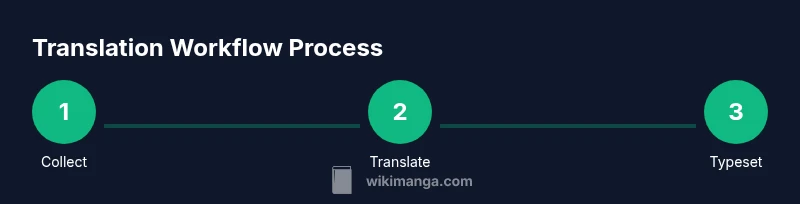
A robust translation workflow starts with a bilingual source script, or a reliable transcription of on-page text. Create a glossary of character names, place names, and recurring terms to ensure consistency. Develop a style guide for tone, humor, and regional expressions, and use a translation memory or glossary tool to reuse translations across chapters. Localization is more than swapping words; it’s preserving meaning, humor, and cultural cues while keeping the original pacing and panel flow intact. Maintain a changelog so editors can review decisions and authors can trace evolution of phrasing across the work.
Script and dialogue handling
Manga text includes not only dialogue but onomatopoeia and sound effects that require localization choices. Decide early whether to translate SFX directly or retain original speech patterns with localized annotations. For dialogue, preserve character voice and avoid stilted phrasing that breaks immersion. When in doubt, consult a bilingual editor to ensure cultural resonance and readability across scenes. Keep a running list of preferred translations for key phrases to avoid inconsistency later in the manga.
Typography, fonts, and readability
Typography is a major factor in readability for English editions. Choose font families that match the tone of the original while ensuring legibility at small sizes within speech bubbles and captions. Respect licensing requirements for any fonts used, and plan for line breaks that maintain natural reading flow in English. Use consistent font weights for emphasis and ensure font metrics align with the original panel sizes to avoid crowding. Remember to test across different devices if you plan a digital release.
Artwork, panel layout, and typesetting tips
Text placement must respect the original panel layout. When text blocks collide with art, adjust bubble shapes, line breaks, and often the speech bubble position to maintain readability without obscuring important art. Use careful kerning and tracking to fit longer English phrases without shrinking type below legibility. If a translation makes a panel too long, consider a global reflow of text across adjacent panels rather than cramming words into a single bubble. Respect the art while delivering a natural reading rhythm.
Quality control and proofreading
Proofreading is essential to catch typos, mistranslations, and typographic issues before release. Build a QA checklist that covers translation accuracy, terminology consistency, font rendering, and layout integrity. Have a second bilingual editor compare the English text to the original and verify that cultural notes are appropriate. Test the edition by listening to the pacing of dialogue and the flow of onomatopoeia in context. Keeping a revision log helps track changes and ensures reproducibility for future chapters.
Licensing, distribution, and fan-site considerations
If you distribute a fan edition, be clear about the unofficial nature of the project and avoid commercial sales where possible. Use non-commercial hosting and provide proper attribution to the original work. Always respect takedown requests from rights holders and be prepared to discontinue distribution if required. Consider focusing on fan communities and forums rather than public distribution channels to minimize legal risk. WikiManga. emphasizes that adherence to rights and transparent practices build trust with readers and rights holders alike.
Tools and resources for English editions
A successful workflow relies on a combination of software and resources. Keep a centralized glossary and style guide, use OCR to extract text from scans, and employ translation memory to promote consistency. Text editing and image editing tools support layout and typography, while project management tools help track progress and revisions. Maintain backups and version control so you can revert changes if needed. Leverage community feedback, but always verify accuracy against the source material.
Common pitfalls and how to avoid them
Common issues include inconsistent terminology, mishandled SFX, and poor type-setting that reduces readability. Avoid relying on ad-hoc translations without a glossary, and never skip a proofreading pass, especially for long chapters. Ensure that rights and licensing are documented before publishing, and avoid posting unlicensed content in public spaces. Plan for quality control at every stage to prevent rework and maintain reader trust.
Final checklist before publishing
Before releasing an English edition, confirm licensing status, finalize the translation glossary, complete the layout pass, and perform a final proofreading run. Ensure all font licenses are valid, and verify that all textual changes align with the art. Prepare a basic credits section and a note about licensing to inform readers. With a careful pre-publication review, your mummy manga English edition can reach fans with confidence and consistency.
Tools & Materials
- Source manga pages (digital copies or scans)(High-resolution scans of the original language edition)
- OCR software(Extract on-page text from scans for translation)
- Translation memory (TM) / glossary tool(Maintain consistency across chapters and terms)
- Style guide / translation standards document(Define tone, terminology, and localization rules)
- English font licenses for on-screen text(Secure proper fonts for speech bubbles and captions)
- Image editing software(To place translated text into speech bubbles and captions)
- Version control or cloud backups(Track revisions and revert changes when needed)
- Rights confirmation or license proof(Keep on file for reference and compliance)
Steps
Estimated time: Estimated total time: 2-4 weeks
- 1
Collect and organize source material
Gather all original pages and run a preliminary text extraction. Create a file structure that maps pages to panels for efficient editing. This step establishes the foundation for accurate translation.
Tip: Create a mirrored folder structure for source, draft, and final assets. - 2
Build glossary and style guidelines
Define character names, terms, and recurring phrases. Establish tone guidelines to maintain voice across chapters and align with the mood of the original work.
Tip: Include at least 20 core terms with approved translations. - 3
Draft initial English translations
Translate dialogue, captions, and panel text. Focus on meaning and pacing rather than perfect wording in the first pass. Record uncertainties for later review.
Tip: Mark ambiguous lines for a bilingual review before finalizing. - 4
Review and refine translations
A second editor checks accuracy, tone, and consistency. Resolve any inconsistencies flagged by the glossaries or TM. Update the style guide as needed.
Tip: Use a change log to track every edit decision. - 5
Layout and typesetting
Place translated text into bubbles and captions, preserving panel flow and readability. Adjust line breaks to fit English phrasing without obscuring art.
Tip: Test readability at multiple font sizes and screen sizes. - 6
Quality control and QA
Run a final proofreading pass, verify fonts, and confirm alignment with the original art. Ensure SFX translations enhance comprehension without overlocalizing.
Tip: Have a fresh reader check for naturalness and clarity. - 7
Confirm licensing and rights
Document licenses and permissions before any public release. If rights are not secured, limit distribution to personal or non-commercial contexts.
Tip: Retain copies of all rights communications for audits. - 8
Publish and monitor feedback
Release the edition in approved channels and monitor reader feedback for future improvements. Prepare to adapt based on reader insights while respecting rights.
Tip: Collect reader comments to inform the next edition.
Frequently Asked Questions
Do I need permission to translate a manga into English?
Yes. Translation rights are typically controlled by the copyright holder. Obtain explicit permission or work through an established license to translate and publish. If rights cannot be secured, avoid public distribution and respect the original creator's protections.
Yes. You should obtain explicit permission or license to translate and publish a manga in English, to avoid copyright issues.
Can I publish a fan translation legally?
Fan translations exist in a legal gray area. They are often non-commercial and non-distributable, but rights holders may still request takedowns. Always prioritize rights and clearly label the work as unofficial.
Fan translations can be tricky legally; keep it non-commercial and clearly labeled as unofficial.
How do you handle sound effects localization?
Choose between translating SFX or retaining originals with annotations. The goal is readability without breaking immersion. Maintain consistency by listing approved SFX translations in the glossary.
Decide early whether to translate SFX or annotate; keep it consistent with your glossary.
Should I redraw panels for English text?
Redrawing is usually unnecessary if you can fit translation within existing bubbles. When needed, adjust text flow and bubble shapes carefully to fit English while preserving art.
Usually avoid redraws; adjust text flow if necessary.
How can I ensure consistency across chapters?
Use a shared glossary, a style guide, and a translation memory. Regular bilingual reviews help align terminology and tone across chapters.
Use a glossary and translation memory, with regular reviews.
Where can I publish an English edition legally?
Publish through licensed distributors or official channels authorized by the rights holders. If distributing fan-made editions, keep them non-commercial and within communities that respect copyrights.
Publish via licensed channels or ensure rights clearance; keep fan editions non-commercial.
Watch Video
Highlights
- Plan licensing before translating.
- Build a glossary for consistency.
- Preserve voice and pacing in English.
- Test readability across devices.
- Document decisions for future edits.