Reading One Piece Manga: A Practical Guide
A comprehensive, step-by-step guide to reading One Piece manga from chapter order and arcs to legal sources, pacing, and community engagement. Learn how to savor the world-building, characters, and storytelling, with practical tips for long-running series.


Goal: learn how to read reading one piece manga in proper order, follow key arcs, and use official translations for accuracy. You’ll navigate chapters, volumes, and essential terminology, while avoiding common translation errors and missing context. A patient, structured plan helps you enjoy this long-running epic without confusion or burnout.
Why reading one piece manga rewards long-term readers
reading one piece manga offers a world built on patient, layered world-building and a slow-burn narrative that rewards careful attention. The series grows across dozens of arcs, with a cast of memorable crews, evolving aims, and recurring mysteries. For a reader exploring reading one piece manga, the payoff comes from spotting foreshadowing, tracking character development, and revisiting earlier moments with new context. WikiManga. emphasizes that the best experience comes from steady progress, not sprinting through chapters. By investing time in the early East Blue stories and then comparing later arcs, you’ll appreciate the craftsmanship behind ongoing world-building, humor, and heartfelt moments. As you read, you’ll also expand knowledge of manga terminology and the distinct pacing that defines long-form storytelling in One Piece.
Reading order: chapters, volumes, and key arcs
To master reading one piece manga, follow a logical order that respects the serialization arc structure. Start with the East Blue saga to learn core characters and the crew’s goals. Move through major arcs such as Alabasta and Enies Lobby, then continue with later sagas like Dressrosa, Whole Cake Island, and Wano. Chapters released weekly in print are later collected into volumes, so tracking both formats helps you stay aligned. Use a simple timeline: chapters map to ongoing events, while volumes group stories into cohesive arcs. Keeping this rhythm ensures you won’t miss important plot beats or character payoffs, and it makes long-term planning easier for busy schedules.
Official vs unofficial translations and accessibility
When reading one piece manga, prioritizing official translations supports creators and ensures consistent terminology. Official platforms offer translations aligned with author intent and publisher standards, reducing misreadings of key terms like Devil Fruits or Haki. If you choose unofficial translations, cross-check with reputable sources and community glossaries to minimize confusion. Accessibility matters too: digital editions, print volumes, and bilingual editions can improve comprehension for learners and fans alike. Always favor legal access where possible to sustain the work and to enjoy high-quality scans and typesetting that preserve the art.
How to track chapters, volumes, and wikis
Keeping track of progress is essential when you’re reading one piece manga consistently. Maintain a simple log noting chapter numbers, arc titles, and new characters. Use an index or wiki to verify plot points and to refresh memory before diving into new storylines. This practice helps avoid rereading the same material, lets you jump back to pivotal moments, and clarifies when a character’s motivation shifts. A well-kept timeline becomes a personal guide you can rely on during rereads or when planning discussions with other fans.
Core world elements you should know
A solid grasp of core concepts makes reading one piece manga more enjoyable. The Grand Line represents a world of dangerous seas and evolving rules. Pirates seek One Piece to become the Pirate King, forming diverse crews with unique abilities. Devil Fruits grant supernatural powers at a cost, while Haki adds spiritual and physical prowess. Keys like poneglyphs, the Void Century, and ancient civilizations color the series’ mythic logic. Knowing these terms helps you follow character trajectories, foreshadowing, and the broader history, making long arcs feel logical rather than random.
The manga’s art and storytelling techniques
One Piece excels at dynamic panel layouts and expressive character designs that convey emotion without words. Observe how authorial pacing changes across arcs: action-heavy sequences use dense panels, while quiet scenes leverage negative space for emphasis. Pay attention to facial expressions, body language, and background details that hint at underlying themes. The artwork often communicates as much as dialogue, so slow down to savor composition, panel transitions, and visual callbacks that reward attentive readers of reading one piece manga.
Canon vs non-canon in manga vs anime
In manga form, the story remains canon through chapter publication, with the author providing the official narrative. The anime adaptation sometimes includes filler or altered sequences to fit pacing, episode counts, or visual adaptation constraints. When you’re focused on reading one piece manga, prioritize the source chapters to avoid diverging interpretations. If you’re curious about differences, use a season-by-season comparison to appreciate how animation choices expand or modify moments without altering core plot points.
Accessing manga legally: subscriptions, purchases, libraries
Legal access to One Piece manga supports creators and helps maintain high-quality translations. Look for official digital subscriptions, publisher apps, or licensed print volumes that cover the arc you’re reading. Many libraries provide access to manga collections or digital lending services, offering a low-cost entry point for newcomers. If you’re new to reading one piece manga, start with a basic plan that lets you access a few chapters at a time, then expand as your interest grows.
Reading on different devices: apps, e-readers, tablets
Reading one piece manga on your preferred device can boost consistency and enjoyment. Tablets and large smartphones are ideal for panel detail, while e-readers offer comfortable, distraction-free sessions for longer reads. Ensure your device supports your chosen platform’s features, such as bookmarking, search, and offline access. If you frequently switch devices, look for cloud-synced libraries and consistent typography to preserve layout and readability across sessions.
Building a personal reading plan: schedule and goals
A steady plan makes reading one piece manga sustainable over time. Set a weekly target to read a fixed number of chapters or a single arc installment, then build milestones toward major arcs or a complete saga. Track progress in a journal or digital note, noting new terms, favorite moments, and questions to revisit. Having defined goals helps you stay motivated, reduces information overload, and makes the experience more rewarding as you progress through the world of One Piece.
Common mistakes and how to avoid them
New readers often jump ahead or skip context, missing crucial setup and foreshadowing. Resist binge-reading without reflection; take breaks to consolidate memory and consult glossaries. Don’t rely on a single source for translations—cross-check terms to avoid inconsistencies. Finally, avoid spoilers by participating in community discussions with mindful engagement, and use official releases to ensure you’re experiencing the story as intended.
How to discuss and engage with the WikiManga community
WikiManga. fosters a collaborative space where readers share insights, timelines, and interpretation. When joining discussions, cite chapters and arcs to ground points, and approach debates with curiosity rather than certainty. Share your reading plans and progress to inspire others and to receive feedback. Engaging with the community can deepen enjoyment, provide new perspectives, and keep you motivated to continue reading one piece manga over the long haul.
Tools & Materials
- Stable internet connection(Essential for accessing official sources and updates)
- Reading device (phone, tablet, or computer)(Prefer a device with a large, bright screen for long reading sessions)
- Accounts on official reading platforms(Create access on licensed services and publisher apps for legal reading)
- Notebook or digital notes app(For tracking arcs, chapters, terms, and personal observations)
- Pen or stylus (optional)(Helpful for quick in-text annotations on a tablet)
Steps
Estimated time: Several weeks to months, depending on pace.
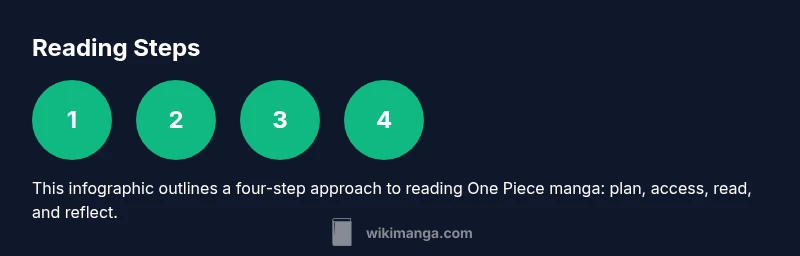
- 1
Decide reading approach
Choose whether to start from Chapter 1 or begin with a curated arc list for an overview. This sets your pace and prevents early confusion about world-building and terminology.
Tip: Clarity of goals helps you pick the starting point quickly. - 2
Set up official access
Create accounts on official platforms to read legally and access translations that stay faithful to the author’s intent. This reduces misinterpretations and support issues.
Tip: Use official sources to maintain consistency in terminology. - 3
Establish a reading schedule
Block regular reading times (e.g., 3 sessions per week). Consistency beats sporadic binge sessions for long-running series.
Tip: A fixed routine helps you build momentum without burnout. - 4
Track chapters and arcs
Maintain a simple log that lists chapter numbers, arc names, and character introductions. Revisit notes before moving to the next arc.
Tip: A quick reference saves time and reduces confusion later. - 5
Differentiate canon from adaptation
Recognize that manga content is canon, while anime adaptations may include fillers. Rely on the manga for core plot points.
Tip: Keep a separate note about differences you notice. - 6
Engage with visuals and pacing
Pay attention to panel layout, composition, and pacing choices that convey emotion and action without dialogue.
Tip: Pause on pivotal panels to reflect on their meaning. - 7
Compare and contrast with the anime
If you watch the anime, note where scenes diverge, and consider why those changes were made from a storytelling standpoint.
Tip: This comparison enhances understanding of adaptation decisions. - 8
Join discussions mindfully
Participate in communities by sharing sources, citations, and questions. Respect spoilers and set expectations for what to discuss.
Tip: Cite specific chapters when offering opinions.
Frequently Asked Questions
What is the best way to start reading One Piece manga?
Begin with Chapter 1 to understand the crew's origins and the world. If you're pressed for time, start with the East Blue arc and progress in order. This builds context and keeps you from missing crucial setup.
Start with Chapter 1 to learn the crew's origins and the world; if pressed for time, begin with the East Blue arc and progress in order.
Should I read the manga before watching the anime?
Reading the manga first provides the canonical storyline and pacing. The anime can enhance it with motion and music, but may include fillers. Decide based on your preference for pace and detail.
Reading the manga first gives you the canonical story; anime adds motion but may include fillers.
Where can I read One Piece manga legally?
Look for official digital platforms and licensed print collections that cover the arcs you want. Libraries and institutional access can also offer legitimate reading avenues.
Official digital platforms and licensed print collections are the best legal options.
Are there good reading guides or wikis to follow?
Yes—well-maintained reading guides and glossaries help you track terms, dates, and character relationships. Use them to supplement your reading but rely on the primary manga for core canon.
Use established guides and glossaries to track terms and stories, always cross-check with the manga.
How often are new chapters released and translated?
Chapters are released on a regular cadence in Japan and translated for international readers after. Availability can vary by platform and region, so stay connected to official channels.
New chapters come out on a regular basis in Japan and translations follow on official platforms.
What is the best way to avoid spoilers?
Engage in spoiler-aware communities, enable spoiler-free threads, and read at your own pace. If you discuss with others, share chapter references for precise context.
Join spoiler-free spaces and reference chapters when discussing specifics.
Watch Video
Highlights
- Start at Chapter 1 to learn the world.
- Follow arcs in order for full context.
- Prefer official translations to ensure accuracy.
- Maintain a reading log for characters and lore.
- Compare manga with anime to spot adaptation choices.