When to Switch to Manga Soul Eater: A Practical Guide
A comprehensive, step-by-step guide on deciding the right moment to switch to the Soul Eater manga, with practical transition plans, reading strategies, and tips for manga enthusiasts in 2026.


You will learn when to switch to the Soul Eater manga by identifying key reading milestones, comparing the manga to the anime, and creating a practical transition plan. Gather the correct volumes, set a realistic reading schedule, and track your progress to decide if continuing is the right move. This quick framework helps you avoid spoilers and wasted time.
Understanding the Switch: Why Move to Soul Eater Manga?
According to WikiManga, readers often reach a turning point when they want more direct engagement with the artwork, pacing, and world-building that manga storytelling provides. If you’ve followed the anime or enjoyed related prose, switching to the Soul Eater manga can unlock new details, character nuances, and a visual rhythm that accelerates or slows with your reading pace. The decision to switch isn’t about abandoning other formats; it’s about choosing the medium that best serves your goals as a manga enthusiast and creator in 2026. This shift is especially compelling for readers who crave deeper canon expansion, creative paneling, and a more intimate connection to the author’s intended pacing. If you’re unsure, start with a single arc and evaluate how the visuals, dialogue, and fight scenes land in your imagination.
For many fans, the manga offers a more sustained cadence than the anime, with opportunities to study character design and world-building in meticulous detail. If you value pacing that lets scenes breathe and suspense build at a controlled rate, the manga can be a satisfying upgrade. The following sections help you recognize when you’re ready and how to plan a smooth transition.
Assessing Your Reading Persona: Are You a Manga-First Reader?
Before diving into Soul Eater, define your reading persona. Do you primarily read for visual storytelling, or do you prioritize canonical fidelity and world-building? A manga-first reader often seeks dense artwork, precise panel layouts, and textual depth that isn’t always present in animated adaptations. If you’re comfortable pausing to study a page, re-reading panels for subtext, or comparing character expressions across chapters, you’re likely in the right mindset for manga. This mindset isn’t about abandoning other formats; it’s about aligning your habits with a medium that emphasizes static, but richly detailed, moments. In 2026, many readers enjoy hybrid approaches, but knowing your core preference helps you decide how to schedule your Soul Eater journey.
Consider your available reading time, tolerance for longer arcs, and how you react to cliffhangers on a page rather than on a screen. If you love decoding visual cues—framing, symbol placement, and action silhouettes—you’ll likely stay engaged across volumes. Conversely, if you prefer rapid, cinematic pacing, you might pace your manga reading alongside anime seasons to keep momentum.
Key Indicators that Soul Eater Manga Fits Your Reading Style
The best time to switch is often when several indicators align with your preferences:
- You crave richer visual detail and panel composition that enhance action scenes and character expressions.
- You want more control over pacing to savor battles, atmosphere, and character development.
- You’re curious about canonical expansions, side stories, and character arcs that may differ from the anime.
- You enjoy short, focused reading sessions rather than large TV binge blocks and want to track progress arc by arc.
- You’re preparing for manga production or fan-work and want a closer look at authorial intent, pacing, and layout decisions.
If two or more indicators describe you, the Soul Eater manga is likely a good fit. Remember, the goal isn’t to replace your current favorites but to enrich your reading toolkit with a medium that emphasizes visual storytelling and canonical depth. In practice, you can start with a single arc to test whether the manga’s rhythm resonates with your reading style.
How to Build a Manga Reading Plan Around Soul Eater
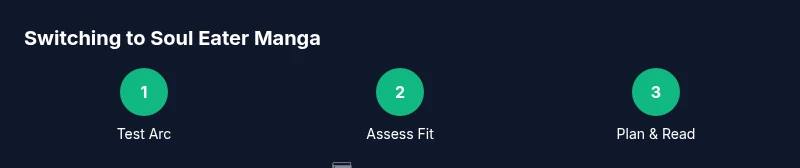
A practical plan helps you transition without spoiling enjoyment or breaking your schedule. Start by choosing the edition or translation that feels most accessible, then map out a two-week trial period:
- Gather volumes or digital copies for the chosen arc.
- Set a reading schedule: e.g., 20–30 minutes per session, three times a week.
- Create a simple progress tracker to note chapters completed and favorite panels.
- Compare to the anime or prose: jot down differences in pacing, character development, and world-building.
- Reassess after finishing the arc: are you enjoying the manga pace and detail enough to continue?
Throughout the process, keep your goals in mind—whether you want deeper canon, art-focused appreciation, or ready access to story expansions. By documenting reactions and questions, you’ll make a clearer decision about continuing beyond the first arc.
Choosing Editions, Translations, and Accessibility
Accessibility greatly shapes the switch. Look for official translations with clean typography and accurate dialogue. If you’re new to mangas in English, choose editions that preserve the original right-to-left reading flow or provide trusted translation notes. Accessibility also means considering library availability, digital platforms, and price ranges. Some libraries offer digital access to manga collections, which is ideal for testing a switch without a large upfront investment. If you’re price-conscious, plan a two-arc trial rather than committing to an entire volume set. Budget-conscious readers can also explore bundled editions or publisher-subsidized deals. The key is to choose a format that minimizes friction so you can focus on enjoying the storytelling and art rather than hunting for missing issues.
Finally, consider accessibility features like adjustable font size and screen brightness to reduce eye strain during longer reading sessions. A comfortable setup enhances comprehension and retention, making the switch more sustainable over time.
Transition Timeline: From First Arc to Full Series
A phased transition helps you avoid overwhelm and spoilers. Start with one arc to calibrate your expectations. If you’re enjoying the experience, proceed to a second arc while maintaining a note-taking habit to compare pacing and panel density. After two to three arcs, you’ll have a solid sense of how the manga’s rhythm matches your preferences. If you’re balancing multiple media, establish a rotation: alternate between manga chapters and anime episodes to maintain variety. This approach helps you savor the manga’s depth while avoiding a complete shift away from other formats you enjoy. Remember to revisit your goals monthly and adjust your reading plan if necessary. In practice, a flexible, long-term strategy tends to yield the most satisfaction when exploring Soul Eater in manga form.
Balancing Anime, Prose, and Manga Pacing
Balancing formats requires an honest assessment of where each format excels. Anime often accelerates action and emphasizes motion and sound, while manga offers deliberate pacing, nuanced facial expressions, and subtler world-building. Prose can deepen internal monologue and thematic exploration. If you’re new to manga, ease into Soul Eater by alternating formats: follow an anime arc, then read the corresponding manga chapters to compare pacing, art direction, and dialogue. Over time, you’ll learn to anticipate differences without feeling forced to choose one format forever. The goal is to create a reading ecosystem that supports your goals—whether you’re a casual fan, a steady reader, or someone who wants to study manga construction for your own projects.
Common Pitfalls and How to Avoid Them
Jumping into manga too quickly can lead to overwhelm if you haven’t set expectations. Another common issue is chasing perfection in translation or art quality—remember that print editions vary by region and publisher. Spoiler fatigue is real when you binge arcs; use a tracker to note what’s new and what’s already known from the anime. Finally, avoid trying to read at maximum speed to “catch up”; instead, prioritize comprehension, appreciation of visual storytelling, and your enjoyment. If you encounter dense pages, slow down, study the panel layout, and take brief notes to reinforce memory. By anticipating these pitfalls, you’ll sustain engagement and reduce frustration as you explore Soul Eater in manga form.
Sustainment: Long-Term Reading Habits with Soul Eater
Once you’ve settled into a rhythm, maintain momentum by setting ongoing goals, such as finishing a volume per month or completing a fixed number of chapters weekly. Encourage a feedback loop: compare your impressions with other readers or creators, and use a reading journal to track evolving opinions. Periodically revisit your initial goals to confirm you’re still satisfied with the switch. As you grow more comfortable, you can expand your reach to related titles or related spinoffs to build a broader understanding of the Soul Eater universe. In 2026, sustained engagement with manga often translates to richer discussions, more precise analysis, and an enduring passion for the craft.
Tools & Materials
- Digital reading device (tablet, e-reader, or computer)(High-contrast display with adjustable brightness for marathon sessions)
- Soul Eater manga volumes or digital copies(choose official translations and annotations if available)
- Note-taking method (digital app or notebook)(Useful for tracking arcs, favorites, questions)
- Reading schedule tracker(Simple calendar or spreadsheet to plan weekly chapters)
- Comfortable seating and lighting(Natural light or soft lamps to reduce eye strain)
Steps
Estimated time: 2-4 hours
- 1
Gather Resources
Collect the Soul Eater manga volumes or legal digital copies for the arc you plan to read first. Verify edition and translation quality to ensure a smooth reading experience. Having all materials ready minimizes interruptions during sessions.
Tip: Choose an edition with reliable translations and clear page layout to reduce confusion. - 2
Set a Realistic Schedule
Create a reading plan that fits your weekly routine. Allocate 20–30 minutes per session, three times per week, and mark days in a calendar. Consistency matters more than session length.
Tip: Place sessions on your calendar at the same time each week to build habit. - 3
Start with a Short Arc
Begin with a single arc or a representative portion to gauge pacing, art density, and storytelling. Avoid jumping ahead to avoid spoilers and overwhelm.
Tip: If you dislike the pacing, adjust the arc length or switch to a lighter volume temporarily. - 4
Track Progress
Maintain a simple log of chapters completed, notable panels, and questions. This will help you compare manga pacing against anime and prose later.
Tip: Use a dedicated notebook or app tag to keep notes organized. - 5
Compare with Other Media
After finishing the initial arc, compare how key scenes unfold in the manga vs. the anime. Note differences in pacing, dialogue, and character design.
Tip: Make a small list of preferred moments to revisit for deeper study. - 6
Assess Readiness for Next Arc
Evaluate whether you’re enjoying the manga’s cadence and depth enough to continue. If yes, plan the next arc and repeat the steps.
Tip: Don’t rush; allow time for adaptation to the manga’s rhythm. - 7
Decide on a Long-Term Path
If the first arcs click, commit to a longer-term plan or set a milestone (e.g., finish three arcs in two months) to maintain momentum.
Tip: Set a tangible goal to prevent drift into inactivity. - 8
Reflect and Adapt
Periodically review your goals, the manga’s fit with your interests, and whether to loop back to anime or prose for balance.
Tip: Be flexible—your preferences may evolve with new arcs.
Frequently Asked Questions
When is the right time to switch from anime to the Soul Eater manga?
There isn’t a universal moment. Start by testing a single arc to see if the manga’s pacing and visuals match your preferences, then decide whether to continue. Consider your goals for canon depth and artwork quality during the test.
There isn’t a universal moment; try one arc first and see how you like the pacing and visuals.
How many volumes should I read before deciding to switch?
There’s no fixed number. Read a representative arc or two to assess the manga’s rhythm, art style, and storytelling quality.
There’s no fixed number—sample an arc to decide if you want to continue.
Should I watch the anime after starting the manga?
You can, if you enjoy cross-referencing scenes. The manga often provides additional details and context that enrich the experience without requiring you to abandon the anime.
Yes, you can; many readers like comparing scenes for differences.
Are there major differences between the Soul Eater manga and anime?
Yes, there are canonical differences and expansions in the manga. Reading the manga can reveal alternate arcs and endings not present in the anime.
There are differences; the manga often diverges from the anime in details and pacing.
What if I prefer other media pacing?
If you prefer faster or slower pacing, alternate formats to match your mood. The manga’s pace is distinct and can be enjoyed alongside anime and prose.
If you prefer other pacing, mix formats to suit your mood.
Watch Video
Highlights
- Clarify your reading goals before switching.
- Build a realistic, consistent manga reading plan.
- Compare manga pacing to anime/prose to evaluate fit.
- Commit to a trial arc and reassess after completion.