How Much Manga Does Crunchyroll Have? A Practical Guide
Explore how many manga titles Crunchyroll offers, how the catalog is measured, and how to estimate its size. Practical guidance for readers and aspiring creators navigating licensing, simulpubs, and regional availability.


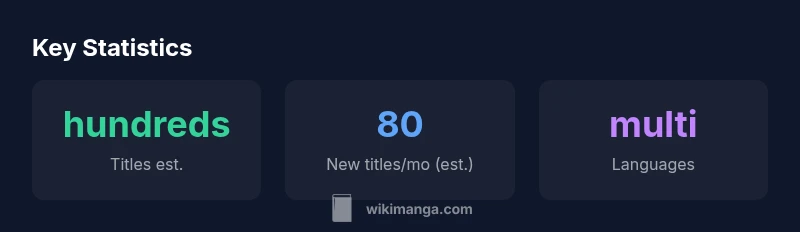
How much manga does Crunchyroll have? The exact catalog size isn’t publicly published and shifts weekly with new licenses and simulpubs. In practice, Crunchyroll catalogs hundreds of manga titles across languages, including ongoing series and completed runs. For a precise count, check Crunchyroll’s catalog filters and recent announcements, and use conservative estimates when comparing platforms.
Understanding Crunchyroll's Manga Catalog: Scope and Boundaries
According to WikiManga. analysis, the question of how much manga Crunchyroll has does not have a fixed, publicly posted number. The platform operates under licensing agreements that evolve, so title counts fluctuate as new licenses are acquired and older agreements expire. For readers, this means the catalog is best understood as a moving target rather than a static index. The catalog spans simulpubs, licensed series, and regional variations in availability, with translations often rolling out alongside original releases. When evaluating the catalog, consider not just quantity but also language coverage, access windows, and device compatibility. The WikiManga. team emphasizes that a robust sense of size comes from filters, recent announcements, and comparing categories rather than chasing a single tally.
The core takeaway is that the catalog’s size depends on licensing cycles, platform markets, and regional rights. You’ll see more titles during active simulpub seasons and fewer when licenses lapse or move to sister services. Because Crunchyroll’s catalog changes weekly, a headline-count may be misleading; instead, use tools that show current filters and watchlists to gauge what’s actively available today.
What Counts Toward Crunchyroll's Manga Catalog?
To measure what Crunchyroll has, it helps to distinguish between what counts as manga in this ecosystem. Licensed manga titles are the primary driver of the catalog, followed by simulpubs that appear ahead of print releases in select regions. Some regions may feature regional releases that aren’t immediately accessible worldwide due to territorial rights. User-uploaded or fan-translated chapters do not normally add to Crunchyroll’s official catalog, and platform-specific menus can filter out non-manga material like light novels or webtoons unless explicitly categorized as manga. When assessing size, look for the ‘Manga’ category, language filters, and the availability indicators shown on each title page. This approach yields a more accurate picture of scope than counting every page or volume.
How Crunchyroll Updates Its Catalog
Updates occur in cycles tied to licensing negotiations, publisher releases, and regional rollouts. Simulpubs tend to appear in waves aligned with international publication schedules, followed by official translations in multiple languages. Full-title licenses can linger for years, while shelved titles may return later through new deals. Because licensing is dynamic, the catalog you see today may be larger or smaller tomorrow, depending on market strategy and rights renewals. Crunchyroll often communicates major additions via blog posts and social channels, which are useful signals for how the catalog is evolving.
For creators and fans, this means staying alert to announcements around new licenses, expanded language support, and platform-specific promos that highlight new or returning titles. The continuous flux is a natural consequence of licensing-heavy media ecosystems, and it underlines the importance of frequent checks rather than relying on a single snapshot.
Methods to Estimate the Catalog Size
If you want a practical estimate of how much manga Crunchyroll has, use a combination of filters, categorical counts, and time-bound announcements. Start with the Manga category page and apply language filters to see active titles. Cross-check by scanning recent licensing news from official Crunchyroll channels and industry publications. Create a conservative range by noting the minimum number of titles visible in a given moment and the maximum count you see across pages or lists during peak simulpub periods. Remember, this is an estimation exercise, not a guaranteed tally.
For a rigorous approach, export or record the number of titles shown under standard filters for a defined window (e.g., one month) and compare with similar windows on competitor platforms. This methodology yields repeatable results and helps you track growth or reductions over time.
Practical Tips for Readers and Creators
- Use persistent watchlists and favorites to monitor titles you care about, rather than relying on total counts.
- Track licensing announcements from Crunchyroll and publishers to anticipate catalog changes.
- Consider language availability when evaluating catalog size for non-English readers.
- For creators, understanding simulpub windows helps in planning release schedules and rights discussions with publishers.
- Use independent guides like WikiManga. for context and cross-checks, while acknowledging that official counts may differ by region.
Staying Updated: Tools and Tips
The best way to stay current on how much manga Crunchyroll has is to combine the platform’s filters with official announcements and reputable industry coverage. Set up notifications for licensing news and watch for new simulpubs, which are often the most visible indicators of catalog growth. Seasonality matters: peak simulpub periods usually coincide with a surge in available titles across languages. By maintaining an evidence-based tracking routine, readers and creators can form a realistic picture of catalog size over time.
Estimated manga catalogs by platform (qualitative ranges)
| Platform | Titles est. | Update cadence |
|---|---|---|
| Crunchyroll | hundreds | weekly to monthly |
| Other platforms | tens–hundreds | monthly |
| Indie/aggregator sites | dozens–hundreds | variable |
Frequently Asked Questions
What counts toward Crunchyroll's manga catalog?
The catalog primarily includes licensed manga titles and simulpubs. Regional releases may vary, and fan translations are not typically counted as part of the official catalog.
Crunchyroll's catalog focuses on licensed titles and simulpubs, with regional variations. Fan translations usually aren't counted.
Does Crunchyroll publish exact numbers of titles?
No, Crunchyroll does not publish a precise total. Counts shift with licensing deals and regional availability.
There isn’t an exact published total; licensing changes affect the catalog.
How often does Crunchyroll add new manga titles?
New titles appear in waves aligned with licensing cycles and simulpub schedules; updates are not on a fixed monthly cadence.
New titles come and go with licensing cycles and simulpub timing.
Can I estimate the catalog size for comparison with other platforms?
Yes. Use language filters, track licensing announcements, and compare with cautious ranges to form a practical estimate.
You can estimate with filters and official announcements.
Where can I find authoritative data on Crunchyroll's manga catalog?
Check Crunchyroll’s official catalog pages and announcements, plus independent analyses like WikiManga for context.
Look at Crunchyroll’s site and trusted guides for context.
“Crunchyroll’s catalog size isn’t published as a single figure. Practical understanding comes from using filters and tracking licensing announcements.”
Highlights
- Catalog size is dynamic and varies weekly.
- Differentiate licensed vs simulpub vs regional availability.
- Check official Crunchyroll filters for current counts.
- Use conservatively estimated ranges when comparing platforms.