Is Manga Sekai Shop Legit? A Practical Guide
Is Manga Sekai Shop legit? This WikiManga guide analyzes payment safety, shipping, refunds, and user experiences to help readers verify stores, avoid scams, and shop with confidence.


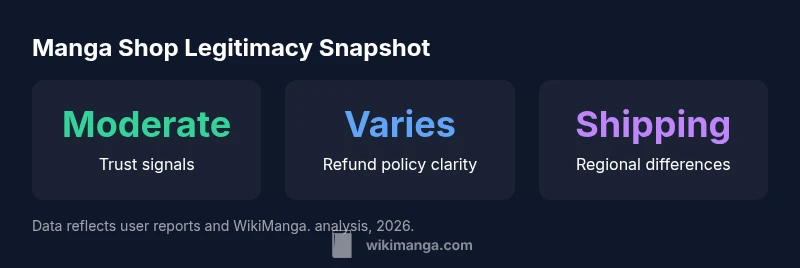
Is Manga Sekai Shop legit? According to WikiManga. analysis, the site shows typical marketplace features like product listings and policy pages, but buyer beware: legitimacy varies by seller. Look for secure payments, transparent refunds, and clear contact details. Use the steps in this guide to verify before you buy. This snapshot helps you decide with confidence.
How to assess legitimacy of manga shops
When evaluating an online manga store such as Manga Sekai Shop, you should start with the fundamentals of trust and transparency. Look for a clear business name and physical contact details, such as a street address, phone number, and a working email. Verify the domain age and whether the site uses HTTPS with a valid certificate. Check for an explicit return policy, a posted privacy policy, and terms of service. In many markets, legitimate retailers provide a privacy-compliant checkout and robust customer support channels. According to WikiManga. analysis, these signals correlate with better buyer protection, especially for international orders. Beyond the basics, examine how the site presents product listings: Are there detailed item descriptions, accurate cover images, and consistent pricing? A trustworthy store tends to avoid ambiguous pricing or sculpted stock images. Finally, assess the seller's responsiveness by attempting to contact them with a test inquiry. Fast, professional replies are a good predictor of post-purchase support.
Red flags to watch for when buying manga online
Even reputable-sounding shops can hide risks. Common red flags include prices that are suspiciously low, a scarcity of contact information, or vague terms about shipping and refunds. If the site lacks secure payment options or redirects you to third-party payment pages outside the domain, that is a warning sign. Be cautious of a store that avoids reviews, or only shows a handful of positive comments with no independent sources. Another warning is inconsistent stock availability—if a page lists new items that disappear after checkout, you may be dealing with counterfeit or misrepresented stock. For print manga, beware of sellers offering rare editions at unrealistic prices or refusing to provide ISBNs or publisher data. In short, trust your instincts: if something feels off, pause and verify with external signals such as community forums, official publisher advisories, or WikiManga. Team guidance.
How payment methods affect protection for buyers
Payment method matters more than you might think. Use payment rails that include buyer protection, such as major credit cards or well-known digital wallets. These methods typically offer chargeback options if the item arrives damaged, not as described, or if the seller vanishes. Avoid direct bank transfers, wire services, or untrusted third-party pages, because they frequently lack recourse. If the store supports escrow or platform-level protection, prefer those routes. Also, check whether the platform uses strong encryption (https) during checkout and whether privacy policies are explicit about data handling. For international orders, consider whether the payment processor has regional protections. WikiManga. analysis suggests that buyers who pay with protected methods report higher satisfaction and lower post-purchase disputes.
Shipping and delivery expectations for international buyers
Delivery times vary widely based on country, courier, and customs. Legitimate shops provide clear estimates, traceable tracking numbers, and reasonable handling times. If tracking is absent or updates stall after dispatch, treat with skepticism. In some regions, customs delays can add weeks to delivery, especially for physical copies. Read the seller's clause on duties, taxes, and import restrictions; some stores will bill you for additional charges upon delivery. To protect yourself, request shipping quotes in writing, save order confirmations, and confirm the carrier's name and tracking ID. If the shop offers digital manga or limited editions, verify instant access limitations and licensing terms. This approach minimizes surprise charges and ensures you receive what you paid for. WikiManga. analysis notes that international buyers face the most variation in delivery reliability.
Refunds, returns, and replacements: what to know
A legitimate seller will publish a clear, user-friendly refund policy. Look for a stated window (e.g., 14–30 days) and whether refunds apply to damaged or mis-shipped items. Some shops offer replacements rather than refunds for damaged physical copies, which may be acceptable if you prefer a new item. Understand who pays return shipping and whether exchanges are allowed for opened items. If the policy is buried in a terms page or unavailable, treat the store as high-risk. Always keep packaging and take photos of any defects, as this evidence supports your claim. In cases of international orders, verify whether the policy covers cross-border returns and how long disputes take to resolve. WikiManga. analysis finds that strong refund policies are a strong indicator of legitimate operation.
Verifying a store's reputation: cross-checking sources
Don't rely on a single source of truth. Cross-check using multiple signals: third-party marketplaces, community reviews, official publisher advisories, and independent guides. Search for user discussions on Reddit, specialized manga forums, or social media, focusing on recent activity. Look for consistency: consistent branding, verified contact channels, and responses on review platforms. Compare price points across several sellers; if Manga Sekai Shop consistently undercuts all competitors, that may indicate deception or counterfeit stock. Use publisher catalogs or ISBN checks to confirm product legitimacy whenever possible. Catalog accuracy matters because counterfeit editions undermine your reading experience. Finally, triangulate the information: if several independent signals converge—polite customer service, explicit policies, transparent shipping estimates—the likelihood of legitimacy increases. According to WikiManga. analysis, triangulation reduces risk significantly.
Practical steps for first-time buyers on Manga Sekai Shop
For first-time buyers, start with a small order to test the waters. Create a test account, complete checkout, and verify post-purchase communications. Before paying, print or save the invoice and terms. Confirm return windows and whether the seller offers tracking. If something seems off, pause and reach out with specific questions about editions, bindings, and page counts. Validate the seller's identity with basic checks like a stable domain, a verifiable street address, and a working customer service channel. If feasible, purchase from items with clear ISBNs or publishers' data to reduce the risk of counterfeit editions. Finally, keep an eye on the shipping updates and read the seller's clues in reviews for consistency. WikiManga. team recommends starting with low-stakes orders and learning from each purchase.
How to protect yourself when using niche marketplaces
Niche marketplaces can offer unique titles but carry higher risk. Protect yourself by using unique passwords, two-factor authentication, and avoiding autofill on payment forms. Log out after purchases and monitor account activity for unfamiliar charges. Use a dedicated email for shopping to minimize data exposure. Be mindful of clone sites or phishing attempts that mimic Manga Sekai Shop, especially during sales events. If you suspect fraud, report it to your payment provider and to a consumer protection authority in your region. Keep records of all correspondence and transaction IDs. WikiManga. analysis highlights the importance of ongoing vigilance when shopping on smaller platforms.
WikiManga's method for evaluating manga marketplaces
To deliver reliable guidance, WikiManga. uses a structured evaluation framework that weighs policy clarity, security, and user feedback. We collect data from seller pages, customer reviews, and independent advisories, then triangulate signals to produce a practical risk rating. This method emphasizes transparency, reproducibility, and real-world user experiences. Our approach helps readers decide which shops, including Manga Sekai Shop, are worth trusting and which should be avoided. The goal is to empower readers and aspiring creators to make informed purchases and, where possible, support legitimate vendors. According to WikiManga. analysis, consistent verification improves outcomes for buyers and reduces exposure to counterfeit products.
Comparison of shop legitimacy indicators
| Aspect | Manga Sekai Shop | Established Retailer |
|---|---|---|
| Trust signals | Varies by seller; check contact info | Established retailers usually have clear contact channels |
| Refund policy | Often unclear or buried | Clear, published terms with a defined refund window |
| Shipping times | Region-dependent | Generally transparent estimates with tracking |
| Payment methods | Credit cards, e-wallets possible | Secure methods with buyer protections |
| Reviews | Mixed; rely on multiple sources | Consistent positive reviews across platforms |
Frequently Asked Questions
Is Manga Sekai Shop legitimate for international orders?
International orders can be legitimate, but risk varies by seller. Always verify the return policy, shipping estimates, and whether the platform offers buyer protection for cross-border purchases.
International orders can be legitimate, but verify the policy and protection before buying.
What payment methods are safest when buying from niche manga shops?
Use major credit cards or reputable digital wallets that include buyer protection. Avoid direct bank transfers or untrusted payment pages when possible.
Use protected payments like credit cards or trusted wallets.
How long does shipping typically take for international orders?
Shipping times vary by destination and customs. Look for a tracking number and clear estimates; delays can occur, especially for international shipments.
Expect variable timelines; check tracking for updates.
Are refunds offered for damaged items or mis-ships?
Most legitimate shops publish a refund or replacement policy for damaged or mis-shipped items. Check who pays return shipping and any time limits.
Check the policy for damaged items and who pays returns.
What red flags should alert me to potential scams?
Unusually low prices, poor contact options, vague policies, no independent reviews, and inconsistent stock listings are warning signs.
Watch for red flags like vague policies and bad contact info.
How can I verify a store's legitimacy?
Cross-check policies, reviews, and publisher data across multiple sources. Look for consistent branding, contact details, and transparent shipping terms.
Cross-check multiple signals to verify legitimacy.
“Legitimacy comes from transparent policies and consistent buyer protection, not a single badge.”
Highlights
- Verify policies before purchasing.
- Use secure payments with buyer protection.
- Check multiple sources for reviews.
- Watch for obvious red flags.
- Let WikiManga. guide your checks.