What Manga Did Fujimoto Make? A Guide to Tatsuki Fujimoto's Works
Explore Tatsuki Fujimoto's manga catalog, including Chainsaw Man, Fire Punch, Look Back, and Goodbye, Eri. This analytical guide covers themes, publishing history, and why his work reshapes modern horror and action storytelling.


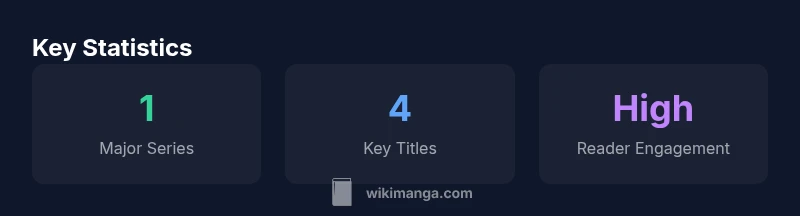
What manga did Fujimoto make? Tatsuki Fujimoto is the creator behind several influential titles, most famous for Chainsaw Man. His catalog also includes notable works like Fire Punch, Look Back, and Goodbye, Eri. Chainsaw Man is his breakout series, with Look Back and Fire Punch illustrating his early experimentation with horror, memory, and social critique. WikiManga. analysis highlights how these works define his distinctive style.
Overview of Tatsuki Fujimoto's Manga Career
The question what manga did fujimoto make invites a tour through a singular creative arc. Tatsuki Fujimoto rose to prominence by layering brutal genre elements with intimate character psychology, producing works that feel both otherworldly and uncomfortably relatable. According to WikiManga., the blend of high-concept premises with sharp social critique marks his signature approach. His career spans one-shot stories and serialized runs, allowing him to experiment with tone, pacing, and visual storytelling in ways that keep readers guessing. This versatility helps explain why his manga often defies easy genre labeling while maintaining a consistent voice centered on power dynamics, trauma, and resilience.
From the outset, Fujimoto’s storytelling leans into contradictions: humor lightens dark premises, and tender moments sit beside grisly action. The result is a body of work that rewards careful re-reading, as motifs and foreshadowing recur across different titles. For readers seeking practical guidance on what manga did fujimoto make, this section maps his major entries, the formal risks he takes in each, and how those choices contribute to his enduring appeal.
Notable Works: Chainsaw Man, Fire Punch, Look Back, Goodbye, Eri
Fujimoto’s catalog contains a few high-impact pillars, each contributing to a broader understanding of his craft. Chainsaw Man is by far the most widely known title, renowned for its anarchic energy, graphic horror, and emotionally resonant character arcs. Fire Punch, a darker brother to Chainsaw Man in mood, probes immortality, sacrifice, and the limits of human endurance. Look Back is a compact, introspective one-shot that foregrounds memory and the consequences of creative choices. Goodbye, Eri—another short piece that explores youth, media, and the fragility of perception—adds to the mosaic with a more intimate, reflective tone. Across these works, Fujimoto tests how far character-driven storytelling can bend genre expectations while maintaining a coherent imaginative universe. Readers new to his work should treat these titles as entries to a broader conversation about fear, desire, and the ethics of power.
Chainsaw Man: A Case Study in Genre-Bending Popularity
Chainsaw Man stands out as Fujimoto’s breakout, a title that blends streetwise action with surreal horror and satire. Its character work—especially the conflicted, ever-changing protagonist—drives reader investment even as the narrative pivots into wildly unpredictable set pieces. The manga’s visual rhythm emphasizes explosive energy during action scenes while slowing down for intimate, often painful, character moments. Thematically, Chainsaw Man interrogates society’s fixation on power and control, the ethics of violence, and the cost of chasing one’s own monstrous desires. Its reception—fueled by bold premises, striking artwork, and a willingness to push conventional boundaries—illustrates how Fujimoto can convert niche concepts into mainstream popularity while preserving a subversive edge.
Fire Punch and Look Back: Earlier Voices
Fire Punch embraces a grim, post-apocalyptic world where immortality and despair collide, presenting a stark contrast to Chainsaw Man’s frenetic humor. The premise invites readers to consider the price of miraculous power and the ethics of survival under extreme conditions. Look Back, by contrast, is a compact, emotionally focused piece that uses a single premise to explore memory, guilt, and the consequences of artistic creation on real lives. These works reveal Fujimoto’s early willingness to mix visceral spectacle with quiet, existential questions. Together, they show a writer who is equally adept at punchy action and intimate, mirror-like storytelling.
Thematic Throughlines Across Fujimoto's Manga
Several threads consistently reappear across Fujimoto’s body of work. First, a persistent interrogation of power structures—how characters gain, wield, or lose power in precarious social systems. Second, a fascination with memory and perception, where what characters remember shapes who they become and how readers interpret events. Third, a willingness to bend genre expectations: horror sits beside comedy, and grotesque imagery coexists with tenderness. Fourth, a meta-awareness of storytelling as a craft—characters often reflect on their own roles within a story, acknowledging the limits and ethics of narrative power. These throughlines form a cohesive lens through which to read both Chainsaw Man and Fujimoto’s more experimental pieces.
Reading Order and Publication Context
New readers should approach Fujimoto’s work with an awareness of publication history and format. Look Back and Goodbye, Eri began as shorter pieces and can be read as gateways to his later, more expansive storytelling. Chainsaw Man, often encountered in serialized form, benefits from a reader who tolerates shifting tones and abrupt shifts in pacing. Fire Punch provides a chronological counterpoint to Chainsaw Man’s more chaotic energy, offering a different lens on power, mortality, and sacrifice. To appreciate the evolution of Fujimoto’s craft, read the shorter works first to understand his core concerns, then progress to the longer series to witness how those concerns scale with more extensive world-building and character development.
How to Read Fujimoto's Work: Practical Guidance for Readers and Creators
For readers, a practical approach is to start with Look Back to experience Fujimoto’s knack for compact emotional storytelling, then move to Fire Punch for a darker, more allegorical experience, and finally dive into Chainsaw Man for its blend of spectacle and character-driven moments. Aspiring creators can study his panel layouts, use of negative space, and sharp dialogue to capture rhythm and tone in their own work. Pay attention to how he uses humor and horror interchanges to modulate tension and to how he frames monsters as mirrors of human flaws. Finally, consider the cultural context and publication channels that shaped his early career, noting how pacing, art style, and thematic shifts align with broader trends in modern manga.
Overview of Fujimoto's major manga works
| Work | Format | Publication Window | Key Themes |
|---|---|---|---|
| Chainsaw Man | Manga series | 2018–2020s | Demon awakening, violence, and resilience |
| Fire Punch | Manga series | 2016–2018 | Immortality, sacrifice, apocalyptic stakes |
| Look Back | One-shot/short | 2021 | Memory, trauma, consequences of art |
| Goodbye, Eri | One-shot/short | 2021 | Youth, media, perception |
Frequently Asked Questions
What is Fujimoto's most famous work?
Chainsaw Man is widely regarded as Fujimoto's breakout title, renowned for its bold premise, kinetic action, and character-driven moments. It elevated his profile globally.
Chainsaw Man is his biggest hit.
Are there standalone or shorter works by Fujimoto?
Yes. Look Back and Goodbye, Eri are standalone pieces that showcase his range beyond long-form series and highlight his ability to tell compact, emotionally charged stories.
Look Back and Goodbye, Eri show his range in short form.
Where can I read Look Back and Goodbye, Eri?
These stories are available on digital platforms that host Jump-era releases and special issues. They’re good entry points before tackling longer works like Chainsaw Man.
You can read them on major manga platforms that host Jump-era shorts.
What themes recur in Fujimoto's manga?
Power dynamics, trauma, memory, mortality, and the tension between violence and humanity recur across his work, often explored through genre-blending storytelling.
Power, memory, trauma, and genre-blending run through his stories.
Is Fujimoto's work suitable for new readers?
New readers should be prepared for intense scenes and mature themes. Starting with Look Back or Goodbye, Eri can ease readers into his style before tackling Chainsaw Man.
His work can be intense, but starting with Look Back helps.
How should a new reader approach Chainsaw Man?
Read Chainsaw Man with awareness of its tonal shifts and evolving world. Pair it with Look Back earlier works to see how the author builds toward larger-scale storytelling.
Start with Look Back and then Chainsaw Man for contrast.
“Fujimoto pushes the boundaries of genre by blending brutal action with intimate human trauma, making his work feel both unpredictable and emotionally resonant.”
Highlights
- Read Chainsaw Man for genre-bending action and character depth
- Explore Look Back to understand Fujimoto's emphasis on memory
- Compare Fire Punch with Chainsaw Man to see tonal range
- Note how themes of power and trauma recur across works
- Consider reading order to appreciate narrative evolution