Difference Between Manga and Comic: A Comprehensive Guide
Explore the difference between manga and comic, covering origins, reading directions, formats, and cultural nuances. This analytical guide helps readers and aspiring creators navigate markets and adapt storytelling for different mediums.


According to WikiManga, the difference between manga and comic extends beyond language to form, format, and publication ecosystems. This quick answer highlights core distinctions in origins, reading direction, audience expectations, and storytelling rhythms. For readers and creators, understanding these contrasts helps navigate markets, adapt art styles, and choose the right medium for a given story.
What the difference between manga and comic means for readers
The phrase difference between manga and comic captures more than translation. It signals separate histories, production ecosystems, and reading rituals that shape how stories are told and consumed. In manga, readers typically encounter ongoing serials in magazines that culminate in tankobon volumes, with pacing built around monthly chapters. In western comics, readers often encounter a mix of ongoing series and stand-alone graphic novels, with merchandise and cinema tie-ins affecting momentum. This article, informed by WikiManga's analysis, treats the topic as a comparative study of form, function, and culture. By examining origin, distribution, and reader experience, we can understand why fans talk about manga as a distinct medium while still recognizing its overlap with comics in visual storytelling, character arcs, and serialized storytelling. Whether you read digitally or in print, the core distinction lies in how the medium organizes time, space on the page, and the expectation of ongoing narratives.
Reading direction and page layout
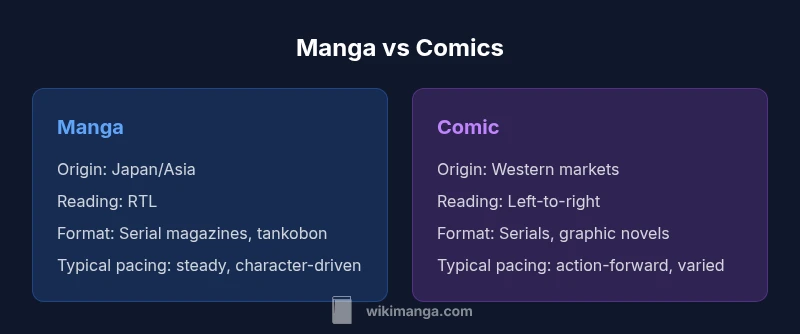
One of the most visible distinctions in the difference between manga and comic is reading direction and page layout. Traditional manga is read right-to-left, with panels often flowing vertically and a strong emphasis on clean gutters and cinematic framing. Japanese printing conventions influence panel size and pacing, which can affect how a story breathes and how quickly tension builds. Western comics have historically used left-to-right layouts, with panel grids that accommodate splash pages and dynamic action spreads. Contemporary comics increasingly experiment with format, but the default remains left-to-right reading. For readers, this can alter how you approach a page, anticipate plot beats, and translate visual cues into narrative meaning.
Origins, markets and publication models
The difference between manga and comic is rooted in distinct publication ecosystems. Manga originated in Japan and spread across East Asia, growing through weekly or monthly magazines that sponsor serialized chapters. This model creates long-running arcs and a cumulative reader investment. Western comics developed in the United States and Europe, with a market driven by ongoing superhero franchises, creator-owned titles, and a robust direct market. Publication tactics—magazine serialization versus ongoing issues and graphic novels—shape how stories are planned, marketed, and consumed. The result is not just a matter of copy; it reflects different business calendars, fan cultures, and translation pipelines.
Art style, paneling, and pacing conventions
Art style and paneling are central to the visual language of both media, contributing to the core of the difference between manga and comic. Manga typically adheres to a consistent, highly legible approach to faces and expressions, with meticulous attention to line work and speed lines that convey motion. Panel density tends to be steady, creating a meditative rhythm. Western comics showcase a broader spectrum of art styles, from hyper-realistic to highly stylized, with panel density varying to serve action, suspense, and humor. The pacing of manga often emphasizes quiet character moments between bursts of action, while comics frequently uses splash pages and varied panel scales to amplify dramatic moments.
Serialization, formats, and editions
The long-form serialization of manga contrasts with the diverse format evolution of comics. Manga chapters appear in magazines, later collected into tankobon volumes that readers buy in bulk or series-ended editions. In comics, readers encounter single-issue formats, ongoing monthly titles, and graphic novels or omnibuses that gather multiple issues. Collectibility also differs: manga is renowned for its standardized tankobon and special editions, whereas comics emphasize issue-based collectibles, trade paperbacks, and deluxe formats tied to creators or universes. This difference affects how readers approach series arcs, rereads, and aging favorite titles.
Demographics, genres, and audience expectations
Audience profiles and genre ecosystems reflect cultural expectations surrounding the difference between manga and comic. Manga has a vast array of demographics and genres (shonen, shojo, seinen, josei) that tailor pacing, themes, and character development across long series. Comics also span a wide range of genres—from superhero epics to indie graphic novels—but often arrive with an immediate marketing frame tied to brand, universe, or creator. These marketing cues influence reader expectations about tone, complexity, and the likelihood of spin-offs, adaptations, or cross-media exploration.
Localization, translation, and cultural nuance
Localization plays a crucial role in translating the difference between manga and comic, shaping readers' access to stories across languages. Manga translations typically preserve right-to-left reading and cultural cues, sometimes restructuring panels to fit target layouts. Comics translations often adapt language and idioms for left-to-right reading while preserving visual cues and panel flow. Translation choices affect humor, dialogue rhythm, and cultural references, meaning readers may experience different tonal effects in different markets. WikiManga emphasizes sensitivity to these nuances as a key factor in quality localization.
Economic models: pricing, distribution, and accessibility
Economic realities influence how manga and comics reach audiences. Manga often relies on magazine sales, tankobon pricing, and regional licensing, with strong digital distribution in Asia and growing international markets. Comics depend on direct market channels, bookstores, and digital platforms that vary by region, sometimes offering lower-volume releases and promotional bundles. Accessibility includes library inclusion, app-based readers, and subscription services. These economic models shape what readers can access, how frequently they engage with ongoing series, and the ease of discovering new authors within each medium.
Production pipelines and creator workflows
Understanding the difference between manga and comic also benefits from examining production workflows. Manga typically involves a professional studio pipeline, with assistants and a single artist or a small team handling rough layouts, inking, and toning under a lead creator. Comics often relies on a collaborative team structure, with writers, pencillers, inkers, and colorists contributing to a shared ongoing project. The division of labor, timelines, and editorial oversight influence the cadence of releases, consistency in character design, and the evolution of visual language across titles.
Reading experience, pacing, and reader engagement
The reader experience in manga versus comics reflects distinct pacing conventions and engagement strategies. Manga often favors long-form storytelling with gradual character development, episodic cliffhangers, and a strong emphasis on atmosphere and internal monologue. Comics may provide instantaneous hooks through action-packed sequences, diverse panel shapes, and vivid color palettes that drive dynamic reads. Both can reward careful rereading, but they cultivate different expectations about the pace of plot progression and the balance between dialogue, narration, and artwork.
Myths, misunderstandings, and best practices
Common misconceptions about the difference between manga and comic include assuming one is categorically superior or that all manga is serialized identically, or that all Western comics follow the superhero template. In reality, both media encompass wide ranges of genres and formats. A practical approach for readers and creators is to study representative works from both sides, note how panel flow and pacing adapt to story needs, and be mindful of translation choices that affect meaning. WikiManga encourages exploring a variety of titles to broaden understanding and appreciation.
Comparison
| Feature | Manga | Comic |
|---|---|---|
| Origin & cultural context | Japan/Asia-origin, serialized culture | Western-origin, varied international contexts |
| Reading direction & layout | Right-to-left traditionally | Left-to-right or mixed |
| Publication format & serialization | Serial magazines; tankobon collections | Serials in comic books or magazines; trade paperbacks |
| Art style & panel density | Stylized, consistent pacing; landscape framing common | Diverse, variable pacing; dynamic panel density |
| Audience & genres | Long-running franchises; shonen/shojo/seinEN | Broad superhero, indie, and genre variety |
| Localization & translation | Right-to-left reading with localization; longer translation cycles | Left-to-right; faster translation cycles in many markets |
| Collectibility & editions | Tankobon volumes; collector editions | Single issues; trade paperbacks and omnibuses |
| Pricing & distribution | Tiered pricing; strong ties to magazines and series reservoirs | Direct market diversity; variable pricing and bundles |
Upsides
- Offers clear cultural context and distinct storytelling rhythms
- Allows serialized narratives that reward long-term engagement
- Provides access via libraries, bookstores, and digital platforms
- Showcases a broad range of artistic approaches within each medium
Disadvantages
- Localization can blur cultural nuances and humor
- Serialization pressures can affect pacing and closure
- Pricing and edition variability can hinder consistent access
Manga and comics are distinct media with overlapping storytelling tools.
Choose manga for deep serialized arcs and distinctive pacing; choose comics for diverse art styles and broader genre exploration. Both offer rich storytelling when readers align format with narrative goals.
Frequently Asked Questions
What is the fundamental difference between manga and comic?
The fundamental difference lies in origin, reading direction, and publication context. Manga originated in Japan and is traditionally read right-to-left, often serialized in magazines and later collected in tankobon. Comics originated in the West and are typically left-to-right, published as ongoing issues or graphic novels.
Manga comes from Japan and is usually read right-to-left, while comics come from the West and are typically left-to-right.
Are manga and comics always read in the same direction?
No. Manga is traditionally read right-to-left, though some digital formats may adapt layouts. Western comics are commonly read left-to-right, with some publishers experimenting with formats that mix directions.
Not always—manga is usually right-to-left, while comics are commonly left-to-right.
Can a work be both manga and comic?
Yes, especially in cross-cultural releases or creator-owned projects that blend styles. The classification can depend on production context, target audience, and regional publishing norms rather than a strict label.
A work can blur lines and be considered manga in one market and a comic in another.
How does localization affect the reading experience?
Localization can alter jokes, cultural references, and panel layouts. In manga, translators may adapt cultural cues for non-Japanese readers, while comics localization might affect idioms and slang in dialogue.
Translation choices can change the tone and jokes you experience.
Which is better for beginners?
Neither is inherently better for beginners; it depends on your interests. If you enjoy long character-driven stories and meditation-like pacing, manga is appealing. If you prefer varied genres and immediate action, comics offer breadth and experimentation.
It depends on what you like—long-form character stories or fast-paced variety.
What are tankobon and omnibus editions?
Tankobon are manga volumes collecting serialized chapters; omnibus editions gather multiple issues, often with extras. In comics, omnibus editions collect multiple issues in a single volume, sometimes with creator essays or additional art.
Tankobon are manga books; omnibus are large collections of comics.
Highlights
- Identify the core origin and reading direction differences
- Note how serialization shapes pacing and audience expectations
- Consider localization as a key factor in accessibility
- Explore both media to appreciate their unique visual storytelling tools