Manga and Manhwa: A Practical Side-by-Side Guide
Explore manga and manhwa side by side— origins, formats, reading directions, and global reach. A practical, creator-focused guide by WikiManga.


Manga and manhwa are serialized graphic narratives from Japan and Korea, respectively, with distinct publication models, reading directions, and audience practices. Manga often appears in print magazines with tankobon volumes and right-to-left pagination, while manhwa originated as digital-first, left-to-right reading on vertical scroll webtoons. Both offer rich storytelling and broad global reach.
What are manga and manhwa?
Manga and manhwa are terms used for serialized graphic storytelling from Japan and Korea, respectively. Manga emerged in Japan in the early 20th century and developed a vast ecosystem of magazines, tankobon collections, and a global licensing pipeline. Manhwa originated in Korea and evolved from print-oriented formats to a dominant web-based form influenced by digital platforms. The two share the core idea of episodic storytelling but diverge in form, publication culture, and reader expectations. For readers and creators, understanding these roots helps navigate genre conventions, pacing, and audience engagement. In today’s global market, both formats attract diverse fans who appreciate different approaches to character development, world-building, and visual language. WikiManga. analysis highlights how these ecosystems influence reader habits and community practices across continents.
Reading directions, formats, and pacing
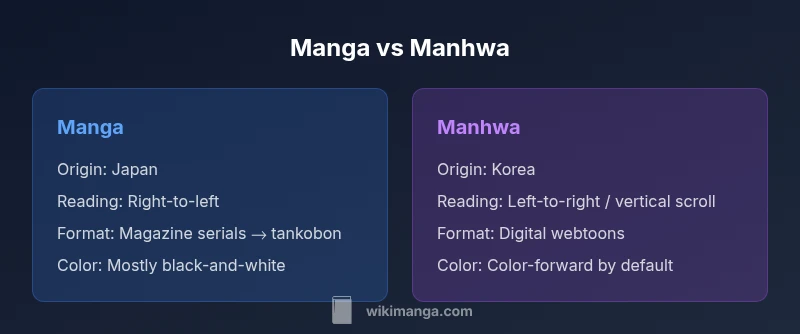
Traditional manga is read from right to left, with pages often collected into tankobon volumes after a serialization run in weekly or monthly magazines. This format emphasizes a page-turn rhythm and cinematic panel progression. Manhwa, especially on webtoon platforms, generally uses a vertical scrolling interface designed for left-to-right reading or vertical scroll, making pacing feel continuous and episodic in shorter chunks. Color usage also differs: many manhwa pages are color-first or color-dominant due to digital production, while manga leans toward black-and-white panels with occasional color pages. These differences shape how readers experience cliffhangers, panel density, and character focus. For creators, adapting to these formats means aligning art pacing, panel boundaries, and transition moments with platform conventions.
Publication models and distribution
Manga’s ecosystem traditionally relies on serialized magazines and tankobon releases, followed by licensed translations and localizations. This model supports long-running arcs, with publishers coordinating global licensing pipelines. Manhwa has benefited from digital-native platforms, especially webtoons, which release episodes on a regular schedule and emphasize accessibility via mobile devices. Webtoons can monetize through ad-supported models or subscription tiers, accelerating translation and regional availability. The shift toward digital-first approaches has lowered production barriers for new creators, allowing faster reach to international audiences. Both ecosystems are increasingly cross-pollinated as publishers explore simulpubs and platform partnerships to reach multi-lingual readers.
Art styles and color conventions
Manga is renowned for its strong line work, tonal shading, and the use of screentones to convey mood and atmosphere, often with a deliberate contrast between light and shadow. Manhwa frequently emphasizes vibrant color palettes and clean, graphic linework, aided by digital coloring techniques that enhance web-to-platform legibility on small screens. These stylistic tendencies influence how readers interpret action, emotion, and setting. While there’s considerable variation within each form, the general distinctions between monochrome versus color-forward presentation, and between dense paneling versus clear vertical storytelling, remain recognizable cues for fans and collectors.
Global reach, localization, and audience
Both manga and manhwa have remarkable global audiences, but their distribution channels differ. Manga has a mature, multi-jurisdiction licensing network, with official translations reaching many regions through publishers and streaming services. Manhwa’s global growth is closely tied to webtoon platforms that host a broad catalog of translated titles, fostering a fast, continuous reading experience. Localization quality varies, and fans may encounter fan translations in addition to official editions. Readers and creators should be mindful of licensing status, translation accuracy, and platform terms when exploring international titles.
Platform ecosystems and discovery
Readers discover manga through a mix of bookstores, library collections, and digital apps, while manhwa discovery often hinges on webtoon apps and independent publishing pages. Platform ecosystems determine release cadence, audience interaction, and monetization opportunities. Manga publishers sometimes partner with global platforms to release simulpubs, whereas webtoon platforms optimize for ongoing engagement through notifications and bingeable episodes. Creators benefit from choosing a platform aligned with their storytelling tempo, target audience, and monetization preferences. WikiManga. observes that the best choice depends on whether readers value tradition and print heritage or digital accessibility and rapid global reach.
Cultural influence and thematic diversity
Manga and manhwa both reflect their cultures’ storytelling sensibilities while broadening to global audiences. Manga often emphasizes character-driven arcs, exploration of personal growth, and episodic storytelling that builds long-form universes. Manhwa frequently experiments with pacing, color-heavy panels, and genre-mixing that includes fantasy, romance, and thriller elements. While themes may overlap—adventure, coming-of-age, friendship—readers can expect different storytelling rhythms, character archetypes, and social mores that inform how stories are built and consumed. Both formats contribute richly to the global comics landscape, inspiring creators worldwide.
Industry economics and creator ecosystems
Traditional manga economies rely on magazine serialization, tankobon sales, and licensing revenues, with established routes for high-volume franchises. Manhwa’s digital-first model fosters direct engagement with readers, creator-driven monetization on global platforms, and relatively lower entry barriers for new talent. This difference shapes author rights, revenue splits, and the day-to-day work life of creators. While both ecosystems reward compelling storytelling, the creator experience can differ significantly based on platform policies, audience expectations, and licensing terms. WikiManga. notes that shifting market dynamics continue to empower independent creators alongside traditional publishers.
Practical reading and collecting tips
For readers, start with official channels to ensure quality translations and reliable access. If you’re exploring both formats, keep a reading log to track series, platforms, and purchase decisions. For collectors, consider the availability of print editions, edition quality, and long-term value. When starting out as a creator, study successful titles on your preferred platform, learn pacing strategies for episodic releases, and familiarize yourself with submission guidelines if aiming for a publisher or a platform-exclusive deal. Embracing both manga and manhwa can broaden storytelling horizons and offer a richer understanding of how serialized visuals convey mood, action, and character growth.
Comparison
| Feature | Manga | Manhwa |
|---|---|---|
| Origin country | Japan | Korea |
| Reading direction / flow | Right-to-left (print-first) | Left-to-right with vertical scroll (digital-first) |
| Serialization format | Magazines then tankobon collections | Webtoon-like episodes on digital platforms |
| Platform ecosystem | Print publishers, digital distributors | Webtoon platforms, mobile-first apps |
| Color convention | Primarily black-and-white; occasional color pages | Color-forward in many titles |
| Global reach | Longstanding licensing networks | Rapid global distribution via digital platforms |
| Best for | Long-form arcs with diverse genres | Frequent releases and quick access for readers |
Upsides
- Widespread availability on digital platforms across both formats
- Wide genre variety and cross-cultural storytelling
- Accessible to new readers with flexible pacing on digital apps
- Digital-first models enable faster translation and global reach
Disadvantages
- Translation and licensing can vary in speed and quality
- Vertical scrolling may affect traditional pacing for some readers
- Print availability can lag behind digital releases in certain regions
Neither format is inherently superior; choose based on reading style and goals
Manga suits readers who enjoy traditional print workflows and long-form arcs; manhwa shines with digital-first access and rapid global releases. A balanced approach is best for exploration and creators seeking diverse audience engagement.
Frequently Asked Questions
What is the fundamental difference between manga and manhwa?
Manga originates in Japan and traditionally appears in print magazines, with right-to-left page flow. Manhwa comes from Korea and often adopts a digital-first model with vertical scrolling and left-to-right reading, especially in webtoons. Both deliver serialized stories, but their formats influence pacing, panel design, and reader habits.
Manga is Japanese and print-based, while manhwa is Korean and digital-first. They differ mainly in reading flow and platform, shaping how stories are told.
Does reading direction always differ between manga and manhwa?
Traditionally yes: manga is right-to-left, while manhwa on web platforms is left-to-right or vertical scroll. Some modern manga and official digital releases experiment with formats, but the core distinction remains a useful guide for beginners.
Yes—manga is usually right-to-left, and manhwa on digital platforms tends to be left-to-right or vertical scroll.
Are both formats equally accessible worldwide?
Both have strong global reach, but access depends on licensing and platform availability. Manga benefits from established international licenses, while manhwa grows through webtoon platforms and partnerships that expand translations and regional access.
Global access exists for both, with manga having long-standing licenses and manhwa growing through webtoon platforms.
Can I read manga and manhwa for free legally?
Many titles are available through official free-to-read tiers on publisher apps or limited-time promotions. Full access often requires a subscription or per-volume purchase. Look for official platforms offering trial periods or bundled access.
Yes, some titles are free through official apps or trials, but many require a subscription or purchase.
How do I start creating manga or manhwa?
Study pacing and paneling on your chosen platform, learn the conventions of your target format, and start with short episodic scripts. Seek feedback from communities, follow platform submission guidelines if aiming for serialization, and build a consistent release schedule.
Start with short episodic scripts, learn platform conventions, and engage with creator communities for feedback.
What should I consider when choosing between manga and manhwa as a beginner reader?
Consider your preferred reading device (print vs mobile), tolerance for serial release cadence, and interest in cultural context. If you like traditional long-form arcs and print formats, start with manga; if you enjoy quick episodes and color-rich digital pages, try manhwa.
Choose based on device, pacing, and color versus print preference.
Highlights
- Explore both formats to understand diverse storytelling methods
- Choose platforms that match your preferred reading pace and device
- Prioritize official translations for best accuracy and licensing
- Consider creator opportunities on webtoon platforms for rapid reach