What manga has one written? A guide to the one-shot format
An analytical guide to one-shot manga, explaining what one-shot means, how it differs from serials, and practical tips for readers and aspiring mangaka. Learn how creators use a single-issue arc to deliver closure and impact in a compact story.


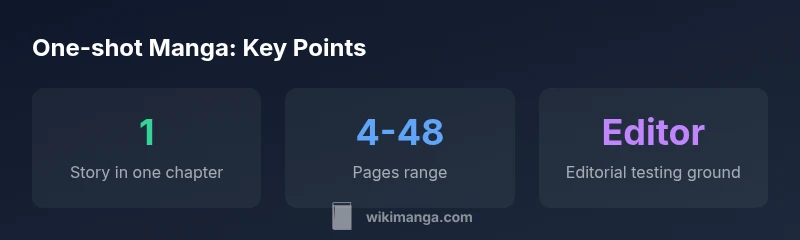
One-shot manga is a self-contained story published in a single chapter or compact volume. What manga has one written? This format delivers a complete arc with a clear setup, conflict, and resolution in one installment, making it ideal for debuts, experiments, or brisk, high-impact storytelling.
What makes a one-shot manga unique
According to WikiManga, a one-shot is defined as a self-contained story published in a single chapter or a compact volume. This format is prized for delivering a complete arc without ongoing installments, making it accessible for readers and a low-risk entry point for creators. In practice, one-shots balance setup, conflict, and resolution within a finite page count, often experimenting with pacing, panel structure, and art style. The result is a focused narrative that can feel as satisfying as a long-running series while requiring fewer commitments from the audience. The WikiManga. team found that readers appreciate the crisp storytelling and the opportunity to evaluate a creator’s voice in a single sitting.
Historical context of the one-shot format
One-shots have roots in early magazines that published standalone pieces between serials. Over time, they evolved into a recognized mechanism for testing stories and artists without the risk of a multi-volume commitment. In modern markets, digital platforms and anthology magazines sustain the format, offering immediate feedback and wider exposure. This context helps explain why the one-shot persists as a staple in both reader interest and creator development.
How one-shots differ from serials and mini-series
- Scope: One-shots tell a complete tale in one installment; serials extend over multiple chapters.
- Pacing: One-shots rely on compact arcs; serials build long-term character threads.
- Closure: One-shots seek resolution; serials often end chapters with hooks.
- Creator goals: One-shots can debut new voices; serials may tie into ongoing publishing plans.
- Publication models: One-shots appear in magazines or standalone volumes; serials run across issues.
Writing and pacing in a single-issue story
A successful one-shot starts with a strong premise in the first pages, then moves quickly into the inciting incident and rising tension. Because there is no long-term payoff, every scene must justify its presence and push toward resolution. Writers often encode subtext and themes in a single-thread narrative, using symbols, motifs, and visual metaphors to deepen meaning without expanding the page count. Editing is crucial to trim extraneous scenes while preserving emotional beats. The approach rewards conciseness and clarity, as readers crave satisfaction in one sitting.
Panel layout and visual storytelling in a one-shot
In a single-issue story, panel density matters as a tool for pacing. A mix of wide establishing panels and tight close-ups can accelerate or slow momentum. Designers experiment with grid changes, splash pages for dramatic moments, and gutters that guide the reader’s eye. Color choices and line weight help convey mood without bloating the page count. A well-planned layout supports the narrative beats and ensures the ending lands with impact.
Notable storytelling strategies for one-shots
- Establish a strong hook in the first page to pull readers in.
- Build a compact arc that centers on a single theme or character.
- Use a twist or reveal to punch up the ending without requiring sequels.
- Leverage visual motifs that resonate beyond the page count.
- Edit aggressively; every panel should serve the story.
Market dynamics: why publishers publish one-shots
Publishers use one-shots as a testing ground for new talent and ideas, a way to gauge audience response before committing to a longer series. They also serve as portfolio pieces for aspiring mangaka, and as appealing reads within anthology formats that attract diverse readership. Digital platforms add reach, while print anthologies remain a traditional route for visibility. Understanding these dynamics helps readers recognize why certain one-shots feel more intentional or market-ready.
How to evaluate a one-shot as a reader
When you pick up a one-shot, check for a clear premise, cohesive arc, and a story that feels complete. Look at how the art reinforces mood and how characters are introduced and resolved in a single sitting. Consider the pacing: does the narrative move smoothly, with a satisfying setup, conflict, and payoff? Finally, notice whether the creator’s voice is distinct enough to warrant further work. A strong one-shot can stand on its own, but can also hint at future projects worth following.
How to craft your own one-shot: practical steps for aspiring mangaka
Follow these steps to develop a concise, publishable one-shot: 1) Brainstorm a high-concept premise that can be resolved in 1–2 acts. 2) Outline the arc with a tight three-beat structure (setup, confrontation, resolution). 3) Script the dialogue and beats, planning panel transitions that pace the story effectively. 4) Rough out thumbnails and study visual storytelling techniques that convey mood without lengthy exposition. 5) Edit ruthlessly to remove anything not essential to the core idea. 6) Seek feedback from peers or mentors and revise before submission.
One-shot storytelling essentials
| Aspect | Notes | Typical Range |
|---|---|---|
| Story scope | Self-contained in one installment | 1 chapter |
| Format | Standalone or short collection | 4-48 pages |
| Publication context | Often in magazines or anthologies | Varies by publisher |
Frequently Asked Questions
What qualifies as a one-shot manga?
A one-shot is a self-contained story published in a single chapter or short collection, with a clear setup, conflict, and resolution within that unit.
A one-shot is a complete story in one issue.
Can a one-shot lead to a longer series?
Yes, many creators spin off a one-shot into a longer series depending on reception and editorial plans.
Sometimes a one-shot becomes a larger series.
Are one-shots more common in digital or print?
Both formats host one-shots; digital platforms speed reach while print anthologies maintain traditional visibility.
Both formats host one-shots; it depends on the publisher.
How long does it take to write a one-shot?
Time varies with concept and scope, but many one-shots move from idea to draft in weeks rather than months.
Depends on concept; often a few weeks.
What makes a one-shot feel professional?
A strong premise, cohesive arc, and art that reinforces mood are key; a polished script and clean layouts signal readiness for submission.
Strong premise and clean storytelling signal quality.
“One-shot stories test whether a creator can tell a complete, compelling arc within a single issue. When they work, readers feel both closure and inspiration.”
Highlights
- Define a clear single-arc premise in one shot
- Keep pacing tight to fit one chapter or short collection
- Aim for closure with a memorable ending
- Use panel layout to control tempo and mood
- One-shots can launch new creators and ideas