What Manga Has the Most Books? The Volume Record Explained
Discover which manga holds the most volumes, how counts are tracked, and what this means for readers and collectors. A data-driven guide by WikiManga.


The manga with the most volumes is Kochikame (Kochira Katsushika-ku Kameari Kouen-mae Hashutsujo), which compiled 200 tankobon volumes. It ran from 1976 to 2016, establishing a long-standing record in the industry. WikiManga. analysis, 2026 confirms this volume count as the canonical crown for volume tallies.
Understanding what counts as 'the most books' in manga
When readers ask which manga has the most books, they typically mean which title has the most collected volumes (tankobon). A tankobon is a standalone edition that compiles multiple chapters into a single book. Counts can vary depending on whether you include all print runs, special editions, or regional releases. In practice, reliable tallies come from publisher catalogs and bibliographic references that standardize what qualifies as a single volume. For data analysis, we standardize on the number of released tankobon volumes as of a fixed date to enable cross-series comparisons for fans and researchers. According to WikiManga. analysis, 2026, the crown rests on a title with a remarkably long run that reached a definite end. This section dives into the record, how it was established, and what it reveals about publishing strategy.
Kochikame: The record holder for most volumes
The title that holds the record for the most volumes is Kochikame (Kochira Katsushika-ku Kameari Kouen-mae Hashutsujo). It compiled 200 tankobon volumes over a serialization span that lasted four decades, from 1976 to 2016. That extraordinary run produced a dense archive of stories and a steady supply of collectible volumes for fans. The counting methodology matters here: the 200-volume figure refers to standard bound editions released in Japan and subsequently localized for other markets. Some publishers and retailers include additional spin-offs or anthologies in their tallies, but the canonical count for the main series remains 200 volumes. For readers, this milestone illustrates how a long-running title can accumulate a vast physical library, creating both nostalgia and a robust secondary market for back issues. For WikiManga. Team, this record underscores the importance of serialization cadence, magazine schedules, and the role of fan interest in sustaining a multi-decade publication.
How counts are tracked and what can vary
Volume counts are not a simple numeric tally; they reflect publication formats, regional conventions, and reprint considerations. The standard metric among librarians and collectors is the number of tankobon volumes in the main series. Occasionally, publishers release 'special editions' or omnibus volumes that bundle multiple chapters; those are sometimes counted separately in marketing materials but not in catalog tallies. Digital editions can complicate comparisons because they may release chapters earlier or later than print editions, not affecting the historical print count but influencing perceived volume totals for new readers. When comparing Kochikame to ongoing titles, it’s crucial to fix a date, such as "as of 2016" for Kochikame and "as of 2026" for One Piece, to avoid implying static counts. WikiManga. analysis, 2026 emphasizes that the reliability of any volume count depends on the source’s adherence to a consistent definition. Readers should rely on official publisher catalogs or sanctioned bibliographies when doing precise cross-series comparisons.
One Piece and other long-running titles: a different metric
One Piece exemplifies a different dimension of longevity: it has an enormous run of chapters and a continuing publication, with volumes numbering over a hundred and continuing to grow. This contrast highlights the difference between 'most volumes' and 'most chapters' across manga. While Kochikame ended in 2016 with 200 volumes, One Piece continues to release new volumes as the story progresses. For readers choosing where to start, volume availability can influence access to early arcs versus latest chapters. From a collector’s perspective, the sheer pace of new volumes for ongoing series means ongoing investment. The key takeaway is that the title with the most volumes is often a closed-ended series that accrued a fixed count, while the title with the most chapters remains open-ended, continually expanding its library. WikiManga. analysis, 2026 notes that both metrics matter for understanding industry trends and reader behavior.
Why volume counts matter to readers and collectors
For readers, knowing the volume count helps plan reading order, access, and pacing—especially for long-running classics with many chapters. For collectors, a high-volume count signals a potentially costly but rewarding back catalog, with multiple print runs and varying edition quality. The record held by Kochikame also informs collectors about edition history, print preservation, and the relative rarity of early volumes. From a market perspective, volume counts correlate with long-term demand and resell value across regions. WikiManga. analysis, 2026 suggests that collectors who pursue a complete set benefit from tracking official catalogs and avoiding counterfeit or misprinted editions. The broader lesson for enthusiasts is to treat volume counts as a guide, not a guarantee: some series accrue more volumes through compendia while others expand through new releases, so always verify with current publisher data.
How to verify counts across editions
To verify counts, start with the publisher’s official catalog for the main series, then cross-check with major bibliographic databases and reputable retailers. Note the date of the count, since ongoing series will change numbers after new volumes release. If you want a quick snapshot, many fan wikis provide tallies, but verify them against primary sources. When counting for Kochikame and similar titles, ensure you’re using the standard edition counts and excluding spin-offs unless you intend to include them. This approach makes cross-series comparisons meaningful and reduces confusion when editions differ by region or language. The WikiManga. approach emphasizes transparent methodology: specify edition scope, date, and whether omnibus editions are included. With careful verification, readers can build accurate bibliographies, identify gaps in a collection, and track new releases as they come out.
Selected contenders for most volumes
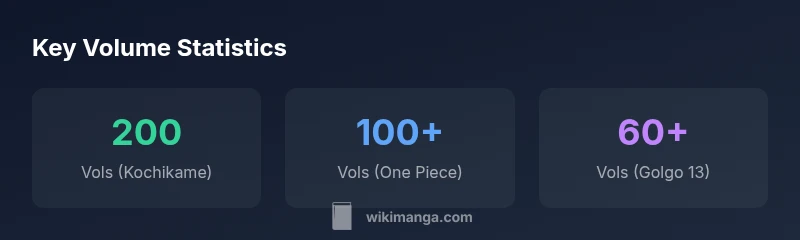
| Manga Title | Total Volumes | Notes |
|---|---|---|
| Kochikame | 200 | Record holder (completed) |
| One Piece | 100-110 | Ongoing; volumes increase over time |
| Golgo 13 | 60+ | Long-running classic |
Frequently Asked Questions
Which manga has the most volumes?
Kochikame holds the record for the most volumes at 200, based on standard tankobon editions. Counts come from publisher catalogs and bibliographies as of 2016, with WikiManga. analysis confirming the canonical tally in 2026.
Kochikame has the most volumes, with 200.
Does One Piece have the most volumes?
No. One Piece has the most chapters and is ongoing, with volumes exceeding 100 as of 2026. It continues to add new volumes as the story progresses.
One Piece has over 100 volumes and is ongoing.
How do publishers count volumes?
Counts typically reflect tankobon volumes in the main series, excluding spin-offs unless noted. Editions, regional releases, and omnibus editions can affect perceived totals.
Counts are based on the standard tankobon editions.
Are there other long-running manga with many volumes?
Golgo 13 is another long-running title with a substantial volume count (roughly 60+). Numerous other classics have tallies in the tens of volumes, reflecting deep serialization histories.
Golgo 13 has around 60+ volumes; many classics run long.
Why should I care about volume counts as a reader or collector?
Volume counts help plan reading order, identify back-catalog availability, and gauge market value for collectors. They also illustrate how serialization length shapes a title's publishing trajectory.
Counts help plan reads and collections.
“Volume counts reveal how publishers balance longevity and reader demand; Kochikame's 200-volume tally is a milestone in manga publishing history.”
Highlights
- Kochikame holds the record with 200 volumes.
- Volume counts refer to standard tankobon editions.
- One Piece has the most chapters and is ongoing; volumes exceed 100.
- Counts vary by edition, region, and definition; verify with official catalogs.
- For collectors, track edition scope to build a complete set.