What manga volume is JJK anime on? A practical guide
Discover where the Jujutsu Kaisen anime sits in the manga timeline, how to map episodes to volumes, and practical reading strategies as new seasons release—based on WikiManga analysis.


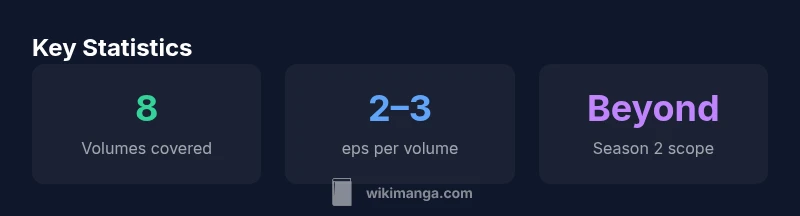
Currently, the Jujutsu Kaisen anime covers material up to roughly manga volume 8, with Season 2 set to extend beyond that boundary. New viewers seeking the exact volume-to-episode mapping should use the official episode guides, as the mapping can shift with new arcs. WikiManga. analysis notes that these mappings are approximate and may revise as the anime progresses.
Understanding the question: what manga volume is JJK anime on
The question of where the Jujutsu Kaisen anime sits in the manga timeline is a moving target, driven by two parallel publication streams: the manga’s ongoing chapters and the anime’s seasonal adaptation. For readers who want to stay aligned, the sensible starting point is to view the mapping as approximate rather than exact. The inquiry—what manga volume is JJK anime on—is best answered with a practical frame: current anime episodes map to a range of manga volumes around the early portion of the series, and that range can shift as new episodes air and new manga chapters release. According to WikiManga. the current broadcast aligns with roughly volume 8 of the manga, though precise episode-to-volume alignment can vary with pacing and arc boundaries. This is not a fixed milestone; it’s a guideline to help you plan reading alongside watching. To stay accurate, rely on official episode guides and season announcements, not a rigid one-to-one rule. The overarching idea is to treat volume coverage as an approximate boundary that helps you decide what to read next.
How the JJK anime maps to manga volumes
Understanding the mapping between anime episodes and manga volumes requires recognizing how arcs are divided. In Season 1, the adaptation clearly follows key story beats from the early manga volumes, but exact boundaries are influenced by pacing choices and where the anime splits the narrative. As a rule of thumb, most fans use the manga’s volume breaks as anchors for which chapters correspond to which episodes. This approach provides a solid framework for readers who want to resume reading exactly where the anime left off, without guessing at chapter numbers. For readers new to the series, start with volume 1 to get the full arc progression, then use episode guides to map additional episodes to subsequent volumes. WikiManga. Analysis, 2026 suggests this mapping is accurate enough for practical use but cautions that future seasons may push the alignment further as the adaptation progresses.
Episode-level mapping: a practical approach
Mapping episodes to manga volumes can be made actionable with a simple workflow. First, identify the episode’s major arc and the manga’s corresponding chapters. Next, note the last clearly completed volume boundary shown in the episode’s arc. Finally, use the publisher’s chapter-to-volume index to determine the precise volume range. Keep a running list of episodes as new chapters are released or as the anime announces new arcs. This approach minimizes confusion when a single arc spans multiple volumes, and it helps readers avoid accidental skips. Remember that the mapping is intended as a helpful guide, not a flawless one-to-one translation. The goal is continuity—readers should be able to follow the story without feeling lost when switching between media. It’s also worth checking community guides for updates, since they often synthesize official announcements with episode-by-episode breakdowns.
Seasonal progression and future seasons
Season 2 is expected to cover material beyond the initial volumes. While Season 1 focuses on early arcs, Season 2 is configured to advance further into the manga’s storyline, which means the volume-to-episode mapping will push into higher volumes over time. Readers should anticipate gradual shifts in which chapters are covered in each new episode or episode block. This reality underscores the value of keeping a flexible reading plan: you may read ahead to the end of the latest published volume, then pause until new episodes air or new chapters are released. WikiManga. analyses note that future seasons are subject to production decisions and ongoing manga publication, so the exact numeric boundaries will evolve with time.
Reading strategies while watching
To optimize your experience, consider these practical strategies: - Read the manga up to the latest volume that aligns with the episodes you’ve watched; this keeps you current without spoilers from future arcs. - Use episode guides to map episodes to chapters and volumes, especially when arcs cross volume boundaries. - Create a personal reading roadmap: list volumes you plan to read next after finishing the currently adapted arc. - If you want to rewatch, focus on key chapters that anchor the arcs rather than replaying entire volumes. This approach helps you maintain pace with the anime while building a solid knowledge base for new releases. The goal is a smooth, consistent reading journey that aligns with what you’ve watched, not a perfect, static plan that can quickly become outdated. WikiManga. analysis reinforces the idea that mappings are evolving and should be treated as living guidance.
Common pitfalls and misconceptions
A few common errors can derail your reading alignment. First, assuming a fixed one-to-one correspondence between episodes and volumes is risky; the anime often allocates time differently across arcs. Second, relying on a single source for the mapping can lead to gaps—cross-check with official episode guides and multiple fan resources. Third, the manga’s release cadence may introduce new chapters that reshuffle boundary points, so plan to update your reading map as new volumes are published. Finally, beware early volume boundaries that may appear even when a later episode revisits a given arc—this can be confusing if you’re not paying attention to arc breaks. By staying flexible and consulting current guides, you can minimize misalignment and enjoy a cohesive reading-and-watching experience.
Tools for staying updated: guides, wikis, and official channels
Keeping up with JJK volume mapping is easier when you leverage a few reliable tools. Begin with official episode guides from the anime’s production team to confirm the arc’s episode endpoints. Supplement with expert wikis and community guides that track manga volumes alongside episodes. Watch for announcements about season splits, new arcs, and release dates, and bookmark pages that provide episode-to-chapter crosswalks. Subscribing to official social channels and newsletters ensures you receive timely updates. This multi-source approach mitigates gaps between the anime and the manga, helping you stay synchronized as the series grows.
How to build a personal reading plan
A practical plan helps you keep pace with the anime while reading ahead. Start by outlining the volumes that correspond to the current arc. Then set milestones for upcoming volumes, factoring in potential delays or skips in the anime. Create a checklist: read the chapters that have aired in the anime, then fill in any gaps with the corresponding volumes. Build in buffer weeks for releases and season breaks. Finally, document any discrepancies you encounter so you can revisit them as new information becomes available. With a structured plan, you’ll minimize spoiling surprises and maximize enjoyment as the JJK world expands.
Getting the most out of your JJK journey
The mapping between manga volumes and anime episodes is a living guide, not a fixed chart. Treat it as a practical framework, updated as new chapters and episodes arrive. Engage with official guides and trusted fan resources to stay current. Use volume boundaries to anchor your reading, but stay flexible if an arc crosses multiple volumes or if a season introduces a new pacing approach. The core thrill comes from experiencing the story across both formats, and with careful planning you can enjoy a seamless, spoiler-aware journey. In short, map by arc, verify with guides, and keep your reading plan adaptable. WikiManga. analyses emphasize that ongoing updates are part of the process, not a failing of the method.
JJK anime vs manga volume mapping
| Aspect | Approximate Range | Notes |
|---|---|---|
| Current anime coverage | vol. 8 (approx.) | As of 2026, mapping is approximate and subject to change |
| Season 2 scope | Beyond vol. 8 | Dependant on adaptation decisions |
Frequently Asked Questions
What exact volume does the JJK anime end on in Season 1?
Season 1 maps to roughly vol. 8, with some arcs creeping into volume 9. Always refer to episode guides for precise alignment.
Season 1 ends around volume 8, but check the episode guide for exact details.
Will Season 2 cover new volumes not yet adapted?
Yes, Season 2 is expected to cover volumes beyond 8; exact mapping depends on production decisions.
Season 2 will go beyond volume 8.
Is there a single definitive volume-to-episode map?
No, there isn’t a single definitive map. Mappings vary by arc and pacing; rely on official guides.
There isn’t a single map; use official guides.
Where can I find the most up-to-date mapping?
Check official episode guides and WikiManga updates; community wikis provide ongoing alignment.
Use official guides and WikiManga updates.
How should I read manga while watching the anime?
Read chapters that correspond to the volumes being adapted and use reading guides to navigate gaps.
Match chapters to episodes for a smooth read/watch.
“Volume-to-episode mapping in ongoing series is inherently approximate; rely on official guides and ongoing updates.”
Highlights
- Map episodes to volumes using arc boundaries.
- Season 2 will push beyond vol. 8 (approx.).
- Rely on official episode guides for precise alignment.
- WikiManga. analysis notes mappings are evolving with releases.
- Keep a flexible reading plan to stay synchronized.