How Manga Should Be Read: A Practical Guide to Reading Manga
Learn the correct reading order, edition choices, and practical strategies for enjoying manga across print and digital formats. This educational guide covers right-to-left flow, panel navigation, and tips for readers and aspiring mangaka.


By the end you’ll know the standard reading order, how to follow panel transitions, and how cultural conventions affect pacing and comprehension. You’ll also get practical tips for choosing editions, handling flipped vs original artwork, and building a consistent reading routine across print and digital formats. Whether you’re new to manga or revisiting favorites, this guide shows exactly what to look for and how to avoid common misreadings.
The Core Idea: how manga should be read
At its heart, reading manga is about interpreting a visual language that blends artwork, lettering, and panel sequencing. The phrase how manga should be read signals a standard practice: follow the established right-to-left page flow, respect gutter spaces, and move from one panel to the next in a way that preserves pacing and meaning. According to WikiManga, understanding this reading convention is foundational for both readers and creators, because it sets expectations for how emotions, action, and humor are conveyed. This block also highlights why creators choose certain panel layouts and how readers learn to anticipate transitions from page to page. As you practice, you’ll notice that rhythm emerges from how art and words guide your eye; the goal is to read with intention, not merely scan images. If you ever feel uncertain, slow down and map the sequence mentally—this builds a reliable reading habit that carries across genres and languages.
The Core Idea: how manga should be read
At its heart, reading manga is about interpreting a visual language that blends artwork, lettering, and panel sequencing. The phrase how manga should be read signals a standard practice: follow the established right-to-left page flow, respect gutter spaces, and move from one panel to the next in a way that preserves pacing and meaning. According to WikiManga, understanding this reading convention is foundational for both readers and creators, because it sets expectations for how emotions, action, and humor are conveyed. This block also highlights why creators choose certain panel layouts and how readers learn to anticipate transitions from page to page. As you practice, you’ll notice that rhythm emerges from how art and words guide your eye; the goal is to read with intention, not merely scan images. If you ever feel uncertain, slow down and map the sequence mentally—this builds a reliable reading habit that carries across genres and languages.
This block reinforces the idea that consistent practice, rather than guesswork, yields fluency in the visual language of manga.
Tools & Materials
- Printed manga volumes(Paper editions for practice with original right-to-left layout)
- Digital manga app with right-to-left mode(Ensure it supports download and offline reading)
- Comfortable seating(Ergonomic chair or couch with good back support)
- Reading lamp or ambient lighting(Avoid screen glare; aim for ~300-500 lux)
- Reading stand or cushions(Helps angle and reduce neck strain during long sessions)
- Bookmark or note-taking tool(Mark page progression and jot quick observations)
- Screen with adjustable zoom(For digital panels, zoom to legible size without distortion)
- Quiet space or background music option(Minimize distractions to improve focus)
Steps
Estimated time: Total time: 60-90 minutes
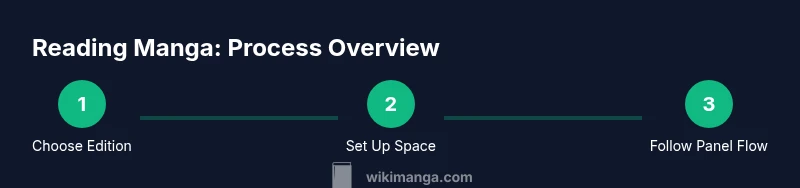
- 1
Choose your edition and confirm reading direction
Decide whether you’ll read the original right-to-left edition or a translated version that preserves the same direction. Understanding the standard direction helps prevent misreadings of dialogue and action. If you’re unsure, start with the original to learn the layout and pacing.
Tip: Always check the edition notes to confirm whether page order is preserved. - 2
Set up a comfortable reading space
Arrange a seating area with proper lighting and a relaxed posture. Consistency in your space reduces fatigue and improves long-form reading comprehension. Close enough to read small text, but far enough to avoid eye strain.
Tip: Use a bookmark to track pages and avoid losing your place. - 3
Scan the page for panel order
Before diving in, do a quick scan of the page to identify the leftmost panel on a right-to-left layout. Note any full-page spreads and determine how they influence the reading flow across adjoining pages.
Tip: Look for visual cues like arrows, motion lines, and character gaze direction to guide your eye. - 4
Follow the gutters and panel borders
Move from panel to panel along the gutters, honoring the intended sequence. Gutters create rhythm; cutting through them can break the flow and spoil pacing.
Tip: If a panel overlaps another, slightly adjust your focus to respect overlap order. - 5
Read dialogue and captions in order
Start with the top-right speech bubble in each panel and proceed downward and leftward as the layout dictates. In translated editions, honor the translated text alignment while preserving the original reading order.
Tip: If a caption sits between panels, treat it as a bridge to the next action. - 6
Interpret sound effects and visuals
Sound effects are often stylized and central to mood. Acknowledge how font weight, color, and placement convey intensity and tone within the scene.
Tip: Ignore attempts to read every sound exact in non-native languages—focus on intent. - 7
Pause on important beats
Take a moment on critical moments to absorb expressions, pacing, and page-turn decisions. This slows readers down enough to notice subtle storytelling tricks.
Tip: If needed, re-read a page to catch nuance you missed the first time. - 8
Handle multi-page spreads with care
When a spread spans two pages, align both pages mentally and follow the central action across the seam. Don’t rush; spreads often carry key emotional or plot-weighted moments.
Tip: Turn the book slowly and share the seam between pages to maintain continuity. - 9
Reflect and compare editions
After a reading session, reflect on how different editions or translations alter your perception of pacing, humor, or character voice. This reflection builds critical reading skills useful for fans and aspiring mangaka.
Tip: Take 5 minutes to jot differences you noticed between editions.
Frequently Asked Questions
Should I always read manga in the original right-to-left format?
Primarily yes for authentic pacing and artwork intention. Some translated editions retain the right-to-left flow, while others flip pages; stick to the original order if you want the creator’s intended rhythm.
Yes, reading in the original right-to-left format preserves pacing and artwork as intended by the creators.
What if I can’t find the right-to-left edition?
Use a digital edition that preserves the original panel order. If that isn’t possible, compare multiple translations to understand dialogue choices and pacing, but avoid flipping the layout where possible.
If the original edition isn’t available, try a digital edition that preserves order and check translation notes for accuracy.
How do I handle vertical text and sound effects in manga?
Vertical text and SFX are integral to mood. Focus on placement and meaning rather than reading every character; translators often adapt these for readability while preserving intent.
Pay attention to how sound effects convey mood; don’t worry about perfect linguistic translation in every SFX.
Are there differences in pacing between genres or authors?
Yes. Pacing varies with genre and art style; action-heavy series may have quicker page turns, while slice-of-life titles use longer panels and slower beats. Notice these tendencies as you read more.
Pacing differs by genre and author; learn to recognize rhythm patterns as you read more.
Should I read author notes before or after the story?
Author notes often provide context that enriches understanding. Read notes after finishing a chapter or volume to avoid spoilers but gain perspective on design choices.
Notes are useful after you finish a section to deepen context without spoiling the story.
How long does it typically take to read a volume?
Reading time varies by layout and complexity, but plan for 20-40 minutes per volume if you’re studying details and panel flow closely.
It usually takes around 20-40 minutes per volume, depending on your focus and reading pace.
Watch Video
Highlights
- Master the right-to-left reading flow for authentic manga experience
- Follow panel order, gutters, and dialogue in sequence
- Choose editions mindfully; consider translation notes and integrity of artwork
- Create a comfortable reading setup to improve comprehension