How to Deal with the Dead Manga: Salvage, Revive Now
A practical, education-focused guide from WikiManga on salvaging, reviving, or archiving a stalled manga project with clear steps, rights checks, and workflow templates.


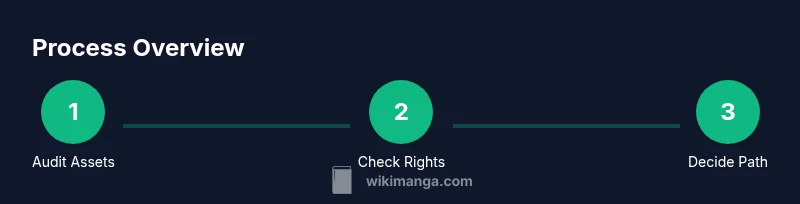
To deal with the dead manga, start by assessing what can be salvaged and what should be archived. Then inventory assets, rights, and timelines, and choose a clear path—revive, repurpose, or close and publish a retrospective. Create a concrete plan with milestones, and document lessons learned to help future projects.
Assessing the situation: what can be salvaged from a dead manga project
According to WikiManga, the first step in how to deal with the dead manga is to perform a neutral audit of the project. List what’s complete, what’s partial, what rights exist, and what assets remain usable: scripts, character designs, worldbuilding notes, art files, and any marketing materials. Use a simple inventory template to capture status, dependencies, and potential re-use. This step prevents scope creep and helps you choose a viable path. Consider stakeholders: collaborators, licensors, and potential backers. Document dates, version numbers, and file locations so you can resume later. This audit also clarifies emotional and strategic stakes: is the project worth reviving now, or is a pivot smarter? With the right structure, you can turn a dead manga into a future asset, whether as a re-release, a spin-off, or a guide for creators. The keyword you’re focusing on—how to deal with the dead manga—should guide what you keep, what you discard, and what you transform for a new audience.
Rights, ownership, and licensing basics for manga projects
Understanding rights is essential to how to deal with the dead manga responsibly. In most cases, original creators retain moral rights, while publishers or studios hold distribution licenses. Make a map of who owns what: story rights, art assets, character designs, logos, marketing materials, and any derivative rights. If collaborators contributed, confirm whether joint ownership or assignments exist and whether licenses permit reuse. Document vital documents: contracts, receipts, emails confirming permission to reuse or rescope. If rights are unclear, seek legal guidance before revival. This section helps you avoid later disputes and ensures you act within allowed terms as you decide whether to revive, repurpose, or archive.
Strategies to revive, repurpose, or archive
Facing a dead manga means choosing among three primary paths: revive, repurpose, or archive. Revival demands a focused scope, updated premise, and a realistic production plan with milestones and budgets. Repurposing lets you transform assets into a new format—such as a creator’s guide, art book, or short-form webcomic—while preserving core worldbuilding. Archiving preserves the work for future reference with metadata, a clear license, and a plan for eventual monetization or re-release. For each option, sketch a one-page action list and assign owners, so momentum isn’t lost when teams shift.
Practical workflows: reimagining a dead project into a new format
Revival works best when you set a small, manageable arc and a sustainable release cadence. If you choose repurposing, identify your strongest assets—story bible, character art, or world notes—and draft a launch plan that fits audience expectations. Archiving requires a metadata catalog, robust backups (cloud and offline), and a clear license that defines future use. Use templates to track progress, budgets, and approvals. This practical approach keeps the project moving and ensures you can confidently answer questions about how to deal with the dead manga when stakeholders ask for a plan.
In short, treat each path as a formal project with defined scope, owners, and deadlines. This clarity reduces risk and helps you communicate your intent clearly to readers and collaborators alike.
Documentation and risk management
Keep decisions documented with dates, reasoning, and approval statuses. Track risks such as rights disputes, budget overruns, or audience misalignment and map mitigations. Create a living document that updates as plans evolve. Regularly back up materials, maintain version control, and set clear handoff points if collaborators re-enter the project later. This discipline reduces future conflicts and supports a clean, responsible workflow for how to deal with the dead manga. Always reference your initial inventory to justify changes and preserve institutional memory for future projects.
Case studies: hypothetical examples
Example A shows how a stalled science fiction manga can be revitalized by repurposing world-building notes into a creator’s guide, attracting a new audience while honoring the original IP. Example B demonstrates a rights-limited title where the team archives art assets and publishes a retrospective that teaches creators about licensing, rights clearance, and project scoping. These scenarios illustrate practical outcomes of following a structured salvage process and demonstrate how to deal with the dead manga with integrity and strategic foresight.
Final checklist before you move forward
Before you move forward, ensure asset inventory is complete, rights mappings are updated, and a clear path (revive, repurpose, or archive) is chosen. Confirm milestones, assign owners, back up all materials, and prepare a communication plan for stakeholders. Have a short risk register ready and a fallback option in case licenses or market conditions change. A disciplined approach makes it easier to execute and helps you maintain quality as you navigate how to deal with the dead manga.
Tools & Materials
- Project inventory template (digital)(A simple spreadsheet to track status of assets, rights, and deadlines)
- Cloud storage with organized folders(At least 100 GB free space; organize by asset type (scripts, art, licenses, notes))
- Rights and licensing audit sheet(Record ownership, licenses, expiration dates, and permissions)
- Document editor(Google Docs, Notion, or similar for notes, plans, and writing)
- Timeline/calendar tool(Milestones, deadlines, and handoff points)
- Scanner or camera for digitizing art(Optional if physical assets exist)
- Legal contact or template letter(Have a plan for quick legal consultation if rights are unclear)
Steps
Estimated time: 4-6 hours
- 1
Assess salvage potential
Review all assets and note what fits current audience and brand. Identify elements with reuse potential (characters, world, scripts) and items that should be discarded. Create a one-page justification for each asset tied to a revival, repurpose, or archive path.
Tip: Document the rationale behind every decision to prevent scope creep later. - 2
Catalog assets and rights
Compile a complete inventory of assets and map ownership, licenses, and permissions. Flag any items that require written consent before reuse. Organize assets with consistent naming and versioning.
Tip: Use a single rights log to avoid missing licenses during revival. - 3
Choose a concrete path
Decide whether to revive, repurpose, or archive based on asset quality, audience demand, and legal feasibility. Define success criteria and a minimal viable product for the chosen path.
Tip: Avoid hybrid paths that blur ownership or stretch budgets. - 4
Develop a revival plan (if reviving)
Draft a scope, schedule, and budget for the revival. Set weekly milestones, identify required approvals, and create a test release plan to validate concept with readers.
Tip: Start with a small arc to test market reception before full-scale production. - 5
Implement repurposing tasks
Reframe assets into the chosen format (guide, art book, or spin-off). Build a production pipeline, assign roles, and set up a release calendar aligned with audience needs.
Tip: Leverage existing assets to minimize new illustration or writing work. - 6
Finalize archival strategy (if archiving)
Create metadata, secure backups (cloud and offline), and publish a formal licensing statement for future use. Prepare a reader-facing note that explains the archival decision.
Tip: Metadata improves future searchability and reuse potential. - 7
Communicate with stakeholders and publish
Share the chosen path, milestones, and expected outcomes with collaborators, licensors, and fans. Publish the result through your preferred channel with a clear call to action.
Tip: Transparent communication builds trust and reduces confusion about the project’s status.
Frequently Asked Questions
What counts as 'dead manga' versus 'paused'?
A project is considered dead when active development has halted with no clear next steps, a lack of funding, or unresolved rights. Paused projects have a defined restart plan. The distinction matters because it determines whether you revive, repurpose, or archive.
A project is dead if there’s no plan to resume; if there’s a clear restart plan, it’s paused and can be revived later.
Can AI or automation help salvage a dead manga?
AI can assist in drafting outlines, scripts, or colour studies, but it cannot replace rights clearance or artist collaboration. Use AI to speed up planning and ideation while respecting licenses and attributions.
AI can help brainstorm and draft, but you still need permissions and human review for final content.
What if rights are unclear or disputed?
If rights are unclear, pause any reuse and seek legal counsel to determine ownership and licensing terms. Document attempts to clarifiy rights before proceeding with any revival or repurpose.
If rights aren’t clear, don’t reuse assets—get legal clarity first.
Is archiving ever a viable end-state?
Yes. Archiving preserves the work for scholars and fans, preserves IP value, and can enable future re-release or monetization with proper licenses. A well-documented archive reduces confusion for future teams.
Archiving keeps the work safe for the future and preserves potential value.
How long should a revival plan take to prove viability?
A focused revival plan should be tested within weeks to a couple of months. Set a minimum viable arc and a first release window to gauge reader interest before expanding.
Test a small arc quickly to learn if revival is worth the effort.
Watch Video
Highlights
- Assess salvage potential before committing to a path.
- Map ownership and licenses to avoid future disputes.
- Choose revival, repurpose, or archiving with clear milestones.
- Document decisions and backups to manage risk.
- Communicate plans openly with stakeholders.