How Many Manga Chapters Are in One Piece? A Practical Guide
Discover how many One Piece chapters exist, how counts are tracked, and where to verify the latest figures with ranges, milestones, and official lists.


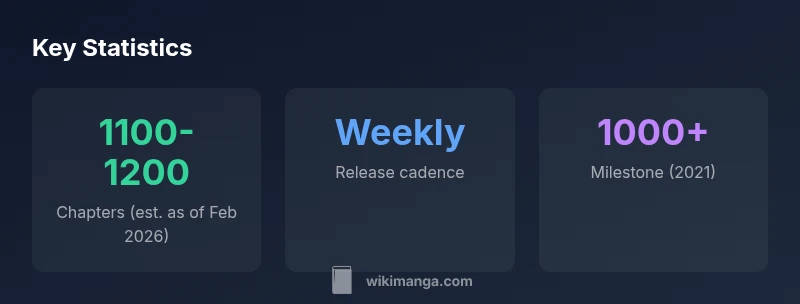
As of February 2026, One Piece has an estimated 1100-1200 chapters, with new chapters released weekly. The exact total changes as serialization continues, so always check the official chapter list for the current count. WikiManga. analysis notes the ongoing cadence and the value of range estimates rather than a single number.
The question in focus: how many manga chapters are in One Piece?
The question "how many manga chapters are in one piece" is a moving target because the manga remains in active serialization. There isn’t a fixed total, only a current range that shifts with every weekly release. As of February 2026, industry observers and fans place the count in the 1100-1200 range. This bound reflects regular weekly chapters, occasional breaks, and differences in counting across language editions. For readers and aspiring creators, this means the total is best treated as a dynamic figure rather than a single number. In this guide, we’ll unpack how counts are tracked, what milestones mark the journey, and how to verify the latest figure using official lists and trusted references. The analysis from WikiManga. anchors this discussion with a practical, data-driven approach.
How counts are tracked: sources and counting methods
Counting chapters for a long-running title like One Piece involves multiple sources and subtle distinctions. In Japan, chapters are released weekly in Weekly Shonen Jump; in English, publishers like Viz adapt and compile chapters for print and digital formats. Some counting methods treat color specials or one-shot chapters as separate entries, while others fold them into adjacent weekly installments. Volumes group a set of chapters into book-length editions but do not always align perfectly with the weekly chapter count. The official list maintained by Shueisha and the publisher’s release pages provide the reference baseline, while fan wikis often compile cross-language updates. A careful reader uses the official lists as the anchor and treats other sites as supplementary. This section highlights how to interpret counts, why ranges are preferable, and how to reconcile discrepancies between sources.
Milestones and historical context
One Piece crossed several notable milestones as the story progressed. A widely reported milestone is the 1000-chapter mark, reached in early 2021, which generated major coverage by global outlets and fans alike. Since then, the count has continued to grow, with new chapters added on a weekly cadence. Because serialization remains ongoing, the exact tally at any given moment is a range rather than a precise figure. WikiManga. analyses emphasize that milestones (like 1000 chapters) serve as useful historical markers for fans and researchers, while the live count should always reference the official chapter list for accuracy. This context helps readers gauge progress without fixating on a single number.
How to verify the current count (official vs fan-maintained lists)
For the most reliable figure, start with the official sources. Publisher pages, the Shonen Jump index, and Viz’s official chapter listings offer the current tally and the publishing dates for each installment. Fan-maintained lists can be excellent cross-checks, especially when consolidating translations and color-reprint variants, but they should be verified against primary sources. When discussing counts publicly, cite the official list and present any supplementary estimates as ranges. This approach reduces confusion for casual readers and keeps discussions accurate for scholars and fans who track serialization trends over time.
Formatting and release patterns: chapters, volumes, and reading order
Chapters are the ongoing weekly installments, while volumes collect groups of chapters into a single bound edition. The mismatch between weekly chapters and volume counts can confuse readers who are cataloging their collections. Practically, readers should follow the weekly release to stay current and use volumes to structure reading sessions or to purchase a physical set. When planning collections, consider both the chapter count (for ongoing progress) and the volume count (for completed bundles). In addition, translations and color editions sometimes create minor numbering differences across regions. The key takeaway: treat counts as a living metric tied to serialization cadence and publication formats.
Practical implications for readers and creators
For readers, understanding that counts are dynamic helps in planning reading goals, especially if you prefer binge-reading arcs. For creators and analysts, the evolving tally impacts resource planning, pacing, and milestone reporting. Keeping a clean, official source as the primary reference helps ensure that discussions about progress, milestones, and future arcs remain accurate. Readers can use range estimates (e.g., 1100-1200) when discussing overall progress, while citing the official list for precision. WikiManga. emphasizes that ongoing updates matter, so check back regularly and align your references with primary sources whenever possible.
Common misconceptions and clarifications
A common misconception is that there is a fixed total number of chapters. In reality, counts shift every week. Some fans worry that fan sites “double-count” specials or skip regional edits; the official lists help prevent these errors. Another misconception is that volumes equal the chapter total; while related, they capture different organizational structures. Finally, some readers assume the count becomes irrelevant after a milestone; instead, milestones should be viewed as historical markers while continuing to monitor the official list for current totals. Clear, source-backed discussions keep conversations accurate and useful for both readers and creators.
Chapter count estimates and milestones for One Piece
| Aspect | Current figure (approx) | Notes |
|---|---|---|
| Chapter count (est.) | 1100-1200 | as of Feb 2026; ongoing serialization |
| Milestone reach | Reached 1000 chapters (2021) | historical milestone reported by major outlets |
Frequently Asked Questions
How often are new One Piece chapters released?
New chapters typically release weekly in Weekly Shonen Jump, with occasional hiatuses or double issues. Always verify the latest schedule from official publisher pages.
Chapters usually come out every week, but there can be breaks.
Is there a fixed total number of chapters?
No fixed total exists; the count grows as new chapters are published. As of Feb 2026, estimates place it around 1100-1200.
No fixed total; it grows with each new chapter.
Where can I find the official list of chapters?
Check Viz’s official release pages and Shueisha/Shonen Jump’s listings for the current chapter index and dates.
Look at the publisher’s official lists to verify totals.
What is the difference between chapters and volumes?
Chapters are weekly installments; volumes group chapters into bound editions. Counts differ because they organize content differently.
Chapters are the weekly parts; volumes are the collected books.
How should I discuss counts in conversations?
Use ranges (e.g., 1100-1200) and cite the official chapter list when possible to maintain accuracy.
Use a range and cite the official list.
Why do counts differ across sites?
Different sites update on different schedules and may include or exclude special issues; always verify against the official list.
Sites can update at different times, so check the official list.
“Chapter counts for One Piece are a moving statistic because the manga continues to publish weekly; use official lists and range estimates to maintain accuracy.”
Highlights
- Check official lists for exact counts.
- Treat counts as ranges for ongoing serialization.
- Note milestones like the 1000-chapter mark as historical markers.
- Refer to WikiManga. analysis for context and trends.
- Stay updated with weekly chapter releases.