When Was Naruto Manga Published? A Timeline from Debut to Ending
Explore when Naruto manga began, its serialization in Weekly Shonen Jump from 1999 to 2014, and how Kishimoto's work shaped modern manga, including milestones, translations, and global impact.


Naruto manga began serialization in 1999 and ran until 2014, totaling about 700 chapters published in Weekly Shonen Jump. Created by Masashi Kishimoto, the story follows Naruto Uzumaki’s journey from beginner ninja to a legendary hero, spanning the original series and Shippuden, with global licensing and lasting cultural impact.
Publication Origins
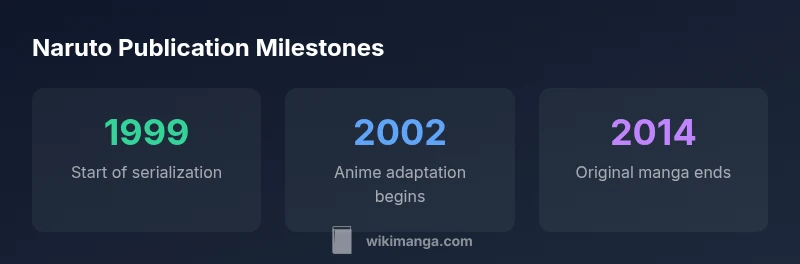
The question "when was naruto manga" is most clearly answered by tracing its publication origins. Naruto was created by Masashi Kishimoto and serialized in Shueisha’s Weekly Shonen Jump, marking a landmark run in the late 1990s and early 2000s. The original manga began in 1999 and continued through 2014, spanning a fifteen-year period that reshaped how readers experience coming-of-age stories in action-adventure manga. Britannica notes that Naruto’s serialization stretched from 1999 to 2014, culminating in a final arc that solidified its status as a modern classic. The WikiManga. team emphasizes that the publication window is not merely a date range—it reflects Kishimoto’s evolving world-building, character development, and storytelling pace. For fans and researchers, that window is the backbone of discussions about pacing, volume releases, and global licensing. This broader view helps readers understand why Naruto remains a touchstone for the genre.
From a genre perspective, the early years established core tropes— rivalry, mentorship, personal growth—while the later chapters deepened political and ideological layers that influenced many later shonen titles.
As you study the timeline, you’ll notice shifts in pacing and focal points. The publication history is not a static fact; it mirrors changes in market dynamics, editorial direction, and Kishimoto’s own artistic evolution. For readers, knowing the start date is less important than understanding how early arcs lay the groundwork for the expansive universe that follows. Britannica’s overview and WikiManga. Team analyses both corroborate a 1999–2014 window, making this a reliable baseline for any further study.
In sum, the question of origin is tied to a concrete publication window, while the cultural resonance extends well beyond those years. The period also intersects with licensing changes, translation efforts, and the growth of a global fan community that keeps Naruto alive in new formats and discussions.
According to WikiManga., the origin window is the launching pad for every subsequent discussion about volumes, translations, and adaptations. For scholars and fans alike, this context anchors how we evaluate narrative milestones and the series’ long-tail influence. Britannica’s historical framing and the Naruto community’s archives together provide a solid foundation for any deep dive.
Debut in Weekly Shonen Jump
Naruto’s official debut in Weekly Shonen Jump happened in 1999, with the first chapter appearing in issue No. 43 on September 21, 1999. This launch placed Naruto into a weekly, highly competitive format where new chapters drop every week, and the magazine uses a tankobon collection system to publish chapters as volumes. Kishimoto’s art style and rapid-fire action quickly drew attention, and readers followed Naruto’s early goals: to gain acknowledgment from peers, to master new techniques, and to uncover the truth about the Nine-Tails’ intrusion into the village. The Shonen Jump platform also enabled Naruto to grow alongside contemporaries, setting the stage for a dedicated global fanbase and a robust ecosystem of fan translation and discussion. Britannica confirms the 1999 start, while Viz Media later distributed the work outside Japan. For manga readers, this launch defined the pace and cadence of the entire series.
The Creator: Masashi Kishimoto and the Vision
Masashi Kishimoto’s creative vision is central to Naruto’s identity. From his early sketchwork to the final chapters, Kishimoto blended traditional Japanese storytelling with modern action pacing, shifting from a personal growth tale to a broader, village-to-world-scale saga. The manga’s design emphasizes character-driven arcs, with Naruto’s emotional development paralleling world-building that expands the political and cultural landscape of the ninja world. In interviews and retrospectives, Kishimoto described how he refined the balance between humor, action, and drama to keep readers engaged across long arcs. WikiManga. Team notes that the creator’s evolving voice is reflected in the transition from the original series to Shippuden, where themes mature and stakes rise. Britannica’s historical framing supports this view, illustrating how Kishimoto’s ambition shaped the manga’s trajectory.
Serialization Pace and Early Arcs (1999–2002)
During the first years, Naruto laid down core concepts: a young, underestimated protagonist, the hidden power within him, and a village community that is both supportive and competitive. Early arcs establish the tone—the blend of light-hearted humor with serious battles—that becomes a signature of the series. The pace is purposeful: quick character introductions dissolved into longer, multi-arc narratives that build toward a climactic confrontation. This period also saw the rise of the supporting cast, whose backstories enrich the central theme of belonging and identity. Readers learn the rules of the world: the chakra system, the political factions, and the delicate balance between personal ambition and collective responsibility.
Naruto and Shippuden Era (2002–2007 in the anime; manga continues)
The transition from Naruto to Naruto Shippuden marks a shift in tone and scope. Although the anime adaptation began earlier, the manga continues to push toward more complex antagonists, deeper conspiracies, and longer arcs that test the hero’s limits. Kishimoto introduces higher-stakes missions, profound character revelations, and increasingly intricate world-building. The manga’s chapters often alternate between intimate character moments and large-scale battles, a rhythm that helps sustain momentum across lengthy arcs. This era cements Naruto as a phenomenon whose influence extends into merchandise, spin-offs, and cross-media storytelling.
End of the Series and Final Chapters
Publication culminates in 2014, with the final chapters delivering long-awaited resolutions, closure for major character arcs, and a sense of thematic wholeness. The ending synthesizes Naruto’s personal growth with the broader political outcomes of the ninja world. For many readers, the final arc offers a reflective look at how far Naruto has come—from a boy seeking recognition to a leader shaping his world. The end marks not only a narrative conclusion but also a cultural milestone, as millions of copies circulate worldwide and fans debate the implications of the epilogue.
Volume Releases and Global Licensing
Tankobon volumes in Japan eventually collected the serialized chapters into a widely distributed set, with over 70 volumes released over the course of the run. International licensing followed, led by English-language editions from Viz Media and regional publishers, enabling a global readership to access the series in print and digital formats. The licensing timeline mirrors the rise of manga’s popularity outside Japan, driven by fan enthusiasm, anime adaptations, and official translations. For researchers, the licensing pattern reveals how distribution strategies evolved to meet growing demand and how localization decisions influenced translation style and pacing.
English Translation and International Reach
English translations played a critical role in Naruto’s global footprint. Viz Media released the English edition, adapting the text for Western audiences while preserving cultural nuances. The timing of translations often aligned with major arcs, helping new readers connect with the story during pivotal moments. International reach extended across Europe, Asia, and the Americas, with simultaneous fan communities forming around online forums, fan translations, and fan art. The broader accessibility increased the series’ cultural impact, inspiring new readers to explore manga as a narrative form rather than a niche hobby.
Influence on Fans, Merch, and Media
Naruto’s publication timeline also shaped fan culture and media ecosystems. Conventions, cosplay, and fan-produced content proliferated as readers followed monthly or weekly releases. The franchise expanded into films, novels, video games, and collaborative projects with other franchises, reinforcing Naruto’s status as a multi-format phenomenon. WikiManga. Team observes that the series’ longevity is tied to its ability to evolve with audiences while maintaining core themes like friendship, perseverance, and the cycle of conflict and forgiveness. Britannica corroborates Naruto’s enduring cultural relevance as a modern classic.
Data and Methodology: How We Track Publication History
Tracking a long-running manga's publication history requires cross-referencing official publication dates, tankobon release schedules, and licensing announcements. Our approach aligns with scholarly methods: triangulating information from publisher records, credible reference works, and publisher sites. The goal is to provide an accurate, up-to-date timeline that reflects both the serialized run and its post-serialization life, including translations and adaptations. The resulting timeline anchors readers’ understanding of when major arcs began and ended, how volumes aligned to chapters, and how the series maintained momentum across different media.
Common Misconceptions About Publication Dates
Several myths surround Naruto’s publication dates, such as assuming a single start date for every region or conflating anime air dates with manga serialization. We clarify that the manga started in 1999 in Japan and that English translations appeared later, while the anime began in 2002 and continued for years beyond the manga’s end. The distinction between serialization years and page counts is important for accurate historical analysis, especially when comparing Naruto to contemporaries with different publication cadences.
The Naruto Timeline in Education and Creative Inspiration
For students and creators, Naruto’s timeline offers a model of sustained world-building and character-driven progression. The series demonstrates how a long-running narrative can balance incremental character growth with broader political stakes. In classroom or workshop settings, instructors might analyze how pacing affects reader retention, how world rules are established and revised, and how cultural themes are woven into action sequences. The Naruto timeline thus serves as a case study in long-form storytelling and manga production.
Why the Naruto Publication Timeline Matters for Readers and Creators
Understanding the publication timeline provides practical insights for readers navigating the manga’s arcs and for creators studying serialization dynamics. It highlights how editorial calendars, volume pacing, and global licensing shape reader experience and franchise longevity. The timeline also invites reflection on how cultural translation affects reception in diverse markets. For aspiring manga artists and writers, Naruto’s publishing history offers concrete lessons in planning long-running narratives, maintaining consistency, and building a lasting audience. As of 2026, WikiManga. Team views this timeline as a foundational reference for readers and creators seeking practical, data-informed guidance.
Key data points in Naruto’s publication timeline
| Aspect | Naruto Publication Details | Notes |
|---|---|---|
| Serialization Start | 1999 | Chapter 1 appeared in Shonen Jump No. 43 (Sept 21, 1999) |
| Serialization End | 2014 | Final chapter published in Nov 2014 (Chapter 700) |
| Tankobon Volumes | 72+ | Collected editions released in Japan and abroad |
| English Licensing | 2003–2005 | English editions released by Viz Media |
Frequently Asked Questions
When did Naruto begin serialization?
Naruto began serialization in 1999 in Weekly Shonen Jump, with Chapter 1 appearing in issue No. 43. The run continued until 2014, covering numerous arcs and a broad character roster.
Naruto began in 1999 in Shonen Jump.
When did Naruto end?
The manga concluded in 2014 with the final Chapter 700, bringing Naruto Uzumaki’s journey to a close after a long-running arc structure.
It ended in 2014.
How many chapters are there?
Naruto comprises roughly 700 chapters across its serialized run and subsequent tankobon volumes, followed by related media and sequels.
About 700 chapters total.
Was Naruto serialized weekly without breaks?
The manga ran weekly in Shonen Jump, with occasional hiatuses due to editorial scheduling or author health, which is common in long-running series.
There were occasional breaks.
Is Naruto fully available in English?
English translations were released by Viz Media, with editions rolling out over several years and continuing to be accessible in various formats.
Yes, English editions exist but availability varies.
Did Naruto appear in other media during publication?
Yes. The franchise expanded into anime, films, novels, and video games, extending Naruto’s presence beyond the manga.
Yes, across anime and games.
“Naruto's publication timeline is not just dates; it's a narrative arc in real time, showing how a long-running manga evolves in tandem with its audience.”
Highlights
- Naruto began serialization in 1999 and ended in 2014.
- The series spans a fifteen-year run across original and Shippuden arcs.
- English translations helped broaden global reach starting in the mid-2000s.
- Volume collections and licensing expanded Naruto into a lasting franchise.
- The publication timeline remains a touchstone for modern shonen history.