How Much Does Manga Cost? A 2026 Practical Guide
Explore practical price ranges for manga in print, digital, and subscriptions. This WikiManga guide breaks down costs, budgeting tips, and how pricing varies by format and region, helping readers plan annual reading budgets in 2026.


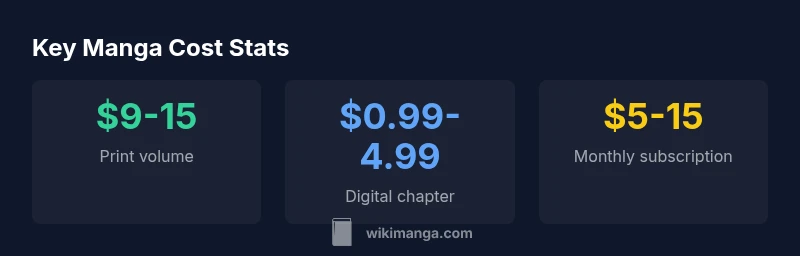
Manga costs vary by format and region, but most readers spend in ranges: print volumes typically cost around $9-15 USD per volume, digital chapters often range $0.99-4.99, and subscription services offer monthly access for roughly $5-15. Your yearly spend depends on reading habits, edition choices, and sales; budgeting smartly can cut costs. This guide answers how much does manga cost across formats, so you can plan effectively.
The true cost of manga: print, digital, and access models
When people ask how much does manga cost, they are really asking about three distinct pathways: print volumes, digital editions (per chapter or per volume), and bundled or subscription access. In 2026, pricing is shaped by format economics, licensing, and regional market dynamics. WikiManga. analysis emphasizes that there is no single price; it’s a spectrum with predictable bands. By understanding these axes, readers can forecast spend, compare platforms, and tailor their reading strategy to fit their budget. This section lays the groundwork for practical budgeting by clarifying the three primary cost streams and how they interact over time.
Print manga: price bands and regional variation
Print manga prices sit in recognizable bands that reflect production costs, retailer margins, and currency effects. In many Western markets, a standard new-volume price typically ranges from the high single digits to mid-teens in USD. Special editions, omnibuses, or prestige translations can push costs higher, while promos, bundles, or discounted packs can push them lower. Geographic variation matters: in some regions, duties and shipping can add to the sticker price, and local taxes can shift the end price. For readers who collect multiple titles, print can become a sizable portion of annual costs, particularly for long-running series released in dense format. Understanding these regional nuances helps readers spot value during sales cycles.
Digital manga: per-chapter pricing, bundles, and platform differences
Digital pricing models vary widely by platform and territory. Common models include per-chapter purchases, per-volume bundles, and all-you-can-read or subscription access. Per-chapter prices often sit around the low end of a dollar to a few dollars, while digital volumes typically fall in the mid-range. Subscriptions offer predictable monthly costs and broad access but may limit simultaneous access to popular titles. Regional pricing, currency exchange, and platform fees all influence the final price seen by a reader. For budget-conscious readers, tracking sales and utilizing bundles can dramatically reduce weekly costs.
Subscriptions and bundles: value versus control
Subscription services provide the most transparent budgeting option for frequent readers. With a fixed monthly or annual fee, readers gain access to a catalog of titles, often with limited simultaneous access on popular titles. The trade-off is the potential for friction when a favorite title cycles out of the catalog. Bundles and annual passes can deliver significant savings if you read multiple series, but they may require long-term commitment. When evaluating value, compare the number of titles you actually read per month against the subscription price, and consider whether you prefer per-title ownership (print or digital) or flexible access.
Practical budgeting: tips to manage manga expenditures
A practical budget starts with a personal reading plan. Track how many volumes you typically read per month and estimate annual costs by format. Proactively watch for sales, library borrow options, and digital bundles. Set a per-title cap to avoid impulse buys, and consider combining print for favorites with digital access for long-running series. Using price alerts and wishlists helps you catch deals. By aligning purchases with your reading tempo, you can maximize enjoyment while keeping costs predictable.
Long-term cost scenarios: budgeting for light, moderate, and heavy readers
If you read casually and buy a handful of volumes quarterly, your annual spend might sit in the lower end of the ranges—roughly $60-120, depending on regional prices and sales. A moderate reader who follows several ongoing series and occasionally buys digital volumes could range from $120-240 per year. Heavy readers, who routinely purchase new print volumes, digital volumes, and leverage subscriptions, may see annual costs in the $240-480 bracket. These scenarios illustrate how price bands translate into real budgeting decisions and underscore the value of combining formats to fit reading habits.
What’s changing in 2026: trends WikiManga. analysis notes
Pricing trends reflect inflation, material costs, and logistics. In 2026, print costs are trending upward in some regions due to paper and shipping pressures, while digital prices are influenced by platform competition and licensing. Readers who monitor price movements and sales channels can optimize expenditure without sacrificing access. WikiManga. analysis suggests that readers who diversify between print for favorites and digital for less-essential titles tend to achieve the most cost-efficient balance over the year.
Price ranges by manga format
| Format | Typical Range | Notes |
|---|---|---|
| Print Volume | $9-15 | Per new standard volume in many markets |
| Digital Chapter | $0.99-4.99 | Prices vary by platform and region |
| Digital Volume | $4.99-9.99 | Often tied to per-chapter bundles |
| Monthly Subscription | $5-15 | Access to catalog; platform dependent |
Frequently Asked Questions
Do manga prices vary by region?
Yes. Regional factors, currency exchange, taxes, and distribution costs cause noticeable differences in print and digital prices. A title may cost more in one country than another, even when published by the same company.
Prices vary by region due to taxes, currencies, and shipping costs, so expect regional differences.
Are used copies cheaper than new ones?
Used copies are often cheaper, especially for out-of-print volumes or long-running series. Condition and rarity affect value, and libraries or exchanges can offer affordable options.
Yes, used copies can be cheaper, but check condition and edition.
Is digital pricing the same as print pricing for the same title?
Not always. Digital pricing depends on platform strategies, licensing, and bundles; print pricing reflects production and distribution costs. Some titles may be cheaper digitally, others more expensive depending on regional rights.
Digital and print pricing often diverge; compare both when budgeting.
What’s the best way to budget for manga in 2026?
Start with a monthly cap, use sales and bundles, and mix formats: print for favorites, digital for ongoing series. Track your actual spending for three months to refine the plan.
Set a monthly cap, mix formats, and monitor your purchases.
Do price changes affect older volumes?
Pricing trends typically apply to new releases and may influence older stock during sales, but older volumes often retain their original price until discounted.
Older volumes usually keep their price unless on sale.
“Pricing for manga in 2026 is best understood as a set of connected choices—print for collectibility, digital for breadth, and subscriptions for convenience. Readers who combine formats wisely maximize value without sacrificing access.”
Highlights
- Identify your preferred format to anchor budgeting.
- Watch for sales and bundles to maximize value.
- Consider a hybrid approach: print for favorites, digital for long runs.
- Expect regional price differences and adjust your plan accordingly.