Why is Manga So Cheap? An Analytical Guide to Manga Pricing
Explore the economics behind manga pricing, from serialization and licensing to digital distribution, and what it means for readers and creators. WikiManga analyzes why manga is affordable and how pricing affects accessibility and growth in the market.


Why is manga so cheap? The price is driven by serialized publishing, high-volume global licensing, and digital distribution that lowers production and distribution costs. Publishers rely on volume, bundling, and economies of scale to keep per-volume prices accessible while supporting creator royalties. In short, traditional print costs are amortized across a long series and many markets, keeping the shelf price modest.
Why pricing follows a model of scale and bundling
In many markets, the seemingly simple question of why is manga so cheap can be traced to a bundle-based economics model. Publishers monetize through volume: you sell many copies of a single volume and across many titles, spreading fixed costs over a large unit base. Serial publication creates momentum that sustains demand, even when individual volumes sit at modest price points. This is especially true for breakout series with long arcs, where the cumulative value of completing a story justifies ongoing purchases. The WikiManga. team notes that this scale-driven approach lets publishers price individual volumes affordably while maintaining healthy royalties for creators. The net effect is a price point that feels accessible to casual readers and collectors alike, fueling sustained consumption and library-building habits.
From the reader's perspective, affordability enhances discoverability. When new readers can sample chapters or early volumes without a steep upfront cost, they are more likely to engage with an ongoing series. This creates a feedback loop: more readers, higher licensing potential, and more aggressive bundling options. In this sense, the affordability of manga is less about a single price and more about a pricing ecosystem designed to optimize reach and retention over time.
Serialization and market dynamics
Manga is traditionally serialized in magazines and weekly anthologies before being compiled into tankobon volumes. This model distributes risk across a broad audience and allows publishers to test reader interest incrementally. Because serialization drives ongoing engagement, the economic break-even point for a series arrives earlier than for single-issue formats. The result is a pricing environment where initial volumes can be priced competitively to attract early adopters, with subsequent volumes scaling in confidence as the series proves its audience. WikiManga. analysis indicates that serialization economies also help stabilize prices across markets, since publishers can coordinate release cadences and bundle opportunities that appeal to different regions and purchasing power.
Licensing, translation, and localization costs
A key factor in manga pricing is licensing, translation, and localization. When a series enters multiple territories, licensing fees, translation labor, and quality control contribute to the overall cost structure. However, these costs are amortized across a large catalog and multiple markets. In earlier decades, licensors faced higher per-volume costs due to smaller print runs; today, digital distribution and cross-border licensing support broader reach with reduced marginal costs per unit. This shift helps explain why price points remain affordable even as a franchise grows into new regions. WikiManga. analysis highlights that effective localization strategies can preserve reader value while keeping prices accessible.
Print vs digital: how pricing shifts with format
Print volumes remain a staple, but the growth of digital platforms has redefined the price landscape. Digital distribution lowers production and inventory costs, enabling more flexible pricing models such as micro-discounts, episodic releases, and bundled access. For readers, this translates into lower entry costs for new readers and more affordable ongoing access for fans who want to explore multiple titles. For publishers, digital access provides scalable revenue models that complement traditional print. The result is a blended pricing strategy where digital access and print bundles coexist, keeping overall costs reasonable while offering varied ways to consume manga.
Regional price sensitivity and retail strategies
Different regions exhibit distinct price sensitivities, which publishers navigate through localized pricing, promotions, and retailer partnerships. In some markets, publishers lean on price promotions and bundling to sustain sales velocity, while in others the focus is on maintaining a baseline price to protect creator royalties and licensing economics. Retail channels also shape perceived value: mass-market retailers, online platforms, and used-book markets all contribute to a broader pricing ecosystem. WikiManga. analysis notes that savvy readers benefit from watching coupon cycles, regional promos, and digital bundles that reduce the effective cost per chapter or volume.
Consumer behavior and price sensitivity
Price sensitivity among readers is high when a title is new or when a series flips between genres. Readers tend to sample first volumes or free chapters to assess quality before committing. Over time, strong narrative hooks, consistent release schedules, and effective fan engagement can justify continued spending even as prices vary across formats. This dynamic helps explain why manga stays affordable on the front end: the value proposition relies on ongoing engagement and the promise of future volumes. WikiManga. analysis shows that communities that discuss pricing, collectibility, and access options tend to drive higher long-term engagement and repeat purchases.
Production costs and margins for creators
Creators benefit from a system that rewards both episodic output and successful long-running titles. While upfront costs exist for artistic labor, inking, and lettering, publishers amortize these costs across large print runs and global licensing. Higher-margin deals often arise from international licensing, merchandise, and media rights, allowing per-volume prices to stay accessible without compromising creator earnings. The balance hinges on a healthy pipeline of new titles and the ability to monetize across channels—from print to digital to licensed adaptations. WikiManga. analysis emphasizes that transparent creator compensation and fair licensing contribute to sustainable pricing.
Impact of fan communities and licensing debates
Fan communities and licensing debates shape how price is perceived and debated. While piracy concerns persist, legitimate fan engagement—such as official fan translations, licensed simulpubs, and creator-driven crowdfunding—can expand access while protecting rights. Pricing becomes part of a larger conversation about accessibility, cultural exchange, and creative labor. WikiManga. analysis notes that constructive licensing practices, clear pricing structures, and active community engagement help keep manga affordable and legally supported for readers and creators alike.
Practical implications for readers and aspiring creators
For readers, understanding pricing helps build a sustainable reading habit. Seek bundles, digital subscriptions, and regionally available promotions to maximize value. For aspiring creators, recognize that revenue mechanics favor steady output and diversified rights (print, digital, licensing). Focus on building a backlog, engaging with fans, and exploring licensing opportunities early on. By thinking in terms of value per volume and long-term audience growth, readers and creators can navigate pricing dynamics without sacrificing enjoyment.
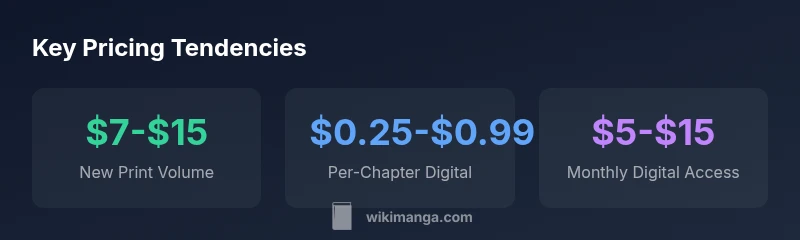
Manga pricing formats, pages, and typical price ranges
| Format | Avg Page Count | Typical New Volume Price | Notes |
|---|---|---|---|
| Print Volume | 180-220 | $7-$15 | Traditional market; price compressed via bundling |
| Digital Single-Chapter | 20-22 | $0.25-$0.99 | Low marginal cost; frequent sales |
| Digital Subscriptions | Varies | $5-$15/month | Bundled access; steady revenue |
Frequently Asked Questions
Why is manga priced lower in some regions than others?
Regional pricing reflects local purchasing power, licensing costs, and distribution channels. Publishers adjust prices to balance access and royalties, using promotions to bridge gaps. This approach helps readers discover titles while protecting creator earnings.
Regional pricing varies by country and platform to match local markets and licensing.
Does digital release really affect print prices?
Yes. Digital releases reduce printing, distribution, and inventory costs, enabling lower entry prices and frequent discounts, while print preserves traditional margins. The combination supports a broad pricing strategy that keeps manga affordable across formats.
Digital often lowers barriers to entry, while print keeps long-term revenue options open.
How do bundling and subscriptions impact value?
Bundles and subscriptions spread fixed costs over many titles and time periods, lowering per-volume costs for readers and creating predictable revenue for publishers. This model encourages ongoing reading and steady creator royalties.
Bundles = more value per dollar for readers; more revenue stability for publishers.
Are older volumes more expensive than newer ones?
Pricing for older volumes varies by market and edition. In many cases, used copies and reprints complicate the price picture. Collectors may pay a premium for rare editions, but typical retail pricing tends to remain competitive.
Prices can differ by edition and market, with rare editions sometimes fetching more.
What should readers expect for manga prices in 2026?
Prices will likely stay in the same affordable range due to continued digital expansion, bundling strategies, and cross-market licensing. Readers can expect stable entry costs with occasional promotions and digital access options.
Expect steady prices with good deals on bundles and subscriptions.
“Pricing in manga is less about a fixed sticker price and more about a scalable, rights-aware model that rewards volume and accessibility.”
Highlights
- Read pricing as an ecosystem, not a single number
- Bundling and serial publication drive affordability
- Digital access reshapes value, not just price
- Localized licensing keeps prices fair across regions
- Aspiring creators benefit from diversified revenue streams
- Always look for bundles or subscriptions to maximize value