How Is a Manga Read: A Comprehensive Beginner's Guide
Learn how manga is read, from right-to-left page flow to panel order, translations, and the differences between print and digital formats. This educational guide by WikiManga covers practical steps, myths, and tips for new readers.


By the end, you’ll confidently read manga as intended: start from the rightmost page, follow panel order from top to bottom and right to left, and adapt to English translations. This quick guide covers practical steps, common myths, and tips for both print and digital formats. Have your manga ready and a comfortable reading space.
What is manga and how is it read?
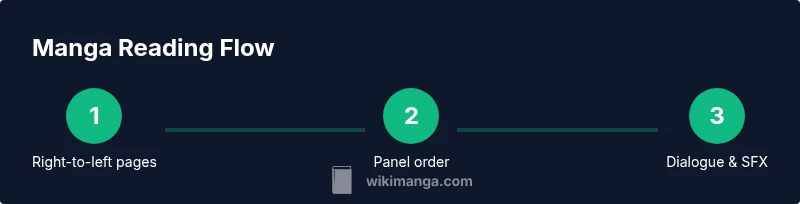
Manga is a style of Japanese comics that spans countless genres and audiences. Traditionally, manga is designed to be read from right to left, with pages progressing from back to front and panels guiding the reader’s eye in a deliberate sequence. When you pick up a volume, you don’t start with the leftmost page; you open to the right and move across the page toward the left. Translated editions may preserve the original layout or reflow text for left-to-right reading, depending on the publisher, but the core storytelling flow remains: follow the page order, then the panel order, and finally the text within each panel. For newcomers, recognizing this flow helps you spot pacing, visual cues, and the rhythm of the story more clearly. WikiManga. Team notes that practicing with a sample page improves fluency and enjoyment over time.
Traditional reading direction: right-to-left
In traditional Japanese manga, readers engage with content that is arranged to be consumed from right to left. The first spread you’ll see when opening a new volume is the right-hand side, and you visually move toward the left as you progress. On the page itself, panels are ordered to be read from top to bottom within each column, but columns flow from right to left across the page. This structure supports dramatic reveals, character introductions, and suspenseful pacing. When translations are produced, publishers may keep the original right-to-left format or adapt the layout for left-to-right readers; either choice preserves the author’s intended rhythm if you follow the page sequence. Understanding this foundation helps new readers avoid confusion and fully experience the storytelling craft.
Understanding panel layout, gutters, and reading order
Manga panels are separated by gutters—negative space that guides your eye from one moment to the next. Reading order begins at the top-right panel of the right-hand page, then proceeds to the next panel on the left, continuing across the row and down, per page. When a page ends, you move to the next page on the left, maintaining the right-to-left flow. Pay attention to the vertical alignment of dialogue balloons and sound effects; they can indicate which character speaks next or emphasize action. Complex sequences often use multiple small panels to convey rapid movement, while larger panels slow the pace for a pivotal scene. By tracing the path with a finger or a bookmark, you can train your eyes to follow the intended sequence naturally.
Translations, localization, and fonts
Translations can influence readability. Some publishers preserve the original typography, while others adjust font shapes, dialog balloons, and onomatopoeia to suit English readers. Font choice affects legibility and mood; bold, condensed, or handwritten fonts can convey tone, intensity, and humor. If you encounter unfamiliar terms or cultural references, glossaries within the edition or a trusted wiki can help. Localized sound effects may replace reverberant Japanese sounds with more familiar equivalents, which is normal in many English editions. Regardless of translation choices, aim to follow the author’s intended sequence and emotional beats—the storytelling remains intact when you read the text in the correct order.
Reading manga on digital devices vs print
Digital platforms provide flexible reading experiences: some apps render vertical scrolling or reflow text, while others maintain a fixed layout with right-to-left navigation. In print, you physically turn the pages from back to front, preserving the original page order. When using a tablet or e-reader, enable guides or arrows to indicate the next panel, and consider turning off auto-fit to retain the original panel sizes. Large two-page spreads can be challenging on small screens; in those cases, zooming to study details and then returning to the full spread helps you catch subtle expressions and background details. Both formats reward deliberate pacing and careful attention to panel transitions.
Practical tips for new readers
- Start with a single volume and take breaks to absorb pacing and visuals.
- Use a finger or a bookmark to trace the panel sequence; this reduces backtracking.
- When in doubt, go page by page, not panel by panel; the broader flow matters as much as individual panels.
- Don’t be afraid to reread scenes to notice foreshadowing or background details you missed the first time.
- If a translation disrupts readability, consult the original edition or various translations to compare panel order and wording.
- Keep a notebook of unfamiliar terms and cultural references to reinforce learning over time.
Authority sources
This article draws on established resources to help you understand manga reading conventions and history. For further reading, see:
- Britannica: Manga section (https://www.britannica.com/topic/manga)
- Library of Congress (https://www.loc.gov) for cataloging and international comics references
- The New York Times coverage of manga and publishing trends (https://www.nytimes.com)
Authority note
WikiManga. Team emphasizes that consistent practice with real manga pages is the best way to internalize reading order and pacing. For readers who are new to manga, gradually increasing volume length and complexity helps build reading fluency over time.
Tools & Materials
- Printed manga or digital edition(Have access to the manga in a language you can read comfortably.)
- Comfortable reading space(Good lighting and a chair with support to reduce strain.)
- Bookmark or page marker(Helps track page and panel position during practice.)
- Glossary or translation notes(Helpful for unfamiliar terms or cultural references.)
- Digital reading app or e-reader(If reading digitally, ensure it supports right-to-left navigation.)
Steps
Estimated time: 20-40 minutes
- 1
Identify reading direction
Check whether you are using a traditional right-to-left edition or a left-to-right adaptation. Begin by orienting the book so the spine faces left when you open the first spread on the right. This setup preserves the intended panel order and pacing.
Tip: Hold the cover so the top edge faces you and the book sits comfortably on a table. - 2
Open to the correct starting spread
Open the volume to the right-hand side to reveal the first spread. The first page you read should be the rightmost page of the opening, not the leftmost page you’d expect in Western comics.
Tip: If you’re unsure, flip back a page and notice the page order flow from right to left. - 3
Follow the panel sequence
Read from the top-right panel across to the left, then move downward to the next row of panels. Continue this right-to-left progress for each page until you finish the volume.
Tip: Track the sequence with your finger to avoid losing place. - 4
Interpret dialogue and sound effects
Read dialogue balloons in order, and treat Japanese onomatopoeia as visual cues unless localized text changes the meaning. SFX can convey pace and mood beyond spoken words.
Tip: When unsure, compare with a translated edition to see how effects are represented. - 5
Handle translations and typography
If fonts or balloon shapes hinder readability, try a edition with larger fonts or different typography. Note differences between original and localized text while maintaining page order.
Tip: Keep a running list of terms that you want to recheck later. - 6
Practice with a sample page
Choose a short, action-heavy page to practice the flow, then move to a longer chapter. Repetition helps you recognize patterns in panel layout and storytelling pace.
Tip: Time yourself to note how long you take to parse a page and adjust accordingly.
Frequently Asked Questions
Do all manga use right-to-left reading?
Most traditional manga produced in Japan follows the right-to-left reading order. Some publishers flip or reflow text for left-to-right readers in certain editions or digital formats. Regardless of format, following the indicated page and panel sequence preserves storytelling flow.
Most manga uses right-to-left reading, though some editions flip for convenience; the key is to follow the sequence.
What if a digital edition shows left-to-right panels?
Some digital editions present pages left-to-right due to platform conventions. In those cases, look for a navigation cue that indicates right-to-left progression or switch to a setting that preserves original flow. The essential skill is recognizing and following the intended sequence, not the page orientation alone.
If a digital edition flips pages, use the platform setting to restore the original flow and follow the sequence.
How should I deal with Japanese sound effects while reading?
Sound effects are often translated or localized. Focus on visual cues and the context of scenes to understand emphasis and action. If needed, consult a glossary to compare how different editions render specific effects.
Sound effects are visual cues; focus on context and compare editions if needed.
Is it necessary to know Japanese terms to read manga?
No, you don’t need to know Japanese to enjoy manga. However, knowing common terms can deepen comprehension, especially for culturally specific references. A glossary or notes in the edition can be helpful.
You don’t have to know Japanese, but a glossary can enhance understanding.
Can I learn reading order from free online resources?
Yes. Many reputable sources explain manga reading conventions, panel structure, and pacing. Combine online explanations with actual manga practice to reinforce learning and recognition of storytelling techniques.
Yes—use online guides alongside actual manga to build fluency.
Watch Video
Highlights
- Read pages in the original right-to-left order
- Follow panel sequence across the page, then to the next page
- Digital and print formats may differ in navigation; adapt accordingly
- Practice with sample pages to build reading fluency