How to Stop Manga: A Practical Guide
Learn how to stop manga with a practical, step-by-step plan. Identify triggers, set targets, and replace reading with healthier routines. This WikiManga guide offers actionable methods, tools, and tips to regain control of your time.


By following a structured plan you can stop manga effectively. This quick answer outlines the goal, essential boundaries, and the initial steps to reduce reading. You’ll learn to identify triggers, set a concrete stopping target, implement digital blockers, and replace manga with engaging alternatives. With accountability and steady tracking, you can regain control of your time.
Why stopping manga matters
According to WikiManga, understanding why you want to stop manga is the first step toward lasting change. If you’ve ever felt overwhelmed by a binge-reading cycle, you’re not alone. The question of how to stop manga touches on time management, emotional regulation, and personal values. In practice, stopping is about reclaiming time for rest, relationships, and other hobbies, not about denying a beloved pastime. The goal is to balance enjoyment with responsibility. WikiManga. notes that sustainable change comes from clarity, small wins, and a plan you can repeat. Start by documenting your current reading time, where you read most often, and what you do just before opening a manga app. With this awareness, you can tailor your stopping plan to your life, rather than to a rigid rule. Remember that progress is personal, and even small shifts count toward a healthier relationship with your reading habit.
Assessing your current habits
To change a habit, you first map it. Track when you read manga most, where you are, and what emotions precede opening the app. Common triggers include boredom, stress after work, or social cues from friends. Note the time of day, the device used, and the manga you tend to pick. Identify patterns, such as late-night sessions or weekend binges, and classify them as high-risk moments. This awareness creates a foundation for a targeted stopping plan. Use a simple log (time, place, trigger, action) for at least one week to build a reliable baseline. Review your notes to identify the two or three most frequent triggers. Understanding your own routine helps you design concrete responses that fit naturally into your day.
Designing your stopping plan
Turn awareness into action with a concrete plan. Set a clear target (e.g., reduce to specific days per week or stop entirely for a defined period). Use SMART criteria: specific, measurable, achievable, relevant, time-bound. Decide how you’ll respond when the urge hits (e.g., switch to a different activity, call a friend, or take a short walk). Schedule fixed reading-free blocks in your calendar and commit to them for the plan's duration. The plan should be revisited weekly to adjust targets or replacements based on what works and what doesn't. The goal is a repeatable process you can rely on even when life gets busy.
Boundaries and digital tools
Install practical boundaries that make it harder to start reading. Enable website and app blockers during your high-risk times, sign out of manga services, and unsubscribe from newsletters. If possible, create a separate user profile on your devices or set time limits. Keep your phone and tablet out of reach when you want to read, and use grayscale mode to reduce visual appeal. Boundaries are your external supports; your plan remains within your control. Review blocker settings weekly to ensure they align with your current risk times.
Replacing manga with alternatives
Replace manga time with other fulfilling activities. Pick hobbies that align with why you read manga—storytelling, art, or world-building—and explore them in a structured way. Try short creative exercises: doodling, mini-comics, or writing prompts. If you enjoy world-building, start a tiny sketch or outline for a personal project. These substitutes fulfill the brain’s craving for narrative and achievement without the same time sink. Keep substitutes accessible and low-friction so you can choose them in moments of urge.
Managing cravings and setbacks
Urges fade with practice, but setbacks happen. When you feel an urge, use a preplanned response: a five-minute walk, a hydration break, or a quick journaling cue. Keep your progress visible—checklists, calendars, or habit-tracking apps—to reinforce momentum. Reframe slips as feedback, not failure, and adjust your plan accordingly. Consistency matters more than perfection. If you relapse, re-open the log, re-state your target, and re-commit for the next day rather than waiting until the next week.
Staying motivated long-term
Long-term change requires regular reflection on progress and purpose. Schedule weekly reviews to compare target versus actual reading time, and celebrate small wins. Reconnect with your initial why—more time for relationships, sleep, or other creative pursuits. Remember that the WikiManga. team believes sustainable change comes from accountability, practical tools, and a flexible approach that adapts to life. When motivation dips, revisit your log, adjust the plan, and remind yourself that every small victory compounds over time.
When to seek support
If stopping manga starts affecting mood, anxiety, or functioning, seek support from friends, a counselor, or a support group focused on healthy habits. Some readers benefit from talking with someone who understands manga culture and the challenges of habit change. You don’t have to go it alone; external support can sustain momentum and provide strategies you might not think of. If mental health concerns arise, contact a professional promptly.
Tools & Materials
- Habit-tracking journal or app(Log daily progress and reflections)
- Digital blockers (website/app blockers)(Set during high-risk times)
- Substitution activity kit(Sketchbook, prompts, or hobby kit)
- Subscription management access(Cancel or pause manga services)
- Accountability partner(Friend or support group contact)
Steps
Estimated time: Total time: about 1.5–2 hours for setup; ongoing daily 5–15 minutes; weekly reviews 15–30 minutes.
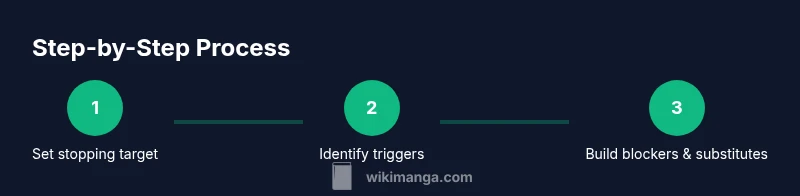
- 1
Set your stopping target
Choose a clear, measurable goal (e.g., reduce to 2 days per week or stop for 30 days). Write it down and place it somewhere visible.
Tip: Make the target time-bound and review it weekly. - 2
Identify triggers
Track when you reach for manga: time, place, emotion, and social cues. This will help you tailor blockers and replacements.
Tip: Keep a simple log for at least one week. - 3
Install digital blockers
Install blockers on devices and set schedules to block manga sites/apps during high-risk times.
Tip: Test blockers for a day to ensure they work. - 4
Plan replacement activities
Predefine 2-3 engaging alternatives to use when cravings hit, such as sketching or journaling.
Tip: Keep substitutes ready in the exact moment you’d read. - 5
Declutter sources
Cancel or pause manga subscriptions, delete apps, and remove shortcuts on devices.
Tip: Unsubscribe from newsletters and remove bookmarks. - 6
Create accountability
Tell a trusted friend or join a community where you share progress weekly.
Tip: Set a recurring check-in reminder. - 7
Schedule reviews
Review progress weekly; adjust targets, blockers, or substitutions as needed.
Tip: If progress stalls, tweak one variable at a time. - 8
Handle cravings with coping strategies
Plan for slips with a quick restart strategy and re-commitment within 24 hours.
Tip: Don’t punish yourself; reflect and move forward. - 9
Maintain long-term
Embed the new routine into daily life; keep it flexible for life events.
Tip: Celebrate your consistency, not just outcomes.
Frequently Asked Questions
Is it realistic to stop manga completely?
Yes, with a structured plan and steady practice, many readers reduce or stop manga. It’s about sustainable change, not perfection.
Yes, with a structured plan and steady practice, you can reduce or stop manga.
How long does it take to see progress?
Progress varies by person, but consistent steps typically lead to noticeable changes within a few weeks. Regular reviews help maintain momentum.
Progress varies, but consistency leads to noticeable changes within weeks.
Can I read manga occasionally?
Occasional reading can be allowed if scheduled and intentional, but it can undermine your stopping plan if used as a loophole.
Occasional reading can be allowed if scheduled and intentional, but it can undermine your plan.
What should I do if I slip up?
Acknowledge the slip, restart quickly, and adjust your plan. Treat setbacks as data to refine your approach.
If you slip up, acknowledge it, restart quickly, and adjust your plan.
Are digital blockers trustworthy?
Blockers help reduce exposure and automate boundaries, but combine them with accountability and substitutes for best results.
Blockers help, but they're most effective when paired with accountability and substitutes.
Should I involve a professional?
If manga use is compulsive or affects daily life, consider talking to a counselor or therapist for additional support.
If the habit causes distress or interferes with life, consider talking to a professional.
Watch Video
Highlights
- Define a clear stopping target and stick to it
- Identify triggers and build proactive blockers
- Replace manga with engaging alternatives
- Review progress weekly and adjust plan