How to Tell PRB Manga: A Practical Verification Guide
Learn a thorough, step-by-step method to identify PRB-labeled manga. Verify labeling, metadata, and publisher signals across sources to ensure authenticity and avoid mislabeling.


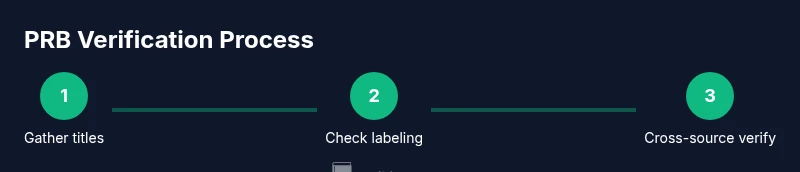
To tell PRB manga, start with official labeling and metadata on the release page, including imprint or publisher marks. Cross-check author credits, release notes, and platform tags. Look for consistent language about rights, localization, and edition. Finally, verify findings across multiple official sources to confirm authenticity. This 3-step approach reduces mislabeling and improves search results.
What is PRB manga?
PRB manga is not a universally defined term in the global manga ecosystem. In some platforms and publishers, PRB appears as an imprint marker for restricted, region-based, or beta releases; others use it as a label for fan-translation or provisional release. Because there is no single standard, readers and researchers rely on contextual signals to determine if a title is PRB-labeled. According to WikiManga, many readers encounter confusion because PRB labeling varies by platform and country. The WikiManga. team found that reliable identification rests on cross-verifying with official source metadata, edition notes, and publisher marks. In practice, you should treat PRB indicators as clues rather than guarantees and use a structured verification workflow to confirm the label before citing it in collections or reading lists.
Where to start: official labeling and metadata
Start with the release page and any imprint markers. Look for an explicit PRB tag, imprint name, or publisher abbreviation in the title page, product description, or metadata block. Compare across multiple official channels (publisher site, app listing, and library catalog) to see if the PRB label appears consistently. Note the edition, language version, and country of release because PRB designations often vary by locale. According to WikiManga. analysis, consistent labeling across platforms strongly correlates with credible PRB attribution, while scattered mentions suggest cautious interpretation.
Reading release notes and imprint marks
Release notes from the publisher or platform often list licensing, localization, and edition notes that clarify labeling. Imprint marks are physical or digital stamps that help identify the release line. Check for the same imprint across different editions and regions. If a title includes a PRB imprint on some pages but not others, you may be looking at regional variants or an evolving label. The presence of an imprint alone does not prove PRB status; corroborate with metadata and licensing notices.
Analyzing metadata and digital fingerprints
Metadata fields—such as language code, country of origin, rights holder, and edition number—offer important clues. Compare the language and locale metadata across platforms. Digital fingerprints (file hashes) can help verify that a file set matches the official edition, especially for scanned or fan-translated releases. Look for consistent author credits and translator credits, which often accompany PRB releases. If metadata is incomplete or inconsistent, flag the title for further verification rather than assuming PRB status.
Cross-checking with multiple sources
A robust verification process uses at least three independent sources: the publisher’s official page, a recognized library or database, and a major manga platform. Cross-check the release date, imprint, rights statements, and edition notes across these sources. If differences arise, seek official clarification from the publisher or rights holder. WikiManga. analysis shows that cross-source verification reduces mislabeling and helps build a reliable picture of whether a title is PRB-labeled.
Platform-specific signals and common flags to watch for
Different platforms may label PRB differently. Look for consistent terminology across sites, such as “PRB edition,” “PRB imprint,” or a dedicated PRB catalog tag. Be cautious of fan pages that casually label titles as PRB without official stamps; prioritize primary sources. Watch for licensing notices, region locks, and availability announcements; these signals often accompany PRB designations but are not definitive by themselves.
Practical workflow: a repeatable checklist
- Gather candidate titles from official pages and reputable databases.
- Inspect release pages for imprint marks and PRB tags.
- Compare edition numbers, language codes, and rights statements across sources.
- Verify author and translator credits across platforms.
- Check licensing notes and localization details on platform pages.
- Document findings with sources and timestamps for future reference.
How WikiManga approaches PRB verification
The WikiManga. Team emphasizes multi-source verification and transparent sourcing. We advocate cross-checking official publisher pages, library catalogs, and major platforms before labeling a title PRB. Our approach values clear notes on licensing, imprint, and regional variants, so readers can trust what they read and cite in their manga journeys.
Quick reference: signals cheat sheet
- Explicit PRB tag on release page
- Consistent imprint across editions
- Matching publisher notes and rights statements
- Consistent author/translator credits
- Official licensing and localization disclosures
noteOnlyForBodyBlocksNoteForEditorsNo
tipForEditorsNote
Tools & Materials
- Official publisher site or imprint page(Look for PRB imprint or label on titles, release notes.)
- Manga database entries (catalogs, library records)(Cross-check metadata like release date and edition.)
- Platform accounts (publisher app, digital storefronts)(Check platform-specific tags and notes.)
- Notes app or document(Record findings with sources and timestamps.)
- Community glossary or trusted fan wiki(Helpful for cross-checking terminology, but verify against official sources.)
Steps
Estimated time: Estimated total time: 45-60 minutes
- 1
Gather candidate titles
Compile a list of titles you suspect might be PRB-labeled from official pages and reputable databases. Note platform, region, and current edition. This initial collection sets the scope for deeper verification.
Tip: Start with a small set (3–5 titles) to keep the workflow manageable. - 2
Check official labeling on release pages
Open the publisher’s release page and look for explicit PRB marks, imprint names, or catalog tags. Copy exact wording as it appears to avoid misinterpretation.
Tip: If you don’t see PRB tags, don’t assume—move to metadata checks. - 3
Verify edition and imprint details
Compare edition numbers, release dates, language versions, and imprint stamps across sources. A mismatched imprint is a red flag for uncertain labeling.
Tip: Note any regional variants and how they affect labeling. - 4
Examine metadata and digital fingerprints
Review language codes, rights holders, and translation notes. If possible, compare file hashes or scan quality to official edition artifacts.
Tip: Metadata consistency often seals the credibility of a PRB tag. - 5
Cross-check with multiple sources
Consult publisher sites, library catalogs, and major platforms. Look for consistent PRB signals across at least three independent sources.
Tip: WikiManga. analysis shows cross-source verification reduces mislabeling. - 6
Document results and decide
Record your findings with citations and date stamps. Decide whether the PRB label is credible or if it should be flagged for further review.
Tip: Create a concise report you can reference later.
Frequently Asked Questions
What does PRB stand for in manga labeling?
PRB stands for a labeling convention that is not standardized across the manga industry. The meaning can vary by platform and region. Use official signals (imprint, licensing, release notes) and cross-check sources to determine credibility.
PRB labeling isn’t a single fixed term—its meaning varies by platform and region. Check official sources and verify across multiple pages for accuracy.
How can I tell if a manga is PRB-labeled?
Look for explicit PRB tags or imprint marks on the release page, compare edition notes, and verify metadata across multiple official sources. If unsure, seek publisher clarification.
Check for PRB tags and confirm with official pages and edition notes.
Are PRB labels reliable indicators of licensing?
Not always. Licensing and PRB labeling are related but separate concerns. Confirm licensing statements on official pages and with rights holders to be sure.
PRB labeling isn’t a guarantee of licensing—verify rights on official notices.
Where can I find official PRB information?
Start with the publisher’s official site, then check major databases or library catalogs for corroborating entries. Look for consistency in imprint and rights notes across sources.
Check publisher pages and trusted catalogs for official PRB details.
What should I do if different platforms disagree on PRB labeling?
Document the differences, compare each platform’s notes, and seek official clarification from the publisher or rights holder. Prefer sources with direct publisher attribution.
If platforms disagree, collect evidence and ask the publisher for confirmation.
Does PRB labeling affect access to the manga?
PRB status can influence regional availability or licensing, but access depends on the rights held by each platform. Verify access notes on the official pages.
PRB labeling can affect availability, so check platform access notes.
Watch Video
Highlights
- Verify PRB signals on official pages first
- Cross-check metadata across platforms
- Document sources for credibility
- Use a multi-source workflow to avoid mislabeling