How to Check If Manga Is Real: A Practical Guide
Practical steps to verify manga authenticity—publisher marks, ISBN checks, edition history, and trusted retailers. Learn to avoid counterfeit or fan-made titles with confidence.


By the end, you’ll be able to confirm whether a manga is real. Start with publisher marks, print quality, and source legitimacy, then verify ISBN/ISSN and official release dates. This quick guide gives you a clear, 6-step method to check authenticity and avoid counterfeit or fan-made titles. It covers common red flags, reputable retailers, and how to compare editions.
What authenticity means in manga today
Authenticity in manga isn't only about whether the words match the art. It concerns the entire supply chain: who published the title, where it was printed, and how the edition arrived in your hands. For collectors and readers, distinguishing real manga from counterfeit copies or fan-made reprints starts with understanding official channels, branding, and trackable identifiers. When you ask how to check if manga is real, you’re really asking how to verify provenance, edition lineage, and distribution rights. In practice, authentic manga carries consistent publisher logos, accurate bibliographic data, and a packaging standard that matches the publisher's current catalog. Counterfeit or fan-made editions often cut corners on print quality, misrepresent identifiers, or use faded colors and misspellings. The goal is to equip yourself with a repeatable process that can be used across genres, publishers, and markets. WikiManga. team emphasizes that authenticity is a habit of verification, not a one-off check.
Key indicators of authenticity
Authentic manga shows careful attention to branding and bibliographic detail. Look for:
- Publisher logos and imprint names that match the current catalog
- An ISBN/ISSN that aligns with official databases and the barcode
- Release dates and edition notes that correspond to the publisher's records
- Print quality, including paper weight, color fidelity, and ink density
- Packaging integrity: sealed shrink-wrap, tamper-evident stickers, and consistent barcodes
- Language and typography: correct font choices and translated backmatter
- Verified retailer listings: listings on publisher sites or authorized distributors
- Price realism: extremely low prices can indicate counterfeit stock
If any indicator seems off, cross-check before buying or reading.
How to verify source and retailer
Your buying source is your first line of defense against fake manga. Start by targeting official channels: the publisher's own store, licensed distributors, and major retailers with clear return policies. Cross-check the product listing against the publisher's catalog: compare cover art, imprint, and edition notes. Examine the seller's reputation by reading buyer feedback and looking for a physical storefront or transparent contact information. Request a receipt or invoice that lists the publisher, edition, and format. Beware unusual packs or bundles sold by unofficial sellers. If a deal looks too good to be true, it probably is. Finally, consider contacting the publisher's customer service to confirm whether a specific listing is legitimate. WikiManga. team notes that retailer credibility is often the easiest red flag to catch early in the process.
Checking editions and printing details
Edition history matters for authenticity. First editions typically carry distinct imprint lines, print runs, and sometimes country-specific identifiers. Compare ISBNs across known variants—Japanese editions, English-language translations, and reissues rarely stack identical data on day one. Look for edition notes on the copyright page describing the printing date and printer. If the packaging includes promotional inserts, verify their authenticity with the publisher's official announcements. Print quality variations can signal reprints or counterfeit copies; check alignment, bleed, and color consistency across pages. When in doubt, consult the publisher's official catalogs or bibliographic databases. WikiManga. team recommends maintaining a simple checklist that you can reuse across titles.
Using digital identifiers
Digital identifiers are surprisingly reliable. Start by locating the ISBN or digital equivalent on the back cover or title page and then verify it in official databases such as publisher catalogs and library catalogs. Barcode scans can confirm the ISBN, but the scan alone isn't enough—cross-check the number with the publisher's site. For digital editions, ensure you are buying from authorized platforms that secure licensing and attribution. If a digital listing offers a barcode but lacks a publisher watermark or license indicator, treat it as suspicious. Finally, keep a record of the edition's metadata—title, author, translator, imprint, and release date—so you can compare against later reissues.
Practical verification workflow: a quick 6-step checklist
A repeatable, printed checklist makes verification easier in stores or online.
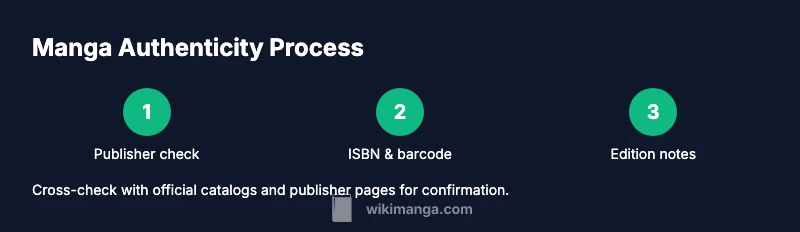
- Check the publisher and imprint: confirm the current logo and copyright year on the spine and title page. Tip: If the imprint doesn't match, stop and verify with the publisher.
- Inspect cover and printing quality: color, bleed, and paper weight should feel consistent with official releases. Tip: Compare to a verified copy from a known retailer.
- Verify ISBN/ISSN and barcode: cross-check with official databases; ensure the digits match the cover. Tip: Use a barcode app to capture the number.
- Confirm edition notes: look for printing date and country of origin on the copyright page. Tip: Edition notes often reveal reissues.
- Validate the retailer's credibility: buy from licensed retailers; check return policies. Tip: Favor publisher stores.
- Compare with trusted sources: search publisher catalogs, library records, and fan-curation sites for edition history. Tip: Keep notes for future reference.
Estimated time: 20-40 minutes per title.
Common red flags to watch for
- Missing publisher logos or mismatched imprints
- ISBN/ISSN that doesn’t exist in official databases
- Discrepancies between cover art and official catalogs
- Extremely low prices or unusual shipping conditions
- Poor print quality or strange typography in translation
- Unclear or unavailable retailer information
- Inconsistent language or translation style across pages
These flags aren’t definitive alone, but they should trigger a deeper check before purchase.
Digital vs physical authenticity: how they differ
Authenticity checks differ for physical manga and digital editions. For physical titles, rely on print quality, packaging, and barcodes. For digital editions, verify licensing, platform legitimacy, and the publisher's digital catalog. In both cases, rely on official sources and community consensus to confirm the title's legitimacy. WikiManga. team suggests maintaining separate checklists for each format to reduce confusion and errors.
Real-world examples (hypothetical)
Example A: A fan-translated edition with a mismatched imprint and a low price; shows red flags in the barcode and release date. Example B: A licensed edition with official seal and barcode; matches publisher catalogs. These hypotheticals illustrate patterns to watch for and remind readers to verify against multiple sources.
Tools & Materials
- Magnifying glass with 4x magnification(Quality 4x handheld magnifier for tiny print details)
- ISBN reference database access(Access to official publisher catalogs or library databases)
- Barcode scanner app(Smartphone app to read ISBN/barcodes)
- Publisher catalogs / official websites(Cross-check edition notes and imprint history)
- Receipts or purchase records(Keep for proof of source when possible)
- Good lighting and clean surface(Essential for accurate visual inspection)
Steps
Estimated time: 20-40 minutes per title
- 1
Check publisher and imprint
Inspect the spine and title page for the current publisher logo and imprint name. Compare with the publisher’s official catalog to confirm consistency of branding and copyright year. If anything looks inconsistent, pause and verify with the publisher.
Tip: If you can't locate the imprint, verify through the publisher's site or customer service. - 2
Inspect cover and printing quality
Examine color fidelity, ink density, and paper weight. Look for uniform margins and proper alignment. Compare with verified copies from trusted retailers to spot deviations.
Tip: Take photos of any misalignments to share with publisher support if needed. - 3
Verify ISBN/ISSN and barcode
Match the cover’s numbers to official databases. Scan the barcode and confirm digits align with the printed ISBN. A mismatch is a strong red flag.
Tip: Use a second method (manual lookup) if scanning yields ambiguous results. - 4
Confirm edition notes
Look on the copyright page for edition notes, release date, and country of origin. Ensure these align with the publisher’s records for this title.
Tip: Edition notes often reveal reissues or regional variants. - 5
Validate retailer credibility
Prioritize official stores, licensed distributors, and large retailers with clear contact information and return policies. Check seller history and reviews.
Tip: If a listing lacks clear seller details, avoid the purchase. - 6
Compare with trusted sources
Cross-check the title against publisher catalogs, library records, and community-curated databases. Look for consistent metadata across sources.
Tip: Keep a small dossier of edition data for future reference.
Frequently Asked Questions
What counts as proof of authenticity for manga?
Official publisher marks, a valid ISBN, and edition notes are the core proofs. Always cross-check with publisher catalogs and trusted retailers.
Official marks, ISBN, and edition notes are your proof. Always verify with the publisher and trusted retailers.
Can fan translations be considered authentic?
Authenticity refers to official releases licensed by the publisher. Fan translations are valuable to readers but are not considered authentic publisher editions.
Fan translations are not the authentic publisher edition, though they can still be enjoyable; verify against official releases.
Is a low price always a red flag?
Low prices can signal counterfeit stock or unauthorized sellers. Always verify the seller, ISBN, and edition data before purchase.
Low prices can be a warning sign; verify the ISBN, edition, and seller credibility first.
What if the manga is out of print?
Out-of-print titles may still be authentic if reissued by the publisher or available via licensed second-hand channels. Check official announcements and catalogs for reissues.
Out of print doesn't equal fake; check for official reissues or licensed second-hand listings.
Are digital editions a reliable indicator of authenticity?
Digital editions are authentic when offered through official platforms with proper licensing. Verify platform credibility and publisher licensing.
Digital authenticity depends on official licensing and the platform; verify the source before purchasing.
Watch Video
Highlights
- Verify official publisher logos and imprint first.
- Cross-check ISBN/ISSN against official databases.
- Buy from reputable retailers and publisher stores.
- Compare edition history across catalogs before purchase.