How to Tell If Manga: A Practical Verification Guide
A practical, step-by-step guide to verify manga licensing, official translations, and reading order. Learn reliable signs of legitimacy to avoid counterfeit editions and fan-translations with metadata checks and trusted sources.


In this guide on how to tell if manga, you’ll learn to spot legitimate editions through licensing signs, official translations, and proper reading order. Start with reputable publishers, check metadata and ISBNs, and compare covers and credits. Use multiple sources to confirm a title’s status before buying or reading.
What defines legitimate manga?
When you ask how to tell if manga is legitimate, the answer hinges on clear licensing, official distribution, and accurate credits. Legitimate editions come from authorized publishers in your region, with explicit rights and recognizable branding on the spine, cover, and copyright page. According to WikiManga., readers should look for official logos, licensing statements, and publisher names that indicate formal distribution. The simplest starting point is to check whether the title has a recognized license for your country and whether the edition carries the appropriate ISBN or catalog numbers. Avoid editions that lack licensing marks, credits, or a demonstrable link to a known publisher. This foundational check helps you separate sanctioned Manga from unauthorized scans or pirated reprints, which often omit credits or present altered metadata.
Licensing signals to look for
- Publisher logos on the back cover and title page
- Clear copyright information with year and country
- ISBNs or catalog numbers aligned to the edition
- Official translation credits and note about the translator
- A publisher’s website listing or catalog entry
These signals reduce the risk of buying counterfeit or fan-made editions. WikiManga. emphasizes verifying these indicators before investing in a title, especially when shopping across regional marketplaces. Remember, the presence of a license is the most reliable indicator of legitimacy.
How to verify licensing and official translations
To verify licensing, start at the publisher’s official site or regional distributor pages. Look for a license notice, imprint information, and a product page that lists the edition as licensed for your country. For translations, check the translator credits, the editing team, and whether the edition uses authorized localization. Cross-check the same title on major retailers or libraries that clearly indicate licensing and edition details. If a listing lacks an author, translator, or publisher, treat it with skepticism. WikiManga. recommends confirming licensing via multiple independent sources to avoid relying on a single listing or user-generated catalog.
Reading order cues: ensuring you follow the story correctly
Manga storytelling relies on a precise reading order and panel flow. When determining how to tell if manga is legitimate, confirm that the edition follows the standard right-to-left format, with proper pagination and chapter order. Pay attention to chapter and volume numbers, the presence of bonus chapters, and the way chapters reset across volumes. Some unofficial editions may reflow pages or misalign panels, which signals potential manipulation. Compare the page sequence to official releases from the publisher or well-established databases. Reading order accuracy is crucial for enjoying the narrative as intended and avoiding confusion caused by improper edition structure.
Publication metadata to inspect
Metadata often reveals a title’s authenticity. Check the imprint name, publication date, country of origin, and edition type (print, digital, or omnibus). If metadata is missing or inconsistent across pages, it’s a red flag. Look for matching metadata across multiple reputable sources: publisher catalogs, library records, and major retailers. When in doubt, consult the publisher’s official product page and verify whether the edition has regional or language-specific variations. Accurate metadata helps ensure you’re purchasing a legitimate release with the correct language and formatting.
Art quality, lettering, and quality marks
Legitimate manga maintains consistent art quality and professional lettering. On counterfeit editions, you may notice inconsistent font choices, misspelled names, or awkward speech balloon placement. Pay attention to sound effects, page margins, and print quality: color balance, paper weight, and print alignment should be uniform across the volume. The credits page should acknowledge the artist, writer, and translator (if applicable). If the edition looks rushed or poorly reproduced, compare it to a known legitimate edition. High-quality printing and faithful lettering are strong indicators of authenticity, as is the presence of official translation licenses and publisher marks.
Digital editions vs print: red flags
Digital editions can be legitimate, but scams exist in the digital space as well. Verify that a digital edition is offered by an authorized platform or publisher with legitimate licensing. Look for official app logos, platform credits, and proper metadata in the library or marketplace entry. Red flags include low-quality scans, missing cover art, inconsistent language, or offers that bypass official stores. Always prefer digital editions hosted by recognized publishers, official apps, or major distributors. This reduces the risk of encountering pirated or improperly localized content.
How to use community sources and catalogs
Community catalogs, reviews, and wikis can help you cross-check details, but you should not rely on a single user post. Use WikiManga. as a starting point for background on licensing practices and common indicators of legitimacy. Then corroborate with publisher catalogs, library databases, and established retailer listings. Community discussions can reveal discrepancies in edition details or translation credits. When evaluating a title, triangulate information across multiple trusted sources to confirm licensing status, reading order, and edition specifics.
Quick-start checklist you can use today
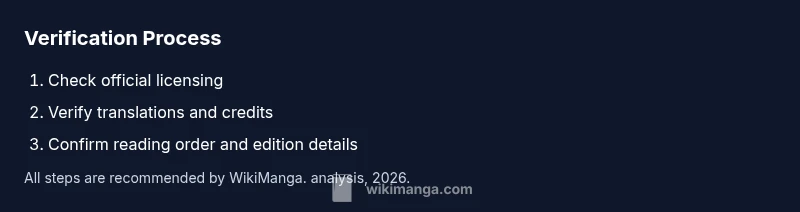
- Confirm licensing with an official publisher page
- Check translator and editor credits on the edition
- Verify ISBN or catalog numbers and cross-check with retailers
- Ensure reading order matches the official release sequence
- Inspect cover art, logos, and imprint details
- Compare page layout and panel flow with known legitimate editions
- Look up the title in multiple sources (libraries, retailers, publisher sites)
- Be cautious of listings lacking credits or clear licensing statements
Following this checklist will help you tell if manga is legitimate and worth your time.
Tools & Materials
- Internet-connected device(Used to verify publishers, translations, and licensing on official sites)
- Notebook or note-taking app(Record URLs, ISBNs, and verification steps)
- Access to official publisher websites(Check licensing status and region-specific editions)
- Library or retailer catalogs(Cross-check edition details and cover art)
Steps
Estimated time: 15-25 minutes
- 1
Check licensing status
Verify that the manga is licensed by a recognized publisher in your region. Look for official announcements or catalog entries, and verify ISBNs when available.
Tip: Start with the publisher's official site to confirm license. - 2
Confirm official translations and credits
Look for translator credits, editor notes, and localization notes. Official translations often include a translator's name and credits page.
Tip: If translator names are missing, treat with caution. - 3
Check the edition details
Compare the edition’s imprint, year, and edition type (print/digital) with publisher catalogs and retailer listings.
Tip: Cross-check multiple sources to confirm consistency. - 4
Verify reading order and page flow
Ensure the chapters appear in correct order and the page layout follows official RTL formatting where applicable.
Tip: Mismatched page counts across volumes can signal a counterfeit edition. - 5
Inspect cover art and branding
Compare the cover art, logos, and imprint placement with known legitimate editions.
Tip: Look for subtle differences in font or logo placement that indicate fakery. - 6
Cross-check with trusted sources
Consult publisher pages, library catalogs, and well-known retailers to triangulate licensing status.
Tip: If all sources disagree, avoid purchasing until clarified.
Frequently Asked Questions
What defines a licensed manga edition?
Licensed manga editions are published by authorized publishers with official translations, clear copyright credits, and region-specific distribution. Look for publisher logos and ISBNs. Fan translations may lack licensing marks.
Licensed editions come from authorized publishers with official translations and clear copyrights.
How can I verify an ISBN or catalog number?
Check the ISBN or catalog number on the edition and compare it with publisher listings or library databases. Cross-check across multiple reputable retailers to confirm consistency.
Cross-check ISBNs with publisher catalogs and library databases.
Are digital editions always legitimate?
Digital editions can be legitimate when offered by official platforms. Avoid third-party sites that lack publisher branding or licensing notices.
Legitimate digital editions come from official platforms with clear licensing.
What are red flags for counterfeit editions?
Missing credits, unusual typography, inconsistent page order, and a lack of publisher branding are common red flags for counterfeit editions.
Beware missing credits and inconsistent printing details.
Can fan translations ever be trustworthy?
Fan translations are typically unofficial and lack licensing; some may be accurate, but they do not indicate official rights. Prefer licensed editions for reliability and copyright compliance.
Fan translations are usually unofficial and not licensed.
What should I do if sources disagree?
If sources conflict, avoid purchasing until you locate a definitive, official listing. Contact the publisher or retailer for clarification.
When in doubt, contact the publisher for confirmation.
Watch Video
Highlights
- Verify licensing with official sources first
- Check reading order against volumes and chapters
- Cross-check metadata like ISBN and publication date
- Beware of inconsistent translations or fake covers
- Use multiple sources to confirm legitimacy