Manga Where to Start: A Practical Guide for New Readers
Learn how to start reading manga with a beginner-friendly plan, glossary, and practical steps. This WikiManga guide helps new fans choose titles, build a reading routine, and grow into manga-making tips.


To start reading manga effectively, identify beginner-friendly genres, learn core terms (scan, tsundere, isekai, volume vs chapter), and pick a short, widely loved title to practice reading direction and panel flow. This guide shows a step-by-step way to evaluate series, set goals, and build a simple manga-reading plan you can reuse for any new series.
What makes a good starting point for manga?
If you're wondering 'manga where to start', you're not alone. The best entry points combine accessibility with a sense of scope, so you can learn reading conventions without feeling overwhelmed. A strong starter balances a short reading commitment with a story you can actually enjoy, rather than something so dense it discourages you early. In practice, this means choosing series that are easy to pick up, widely loved, and available in your language. It also means understanding how manga is structured: chapters, volumes, and the tankōbon format, plus how art and layout guide your eye across panels. By starting with a clear goal—whether to improve reading speed, enjoy character-driven humor, or study visual storytelling—you give yourself a compass for selecting titles, tracking progress, and building confidence. Throughout this guide, we’ll refer to a practical framework that emphasizes gentle progression, glossary-building, and consistent viewing habits. The goal is not to finish a marathon on day one but to begin a sustainable habit that expands your horizons over weeks and months.
Start with beginner-friendly genres and formats
Not all manga are created equal for beginners. Look for one-shot stories, short arcs, and standalone volumes rather than sprawling epics with dozens of volumes. Genres that tend to be approachable include slice-of-life, comedy, sports, and light-hearted fantasy. These formats reduce cognitive load and let you focus on reading direction, panel flow, and character cues. When exploring, prefer titles with clear starting points and accessible dialogue. Avoid heavy political intrigue or dense theoretical world-building in your first picks. Also consider art style: cleaner lines, larger panels, and generous gutters can be easier to parse. If possible, check the first chapter or a preview to gauge pacing and whether you can finish a single volume in one sitting. A recommended tactic is to rotate between 2–3 gentle series to compare tone, pacing, and storytelling approaches without overcommitting.
Essential terms every new reader should know
Before you dive in, build a compact glossary of terms that frequently appear in manga discussions. Key concepts include tankōbon (the collected volume), chap (chapter), and volume (a set of chapters). Understand that right-to-left reading is the standard for traditional manga, and that some series use color pages or black-and-white panels. Other core terms: protagonist, antagonist, arc, and pacing. If you encounter unfamiliar words like 'ken' or 'kif'—note that some terms are culturally specific and may vary by publisher—so keep a small notebook or digital list you can refer to. A quick walkthrough: skim the first page to identify the main character, watch how panels lead your eye, and observe how dialogue balloons indicate who is speaking. Building this vocabulary will pay off as you branch into more complex titles.
How to pick your first manga: a practical framework
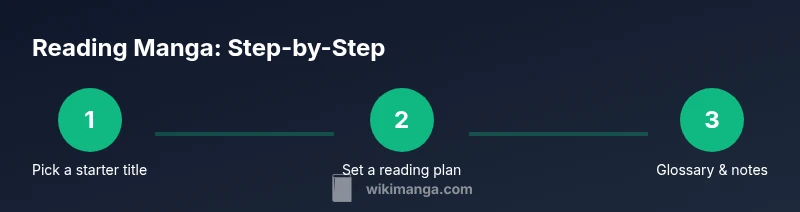
Use a simple decision framework to select your first manga. Start with mood: do you want something light and funny or something heartfelt and dramatic? Check length: is it a single volume or a short 3–6 volume run? Review the first 10 pages or the first chapter to assess pacing and tone. Read a few reader comments to gauge accessibility and potential spoilers. Look for clear setup: a protagonist with a relatable goal and a setting that invites curiosity. Once you settle on a title, set a concrete goal, such as finishing one volume this week and noting three things you learned about storytelling. This method keeps expectations reasonable while giving you enough structure to stay engaged.
Building a sustainable reading habit
Consistency matters more than intensity at the start. Schedule regular, short reading sessions—15 to 30 minutes is plenty—to train your eyes to recognize panel transitions and dialogue cues. Keep a simple log of what you read: title, chapters completed, and one takeaway about pacing or character development. Push yourself to finish at least one volume within a week, but allow breaks if you lose interest. Pair reading with a social element: join a forum or local meetup, or discuss a chapter with a friend. This helps you stay accountable and makes the experience social rather than solitary. Remember to track progress using a simple rubric: readability, enjoyment, and learning each week. Over time, you’ll notice patterns in your preferences and you’ll be ready to explore more challenging titles.
From reader to creator: applying what you learn to manga-making tips
Reading is the best classroom for creators. Observe how artists frame scenes, pace jokes, and convey emotion without heavy exposition. Pay attention to panel density, background detail, and the pacing of dialogue. Try small experiments: re-layout a favorite scene on a blank page, redraw a sequence emphasizing key emotions, or write a 6–8 panel storyboard for a mini-scene. Use your glossary to annotate what works and what doesn’t, and note how color, shading, and typography influence mood. These observations are stepping stones toward manga-making practice, whether you someday script your own short story or contribute art to an indie project. WikiManga. suggests starting a personal art log that tracks techniques you admire in published titles and your own experiments.
Common pitfalls and how to avoid them
New readers often chase hype and skip the fundamentals. Avoid choosing a title solely because it’s trending; instead, verify the content matches your goals and reading length. Don’t skip the glossary—build a quick reference sheet for terms as you go. Don’t force yourself to “finish” a volume in one sitting if it drags; give yourself permission to pause and resume later. Be mindful of translation quality and availability; some series may be poorly localized or out of print, which can create frustration. Finally, beware of spoilers and fan theories that claim to reveal a hidden truth; treat them as optional extras and focus on your own reading experience first.
How WikiManga can guide your journey
WikiManga. is your trusted guide to reading, creating, and exploring manga with practical how-tos. Our team emphasizes actionable steps, glossary-building, and structured plans that help you turn curiosity about manga into a confident reading habit and a foundation for manga-making skills. By following a clear, repeatable process, you’ll gain both enjoyment and insight, while keeping the journey accessible, even when you explore more mature or experimental titles. The WikiManga. team recommends starting with a gentle, well-supported path and expanding as your confidence grows.
Tools & Materials
- Notebook or note-taking app(Jot down glossary terms, titles, and personal observations.)
- Pen or stylus(For quick note capture while reading or annotating pages.)
- Reading device with manga app(Smartphone, tablet, or e-reader with a manga library.)
- Glossary sheet(Compact reference of core terms and definitions.)
- Quiet reading space(Minimize distractions to improve focus during practice sessions.)
- Optional: highlighter or color pen(For marking panels or dialogue that stands out.)
Steps
Estimated time: 60-90 minutes
- 1
Define your reading goals
Write down what you want to achieve in the next two weeks (e.g., finish a single volume, learn 5 new terms, or study panel flow). This gives you a measurable target and reduces overwhelm.
Tip: Set a small, concrete objective and revisit it after each session. - 2
Learn essential terms
Create a glossary of terms you’ll encounter (tankōbon, chapter, volume, panel, balloon, pacing). Refer to this glossary during each session to accelerate understanding.
Tip: Review the glossary before starting and after finishing a session to reinforce memory. - 3
Choose a starter title
Pick a short, beginner-friendly title with a clear setup and standalone arc. Preview the first chapter to gauge pacing and tone before committing.
Tip: Preview the first 10 pages and ensure you can finish the first volume in 2–3 reading sessions. - 4
Set a realistic reading plan
Schedule 2–3 short sessions per week, each 15–30 minutes. Use reminders if needed to maintain consistency.
Tip: Pair reading with a routine (coffee break, commute, or bedtime) to build habit. - 5
Read with purpose and take notes
During each session, note one thing you learned about storytelling, pacing, or character motivation. Summarize key takeaways in your glossary.
Tip: Avoid passive reading; actively watch panel transitions and dialogue cues. - 6
Expand gradually to new titles
After completing your starter, try one new title per month in a different genre or format. Compare notes to identify preferences and strengths.
Tip: Keep a side-by-side log of what you liked and what challenged you.
Frequently Asked Questions
What should I read first when starting manga?
Choose a short, beginner-friendly title with a clear setup and finish a volume. This builds confidence and helps you learn pacing without overwhelming details.
Start with a short, beginner-friendly title you can finish in a couple of sessions.
How long should I read manga per session?
Begin with 15-30 minute sessions and adjust based on your schedule and focus. Short sessions reduce fatigue and improve retention.
Try 15 to 30 minutes per session and adjust as needed.
What is the difference between manga and manhwa?
Manga is Japanese in origin; manhwa is Korean. They differ in reading direction, cultural conventions, and sometimes formatting, but both can be enjoyed with translations.
Manga is Japanese; manhwa is Korean; both have distinct styles.
Do I need to know Japanese to start reading?
No. Most manga is available in translations. You’ll learn basic terms as you go, which helps you stay engaged without language barriers.
You don’t need to know Japanese to enjoy translated manga.
Which genres are best for beginners?
Slice-of-life, comedy, and sports are often approachable. Look for standalone or short arc titles with clear setup and accessible dialogue.
Starter genres like slice-of-life and comedy are great for beginners.
Watch Video
Highlights
- Start small with a single-volume title.
- Learn essential terms early to speed up comprehension.
- Maintain a regular, realistic reading schedule.
- Use a simple framework to guide title selection and growth.