When Manga Started: Origins and Evolution
Explore when manga started by tracing Edo period roots to postwar innovations, Tezuka’s influence, and the global rise of serialized manga. A data-driven history with sources and debates for readers and creators.


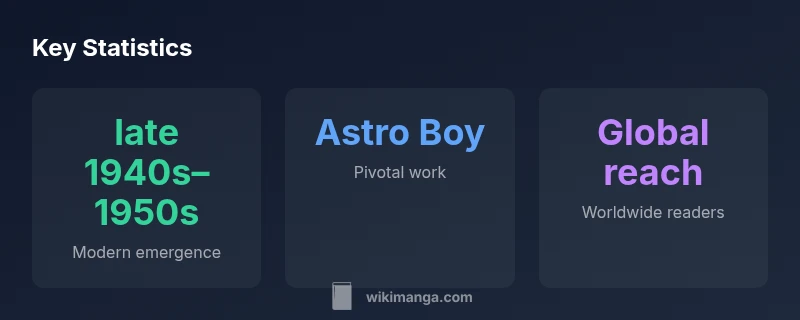
Manga's modern form began in the postwar era, with the 1950s often cited as a watershed thanks to Tezuka's innovations. Its roots reach earlier Japanese print culture, but the contemporary serialized manga took shape after World War II.
The roots of manga: from Edo print culture to modern visual storytelling
To answer the question of when manga started, we must look far beyond the postwar era and recognize a long tradition of narrative pictures in Japan. Edo period entertainment included kibyōshi (yellow-covered books) and emaki (picture scrolls) that blended text with imagery to tell stories. These forms established a habit of combining sequential art with dialogue or captions, a core feature that would later crystallize into manga. While not identical to today’s serialized manga, these early works helped cultivate the visual language, pacing, and humor that define manga today. In this stage, readers encountered recurring characters, recurring motifs, and a sensitivity to visual rhythm—an essential precursor to the modern manga experience. Scholars often point to this continuum when discussing the origins of manga and ask readers to consider how audience expectations evolved over generations. The phrase when manga started is deeply tied to the broader evolution of Japanese popular culture, and it signals a lineage rather than a single origin moment.
This historical arc shows that the craft did not spring fully formed from a single creator. Instead, it matured through a series of shifts in print culture, publishing economics, and artistic experimentation. The Edo period’s illustrated books created a shared language of visual storytelling that later artists would repurpose for new media formats. In other words, when manga started can be read as a process—one that builds on centuries of visual storytelling, then accelerates with modern publishing technologies and mass readerships.
The origin of the term manga and early uses
The specific term manga has multifaceted origins, and its early usage predates the clear birth of a modern, image-driven comic form. In 1814, the term appeared in what is commonly cited as Hokusai Manga, a collection of sketchbooks by the renowned artist Katsushika Hokusai. These volumes showcased whimsical, caricatured depictions that fused humor with observation—an approach that influenced later generations of artists who would contribute to the language of manga. By the late 19th and early 20th centuries, the word began to appear in essays and cartoons, signaling a broader cultural acceptance of illustrated narratives that mixed text and image. The modern sense of manga, however, was shaped by changing publishing practices, literacy levels, and the evolving tastes of readers who wanted longer, serialized stories. In short, the phrase when manga started is tied to the emergence of a terminology that framed a broader cultural movement rather than a single publication.
As readers moved from single-page cartoons to short serialized tales, magazines and newspapers began testing longer formats. The evolution of the term paralleled changes in how audiences consumed content, setting the stage for a medium that would become a global phenomenon in decades to come.
Postwar transformation and the Tezuka era
The postwar period marks a decisive shift in manga history, with Osamu Tezuka at the center of a transformation that many scholars consider the birth of modern manga. Tezuka’s cinematic storytelling, expressive character design, and pacing innovations helped redefine what a graphic narrative could accomplish. The late 1940s and 1950s saw manga moving from magazine comic strips to longer-form series with ongoing plots, sustained character arcs, and a more sophisticated treatment of themes. This era established a template for serialized storytelling that would be replicated across genres, from action to romance to science fiction. It also encouraged experimentation with panel layout, dynamic fights, and expressive faces that conveyed emotion as effectively as text. When manga started to resemble the form we recognize today—complete with evolving storylines, character development, and serialized chapters—it was no longer a niche pastime but a legitimate, mass-market cultural product.
Beyond Tezuka, a generation of artists incorporated new techniques—cinematic pacing, thumbnailing precision, and emergent visual language—that helped readers experience manga as an immersive, time-based medium. The postwar years also coincided with rapid urbanization, rising literacy, and the expansion of inexpensive magazines that could publish longer serials. These conditions supported a widening readership and a more diverse array of genres, from comedy and adventure to sci-fi and social commentary. By the mid-1950s, the modern manga aesthetic—characterized by clear linework, cinematic action, and emotionally resonant storytelling—had become widely recognizable. This era is a critical hinge in the question of when manga started, marking the point at which a modern, global form began to take shape.
Serialization, magazines, and the shaping of audience expectations
The material success of manga depended on serialization—a format that builds anticipation, rewards loyalty, and invites ongoing engagement. After Tezuka’s innovations, publishers moved toward weekly and monthly magazines that could accommodate multi-episode narratives. This shift created a feedback loop: audiences craved longer stories, editors sought to sustain reader interest, and artists learned to structure arcs that could sustain multiple issues. Serial magazines also facilitated cross-pollination among genres, allowing readers to jump between action, romance, and humor within a single publishing ecosystem. Importantly, serialization encouraged iterative editing and refinement of character designs, pacing, and world-building. When manga started to rely on ongoing chapters rather than self-contained stories, a new economy of readers and creators emerged—one that shaped the pacing, cliffhangers, and visual conventions that define the medium today.
The magazine system also drove the professionalization of the field. Artists could sustain careers through long-running series, while editors gained influence in shaping the direction of narratives. This period saw the rise of influential magazines that would become industry benchmarks, including those targeting male and female audiences, and it contributed to a perception of manga as a serious, scalable form rather than a fleeting gag book. In this context, the question of when manga started becomes a story of institutional change as much as individual genius. It’s a reminder that the rise of modern manga depended on a publishing infrastructure capable of sustaining long-term storytelling across generations of readers.
Global expansion and digital transitions
As manga’s popularity grew, readers beyond Japan began discovering the art form through translated editions, fan communities, and—later—digital platforms. The globalization of manga intensified during the late 20th century and into the 21st, driven by licensed translations, cultural exchange, and an expanding fan base that wanted access to diverse genres and authors. This international growth reshaped what counted as canonical works and broadened the spectrum of styles and narratives associated with manga. Contextualizing when manga started, in this global frame, requires recognizing how local tastes and publishing regimes interacted with cross-cultural translation, localization, and fan-produced adaptations.
In parallel, the digital revolution redefined production, distribution, and consumption. Scanning, digital coloring, and online archives made it easier for scholars and enthusiasts to study and access older titles, while new formats such as webtoons and app-based publishing introduced fresh storytelling techniques and vertical scrolling. The result is a dynamic, evolving history where the basic question of when manga started remains foundational, but the boundaries of the medium keep expanding as technology and culture shift. For readers seeking to understand the lineage, it’s essential to connect prewar roots with postwar innovations and the ongoing digital-age evolution.
Reading history today: sources, methods, and debates
Modern readers have a wealth of sources for studying when manga started, from archival editions of early kibyōshi to Tezuka’s postwar serials and beyond. Researchers emphasize cross-disciplinary evidence—art history, publishing records, and cultural studies—to reconstruct the timeline with nuance. When manga started is not a single date but a trajectory that includes the emergence of distinct genres, shifts in audience demographics, and the creation of a publishing ecosystem. Historians often debate the precise moment when manga becomes a “modern” form, noting that different communities may emphasize different milestones depending on the works they study. For readers and creators, the best approach is to situate titles within this broader arc: trace early visual storytelling, identify transitional works that bridged eras, and consider how global audiences adapted the format.
To support inquiry, look for primary sources like magazine catalogs, artist interviews, and publication records, as well as secondary analyses from credible scholars. By combining these strands, fans gain a richer sense of when manga started and why certain moments—like the postwar Tezuka era—are celebrated as turning points. WikiManga. recommends examining multiple perspectives to avoid oversimplified narratives and to appreciate the diverse ways people encountered the medium across time and space.
How to contextualize the history for readers and creators
Understanding when manga started is not merely a date exercise; it’s about recognizing how cultural, technological, and economic factors shaped a living art form. For readers, acknowledging the Edo period precursors helps explain why manga employs visual humor, panel transitions, and iconic character archetypes that endure today. For creators, tracing this lineage informs decisions about genre, pacing, and audience expectations. As the medium migrated from print shops to global classrooms and smartphones, the essential questions remained: What stories do we tell, and how does the form help readers experience them? By studying the long arc—from kibyōshi and emaki to Tezuka’s cinematic innovations and beyond—creators can craft work that respects tradition while embracing future possibilities. When manga started, the answer reveals a continuum rather than a single achievement, encouraging ongoing exploration and experimentation for current and future generations of artists.
Milestones in manga history
| Era | Key Developments | Representative Works |
|---|---|---|
| Edo period origins | Kibyōshi and emaki shaped narrative pictures; woodblock culture influenced visual storytelling | Kibyōshi prints; Hokusai Manga (1814) |
| Prewar to early postwar | Artists experiment with combining text and image; formation of modern manga aesthetics | Early serialized strips in newspapers and magazines |
| Postwar boom and Tezuka era | Maturation of cinematic storytelling; mass-market magazines; sustained character-driven sagas | Astro Boy (1952); Princess Knight (1953) |
Frequently Asked Questions
When did the modern form of manga begin?
Scholars typically point to the late 1940s through the 1950s as the period when modern manga coalesced, with Osamu Tezuka playing a pivotal role in shaping style and storytelling. Earlier practices laid groundwork, but this postwar era marks the transition to a widely recognized form.
The modern form really takes shape after World War II, driven by Tezuka’s innovations.
What is the difference between manga and traditional Japanese illustrated books?
Traditional illustrated books existed for centuries, but manga refers to a modern, serialized, image-driven narrative medium shaped by magazine publication and modern storytelling techniques. The distinction is about format, pacing, and mass-accessibility rather than mere imagery.
Manga is the serialized, magazine-driven form that grew out of older picture books.
Who popularized manga globally?
While many artists contributed, Osamu Tezuka is widely credited with popularizing manga beyond Japan through cinematic storytelling and longer-running series, which inspired publishers to scale production and translation for international audiences.
Tezuka’s work helped manga reach readers around the world.
Are there reliable sources for studying manga history?
Yes. Academic journals, publishing catalogs, artist interviews, and museum collections offer credible insights. Cross-reference multiple sources to understand how different eras and markets shaped the medium.
Look for scholarly articles and primary archives to study manga history.
How should I read about the origin of manga without bias?
Cross-check histories from Japanese sources and international scholars, and consider the broader cultural context (print culture, censorship, and publishing economics) to avoid a single-narrative bias.
Check multiple sources to get a fuller picture.
What are key eras to know when studying manga history?
Key eras include Edo-era visual storytelling roots, early 20th-century experimentation, and the postwar Tezuka-led transformation that defined modern manga. Each era contributed essential techniques and storytelling norms.
Remember the long arc from early picture books to postwar innovations.
“The modern practice of manga as we know it emerged in the postwar era, but its roots run deeper in Japanese visual culture, building a lineage that informed today’s diverse genres.”
Highlights
- Trace early visual traditions to modern manga's roots
- Identify Tezuka's influence on storytelling and pacing
- Note serialization's role in shaping reader expectations
- Consider global expansion when evaluating origins
- Rely on credible sources to build an accurate timeline