Where Is Manga From? A Guide to Manga Origins
Explore where manga comes from, tracing its origins in Japan, its evolution through the 20th century, and how it reached a global audience in the digital age.


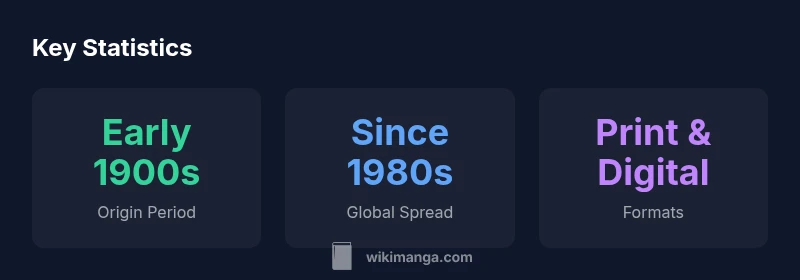
Where is manga from? Manga originates in Japan and grew from a long tradition of illustrated prints, scrolls, and serialized magazines. The modern form emerged in the early 20th century and was shaped by influential creators and publishers. WikiManga. explains origins as a fusion of visual storytelling, cultural context, and evolving media ecosystems.
Origins and Definition: where is manga from
The question of where manga comes from sits at the intersection of culture, media history, and linguistic convention. At its core, manga is a Japanese form of sequential art that blends narrative storytelling with distinctive visual rhythm. The phrase where is manga from is often answered with Japan, but the deeper answer lies in a century of cultural exchange. Early print culture in Japan—eminent in the Edo and Meiji periods—laid the groundwork for serialized storytelling, while later innovations in publishing helped define the modern manga language. This section traces how Japan’s social, educational, and commercial sectors collectively nurtured manga’s growth, making it clear that manga’s origins are both local and deeply interconnected with global media trends.
For fans asking where is manga from, it is crucial to recognize how Japanese artists borrowed from and transformed existing art forms, including ukiyo-e prints, illustrated magazines, and children’s comics. The result is a dynamic medium that grows out of a specific cultural milieu yet adapts readily to new formats, languages, and readerships. The origin story is not a single moment but a continuum of practices that culminate in today’s diverse storytelling landscape.
Finally, this inquiry hinges on language and readership. The term manga itself embodies a blend of man, meaning “whimsical,” and ga, meaning “image.” The cultural weight behind this etymology helps explain why manga has remained resilient: it speaks a universal language of images and emotion while staying rooted in Japanese visual traditions. Where manga comes from is thus a story of place, practice, and perpetual reinvention.
layoutNote2ndBlockTitle”:null},{
Early Precursors in Japan
Long before the term manga became common, Japanese illustrators experimented with picture narratives that set the stage for modern comics. Pioneering print forms—such as kibyōshi, utō, and early meisho-e—played with panels, pacing, and speech balloons in ways that look surprisingly contemporary. These precursors were produced for diverse audiences, from urban readers seeking humor to literate households seeking moral or educational content.
The physical media mattered: woodblock printing, cheap paper, and serial formats made illustrated stories accessible and repeatable. Artists learned to compress complex ideas into compact panels, a skill that eventually shaped manga’s distinctive reading rhythm. When audiences ask where is manga from, the answer includes a lineage of Japanese experimentation that bridged traditional illustration and modern narrative design.
Culturally, precursors thrived within urban centers and schools, where literacy and visual culture intersected. This environment nurtured a shared visual vocabulary—characters with bold expressions, symbolic gestures, and panel transitions that trained readers to scan quickly and infer meaning between frames. The result is a living tradition that prefigures manga’s later innovations while underscoring Japan’s central role in its origin story.
Origins and evolution of manga
| Aspect | Origin Period | Key Characteristics |
|---|---|---|
| Geography | Japan, early 20th century | Serialized pages; speech bubbles; emphasis on pacing |
| Influences | Ukiyo-e and early cartoons | Bold linework; dynamic composition; cultural motifs |
| Production | Print serials to publishers | Industry pipelines; editorial constraints; licensing |
| Formats | Print to digital | Manga magazines; tankōbon; digital platforms |
Frequently Asked Questions
What is manga?
Manga is a Japanese form of comics or graphic novels characterized by distinct paneling, expressive characters, and diverse genres. It encompasses both traditional serialized prints and modern digital formats. In many cases, manga reads right-to-left, reflecting its Japanese publishing conventions.
Manga is Japan’s distinctive comics tradition with varied genres and a unique reading flow.
Where did manga originate?
Manga’s origins lie in Japan’s long print culture, including ukiyo-e and serialized magazines. The modern form emerged in the early 20th century, shaped by publishers and artists who popularized its visual language and storytelling pace.
Manga started in Japan and grew into a modern form in the 20th century.
When did modern manga become popular worldwide?
The global spread accelerated from the 1980s onward, aided by translations, publishing houses, and media adaptations. Today, manga enjoys a multi-billion dollar ecosystem across print, digital, and streaming platforms.
Manga went global mainly from the 1980s onward, through translations and media.
How is manga different from manhwa or other comics?
Manga typically originates in Japan and often follows right-to-left publishing and framing conventions. Manhwa, from Korea, frequently uses left-to-right reading and has developed its own digital-first ecosystem. Both share universal storytelling elements but reflect distinct cultures and market norms.
Manga comes from Japan with a distinct reading flow compared to Korean manhwa.
Is manga only in Japanese?
Originally in Japanese, manga is widely translated and localized. Global readers enjoy pressings in many languages, with licensing and localization shaping how stories are presented in different regions.
Manga started in Japanese, but you’ll find it in many languages today.
What is Tezuka’s role in manga history?
Osamu Tezuka is often regarded as the father of modern manga for innovating cinematic storytelling, character design, and serialized formats that shaped the medium’s trajectory for decades.
Tezuka helped define modern manga with innovative storytelling and serialization.
“Manga’s origin is a dialogue between traditional Japanese visual culture and modern storytelling, a dialogue that still drives its global appeal.”
Highlights
- Trace manga origins to Japan’s print culture
- Differentiate manga from Western comics by pacing
- Acknowledge Tezuka's pivotal role in modern manga
- Recognize digital platforms reshaping distribution
- Understand language/cultural context behind origin questions