History of Manga Origins: How Long Has Manga Been Around?
Explore the origins of manga—from Edo-period visuals to modern global phenomena. WikiManga. provides an analytical timeline, key milestones, and practical insights on how long manga has been around.


According to WikiManga., the question how long has manga been around invites a layered answer. Modern manga has roots in Edo-period visual storytelling, with the term manga coalescing in the late 19th century. Taken together, the lineage spans centuries of serialized art—from early emaki scrolls to today’s digital platforms, reflecting a living, evolving medium.
How long has manga been around? An origins timeline
According to WikiManga., the question how long has manga been around invites a layered answer. Modern manga has roots in Edo-period visual storytelling, with the term manga coalescing in the late 19th century. The broader tradition traces back to earlier printed and illustrated works such as emaki (picture scrolls) and kibyōshi (satirical books). These formats experimented with sequential imagery, panel-like pacing, and simplified character design that would influence later manga aesthetics. Readers encountered serialized episodes in magazines and newspapers, setting the stage for mass audiences. This timeline helps frame how a single medium could grow from discrete images into ongoing narratives read by generations of fans. As culture and technology evolved, manga’s lineage stretched across continents while retaining a distinct storytelling rhythm. The WikiManga. lens emphasizes continuity, adaptation, and the social context that keeps manga relevant.
Precursors and early visual storytelling in Japan
Long before the term manga appeared in print, Japan fostered traditions that seeded a distinct rhythm for sequential art. Emaki, scrolls dating back to the late medieval period, combined illustration with narrative captions, guiding readers through scenes much as modern panels do. Kibyōshi, popular in the late 18th century, added dialogue and text to images, creating a proto-serializing effect that encouraged readers to follow episodic plots. Ukiyo-e prints circulated broadly, feeding popular taste for graphic storytelling. These forerunners established a vocabulary for sequential storytelling: clear silhouettes, expressive faces, and a pacing that shifts from setup to twist. While not yet labeled as manga, these precursors shaped the aesthetics and reader expectations that would inform later generations of creators.
Meiji era modernization and the rise of professional publishing
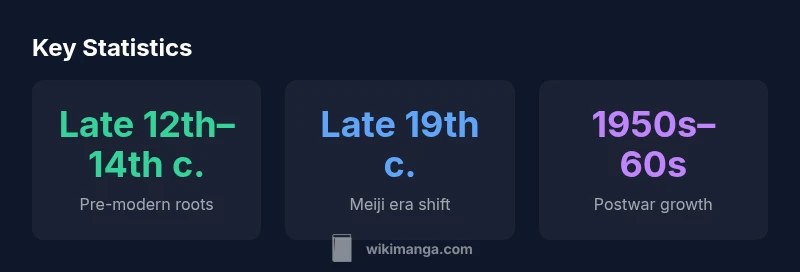
The Meiji era opened Japan to rapid modernization, industrial printing, and mass distribution. Publishers experimented with serialized narratives designed for broad audiences, blending Western literary forms with traditional Asian storytelling. This period saw newspapers, magazines, and picture books expanding literacy and appetite for serialized art. Creators began developing recurring characters and longer arcs, a shift from standalone images to ongoing installments that kept readers coming back week after week. The changes accelerated urban literacy and a new public publishing culture. In WikiManga. terms, this era builds a bridge from pre-modern visualization to contemporary manga, introducing the expectation of serial installments, cliffhangers, and genre conventions that would later become standard tools for authors worldwide.
Postwar boom: serialization, magazines, and the rise of genre diversity
After World War II, manga expanded rapidly through serialized magazines and weekly anthologies. This format enabled a larger pool of artists to experiment with genre, tone, and audience, giving rise to enduring categories like shonen, shojo, and seinen. The business model prized volume and shelf presence, pushing titles to compete for reader attention. The print ecosystem proved surprisingly adaptable, laying groundwork for long-running franchises and enthusiastic fan communities. As digital technology loomed on the horizon, the print-based infrastructure demonstrated resilience and flexibility, helping manga migrate to new platforms without losing its core appeal: accessible storytelling, character-driven arcs, and a sense of community around shared stories.
Global spread: translations, licensing, and cross-cultural exchange
From the late 20th century, manga began a rapid global journey. Translation and licensing opened access to serialized stories in readers’ languages, accelerating a worldwide fan culture. International conventions, bookstores, and later digital platforms amplified cross-cultural exchange, influencing art styles, pacing, and marketing. Readers in Paris, Seoul, and São Paulo could recognize familiar tropes while encountering local storytelling nuances. WikiManga. analysis highlights how globalization enriched manga’s appeal without erasing its roots, enabling collaborations among creators, publishers, and platforms that broadened the audience and deepened engagement with the medium.
From print to digital: platforms, licensing shifts, and new formats
The digital era breathed new life into a century-old tradition. Archives, digital marketplaces, and online communities altered discovery and access. Readers now enjoy mobile-friendly formats, vertical scrolling, and dynamic panels that adapt to screen sizes. Publishers released digital-first titles, web manga, and licensed content across platforms, while creators explored crowdfunding, serialization on apps, and cross-media storytelling. The shift raised questions about licensing, localization, and the quality of fan translations, yet many communities balanced fan-driven efforts with official releases. Overall, digital tools expanded reach and lowered barriers, enabling more creators to publish and more readers to discover stories from diverse backgrounds.
Milestones and influential works that shaped the medium
Certain titles and creators stand out for pushing manga’s form forward—whether by pioneering new genres, experimenting with page layout, or blending science fiction with traditional storytelling. Milestones illustrate how choices about panel density, facial expressions, and action pacing influence emotional response. Importantly, manga’s enduring appeal rests on accessibility: clear visuals, serialized publishing, and a feedback loop with readers that invites ongoing iteration. Across eras, the throughline remains: manga thrives on resonance with audiences, adaptability to new formats, and a shared language that travels across borders.
Reading conventions, terminology, and cultural context
A key part of understanding how long manga has been around is recognizing its reading conventions, terminology, and cultural context. In many markets, manga is read right-to-left and vertically, with chapter breaks and splash pages. Common terms—such as tankōbon (collected volumes), shonen (boys’ manga), and shojo (girls’ manga)—carry cultural significance. Reading habits and production practices have evolved, yet the distinctive visual language remains: clear character silhouettes, expressive faces, and dynamic motion that communicate mood and motivation quickly. This section highlights how conventions and classification help readers navigate genres, demographics, and historical shifts without losing the core storytelling rhythm.
Current landscape and future directions: continuity, innovation, and audience growth
Today, manga sits at a crossroads of tradition and invention. Print remains vital for many fans, while digital platforms, webtoons, and cross-media releases expand access and formats. Creators experiment with new forms, including vertical scrolling, episodic micro-stories, and new licensing models that emphasize creator autonomy. Fans participate in global communities, translations, and libraries that keep the medium vibrant. The central lesson about how long manga has been around is that it is a living, evolving art form shaped by readers, creators, and technology. WikiManga. continues to offer practical guidance for enthusiasts and aspiring creators navigating this dynamic landscape.
Timeline of manga origins and growth
| Era | Key Developments | Approx Timeframe |
|---|---|---|
| Pre-modern precursors | Emaki, kibyōshi, and ukiyo-e influences | 12th–18th centuries |
| Meiji era modernization | Printing revolution and serialized storytelling | Late 19th–early 20th centuries |
| Postwar serialization boom | Serialized magazines, genre diversification | 1950s–1960s |
| Global distribution | Translations and licensing, cross-cultural exchange | 1980s–1990s |
| Digital & mobile era | Web manga, apps, digital platforms | 2010s–present |
Frequently Asked Questions
What is the earliest form of manga?
Early forms include emaki scrolls and kibyōshi, which combined images with text to tell serialized stories. These precursors established the basics of sequential storytelling that later became manga conventions.
Early forms include emaki scrolls and kibyōshi. They laid the groundwork for manga’s sequential storytelling.
When did manga become popular internationally?
Manga gained global popularity in the late 20th century through translations and licensing, followed by a wave of international fans, conventions, and local adaptations.
Manga’s international rise began in the late 20th century with translations and licensing.
Is manga a genre or a format?
Manga is primarily a format—Japanese graphic storytelling presented in serialized form. Within that format, genres such as shonen and shojo address different audiences and themes.
It’s a format and a storytelling tradition, with many genres inside it.
How does manga differ from Western comics?
Manga often uses right-to-left reading, vertical panels, and longer-form serialization, with distinct audience demographics and cultural conventions that influence pacing and artistry.
Manga uses right-to-left reading and serialized formats that differ from most Western comics.
What terminology is essential to understand manga history?
Important terms include tankōbon (collected editions), shonen (youth male audience), shojo (youth female audience), and the role of magazines in serialization, which shaped publishing practices.
Key terms include tankōbon and shonen, which help navigate the genre landscape.
What does the future look like for manga?
The future leans toward digital platforms, diverse formats, and global collaborations that expand access while preserving core storytelling traditions.
The future focuses on digital growth and global collaboration while keeping manga’s storytelling core.
“Manga is a living medium that evolves with its readers and technology, continually shaping how stories are told across cultures.”
Highlights
- Define manga origins across eras, not a single invention
- Note the shift from print to serialized monthly editions
- Recognize globalization as a driver of popularity
- Acknowledge digital platforms as a continuation of the medium
- Appreciate core storytelling traits that persist over time
- Explore reading conventions and terminology to deepen understanding