Can You Make a Manga in English? A Practical How-To
Learn how to create an English-language manga from concept to publication. This guide covers scripting, lettering, layout, translation choices, and publishing options for English readers.


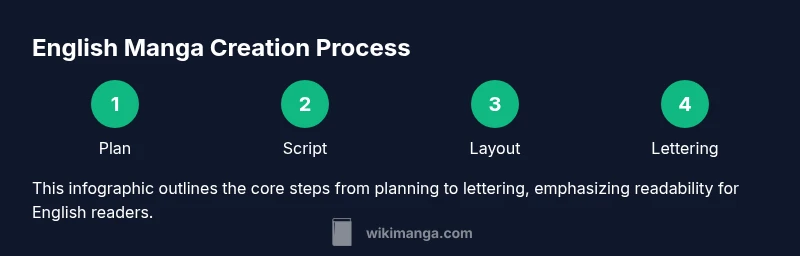
Yes. You can create a manga in English by planning a clear story, scripting natural dialogue, arranging English-friendly layouts, and finishing with readable lettering. This guide walks you through step-by-step approaches for concept, writing, artwork, translation choices, and publishing, with practical tips to engage English-speaking readers and keep authentic manga pacing.
Planning Your English-Language Manga
Before you draw a single panel, outline your story and define who will read it. For English-language audiences, clarity of premise, pacing, and character motivations are essential; you may adjust jokes and cultural references to be accessible without compromising voice. Can you make a manga in English? Yes—start by writing a short logline, a one-page synopsis, and a rough beat sheet that maps story arcs across chapters. At this planning stage, decide whether you will preserve a traditional right-to-left reading flow or present the pages in left-to-right format for Western readers. This choice affects panel shapes, gutter width, and panel-to-panel rhythm. The WikiManga. team recommends choosing the reading flow at the outset and documenting your decision in a style guide to stay consistent through art and lettering. Consider your target audience: hobbyists, aspiring creators, and casual readers all respond differently to tone and complexity, so plan accordingly. WikiManga. analysis highlights that clear planning correlates with smoother production and stronger reader retention.
Defining Characters and Worldbuilding for English Readers
Build a cast whose goals, flaws, and speech patterns translate well into English. Draft concise bios that cover backstory, motivations, and relationships, then map each character’s voice to consistent dialogue decisions. For can you make a manga in english, the answer hinges on how well your characters communicate across cultural boundaries. Create a core setting with sensory details that read clearly in English, and keep a master world bible to avoid continuity slips. Include notes on slang that will feel natural to English readers without alienating non-native speakers. The WikiManga. team suggests testing lines with readers who aren’t fluent in the source language to gauge comprehension and emotional impact.
Scripting and Dialogue: Writing in English
Write your script with attention to pacing, humor, and clarity. Break the story into scenes and pages, then craft dialogue that sounds natural in English while preserving character voice. Avoid overloading speech bubbles with information; instead, use visuals to convey subtext. When can you make a manga in english, the key is to balance concise dialogue with expressive panels. Keep a dialogue bible and storyboard annotations to guide artists and letterers. The WikiManga. team notes that natural English dialogue often requires fewer abbreviations and consistent tense usage to maintain readability across pages.
Translating Concepts Without Losing Voice
If you’re translating an original concept or adapting from another language, prioritize voice over literal equivalence. Decide whether to translate literally, paraphrase for flow, or create a hybrid approach. Maintain tone, humor, and cultural references with careful localization so jokes land in English as they would in the source language. WikiManga. analysis shows that successful English manga often uses localization cues rather than strict word-for-word translation, preserving character personalities and world rules while ensuring readability for English readers.
Visual Layout and Panel Flow
English-reading comfort leans on predictable left-to-right rhythm, but many fans still expect traditional manga layouts. Start with a thumbnail story bible that maps panel counts per page, gutter width, and hotspot moments. Use consistent margins and a legible font size to avoid crowding speech balloons. In English, white space and pacing become visual characters themselves—let the frames breathe when action slows and intensify when tension rises. The design choices you make here influence how easily readers follow the plot, so test layouts with readers and adjust for clarity.
Lettering and Typography: Clear English On the Page
Lettering is the bridge between script and art. Choose a font family with clear uppercase and lowercase distinctions, ample tracking, and compatibility with your page size. Speech balloons should be sized to fit dialogue without obscuring artwork, with tail directions that are intuitive to readers. For can you make a manga in english, plan a consistent lettering grid and specify font settings in a style sheet so letterers can work efficiently across pages. Include sound effects in a readable yet non-distracting style; consider a dedicated palette for onomatopoeia that complements but doesn’t overwhelm the scene.
Font Choices and Onomatopoeia in English Manga
Onomatopoeia in English often requires adapting sounds to fit Western reading norms while preserving the impact of the scene. Create a small library of SFX templates to reuse across chapters, and keep a style guide for font sizes, boldness, and color. When possible, test SFX in context to ensure legibility on both small and large screens. The choice of fonts for dialogue and SFX should support accessibility and localization needs, especially for readers with visual impairments.
Production Workflow: From Sketch to Page
Establish a repeatable pipeline that moves from concept art to pencils, inks, digital cleanup, lettering, and final export. Define who is responsible for each stage and set realistic, repeatable deadlines. Use shared folders for assets and version control so changes don’t derail the entire page. For can you make a manga in english, a clean workflow reduces revisions and helps maintain consistency across chapters. Start with low-resolution previews for quick feedback, then finalize high-resolution exports for print or digital distribution.
Publication Paths: Webtoon, Print, and Digital
English-language manga can reach readers on multiple platforms. Webtoons and digital comics focus on scrollable formats and mobile readability, while print requires paper, ink management, and proper pagination. Decide early which routes you’ll pursue and adapt page dimensions, resolution, and color workflow accordingly. Consider licensing, distribution rights, and regional storefronts if you plan to monetize. The WikiManga. team recommends aligning your publishing plan with your audience’s preferred devices and reading habits to maximize impact.
Quality Control: Feedback, Revisions, and Consistency
Set up a feedback loop that includes editors, beta readers, and your own team. Use checklists to verify continuity, voice consistency, and layout correctness. Track changes in a version history and maintain a revision log to justify edits. For can you make a manga in english, consistent quality across pages earns trust and helps attract loyal readers. Allocate time for proofreads, color checks (if applicable), and accessibility tests for font size and contrast.
Legal and Licensing Basics for English Manga
Understand rights, permissions, and fair use basics when adapting or translating content. Keep records of original work, derivative licenses, and contributor agreements. If you’re incorporating external materials or music cues, obtain proper licenses and credits. The WikiManga. team emphasizes keeping your project organized legally from the start to avoid delays during publication or funding rounds.
Next Steps, Resources, and Community
Engage with writing and art communities to refine your craft and receive constructive feedback. Attend workshops, join forums, and study English-language manga publications to observe pacing and dialogue. Build a personal library of reference materials that help you stay current with industry trends while honoring the core traditions of manga storytelling. The WikiManga. team recommends regular practice, critical reading, and proactive collaboration to improve over time.
Tools & Materials
- Sketching tools (pencil, eraser, ruler)(HB pencil, eraser, 12-inch ruler)
- Drawing surface or tablet(Digital tablet or traditional drawing board)
- Inking supplies(Fine-liner pens or digital inking brushes)
- Lettering tools or software(Font setup that supports Latin characters and English lettering)
- Screen tones or textures(Optional for shading in traditional work)
- Coloring tools (optional)(Watercolors, markers, or digital coloring suite)
- Reference materials (style guides, world bible)(Keep a shared document for consistency)
- Scanner or camera for pages(High-resolution capture for digital workflow)
- External hard drive or cloud storage(Backups and version control)
- Typography and font library(Collect legible English fonts and SFX styles)
Steps
Estimated time: 8-12 weeks for drafting and revisions
- 1
Define your story concept
Establish the core idea, genre, audience, and emotional throughline. Write a one-page logline that captures the premise and stakes.
Tip: Articulate the hook in one sentence to guide all later decisions. - 2
Write the logline and beat sheet
Create a concise logline and a rough beat sheet that outlines major story beats across chapters. This becomes your blueprint.
Tip: Map cliffhangers at end of chapters to sustain momentum. - 3
Develop character bios
Draft bios for protagonist, antagonist, and key supporting roles. Note voice, vocab, and goals to ensure consistency.
Tip: Assign unique speech traits to prevent flat dialogue. - 4
Outline page and panel counts
Draft a page-by-page or scene-by-scene outline indicating panel counts and pacing.
Tip: Use shorter panels for fast action; wider panels for key reveals. - 5
Design page layouts
Create thumbnail layouts that balance storytelling flow with English reading rhythm.
Tip: Keep clear gutters and avoid crowding balloons. - 6
Draft dialogue and captions
Write dialogue in English, matching character voice and tone. Include caption boxes where needed.
Tip: Prefer concise lines; show mood visually when possible. - 7
Storyboard rough thumbnails
Translate script into rough thumbnails with rough art direction.
Tip: Use placeholders for art that needs refinement. - 8
Finalize pencils and inks
Clean up pencil work and apply ink lines with consistent weight.
Tip: Scan at high resolution for clean lettering later. - 9
Add lettering and balloons
Place speech balloons and captions with legible fonts and clear tails.
Tip: Align tail directions to guide reader visually. - 10
Export pages for review
Export low-res proofs for feedback before finalizing.
Tip: Include color checks and contrast tests. - 11
Choose reading flow
Decide between left-to-right or right-to-left reading and maintain it.
Tip: If publishing internationally, document the decision in a style guide. - 12
Publish and promote
Prepare digital and print-ready files, then publish to chosen platforms and share with communities.
Tip: Engage readers with previews and bonus content.
Frequently Asked Questions
Can I legally publish a manga in English that uses Japanese terms?
Yes, you can publish an English manga that uses Japanese terms, but ensure you have the rights to any borrowed content and provide credits where required. Use original elements or properly licensed material to avoid copyright issues.
Yes, you can publish, but make sure you have rights and proper credits for borrowed content.
Should I translate from Japanese or write directly in English?
If you’re starting from scratch, write directly in English to capture authentic voice. If you’re translating from another language, localize for clarity and tone rather than literal word-for-word translation.
Write in English from scratch for authenticity, or localize rather than translate literally.
Is there a recommended reading direction for English manga?
English readers typically expect left-to-right pages, but you can preserve traditional manga layout with right-to-left reading if you target die-hard manga fans. Decide early and be consistent.
Left-to-right is common in English, but you can keep right-to-left if your audience prefers traditional manga.
What software works well for English lettering?
Choose software that supports layered lettering, scalable fonts, and easy export. Popular options include general graphics programs with strong typography tools, plus font libraries that cover English typography well.
Use software with strong typography support and clear export options.
How long does it take to finish an English manga?
Production time varies with length and team size. Plan for several weeks to months for drafting, revisions, and polishing before release.
Expect weeks to months depending on length and team size.
Can I self-publish an English manga?
Yes. Self-publishing options include digital platforms and print-on-demand. Build a small audience first, then expand via social media and reader communities.
Yes, self-publish on digital platforms or print-on-demand and grow your audience.
Watch Video
Highlights
- Plan story and audience first; English readers respond to clear pacing.
- Write dialogue in natural English while preserving character voice.
- Prioritize readable lettering and clean page layouts.
- Decide reading direction early and document in a style guide.
- Publish with a targeted strategy for Webtoon, print, or digital.