Difference Between Manga and Anime: A Practical, Analytical Guide
Learn the difference between manga and anime, including format, storytelling, pacing, and adaptation processes. Practical tips for fans and creators from WikiManga.


TL;DR: The difference between manga and anime is primarily in medium and presentation. Manga is a printed or digital comic format, usually read left to right (or in traditional Japanese right-to-left layouts for some works), while anime is animated video, often released episodically. Pacing, design, and audience experience vary based on production goals and licensing.
What defines the difference between a manga and an anime: medium, production, distribution
The difference between a manga and an anime extends beyond language or visuals. It centers on three core dimensions: medium, production processes, and distribution channels. Manga refers to the comic form—static drawings arranged in panels, typically published in serialized magazines or digital platforms. Anime refers to moving images—animated episodes or films created by studios, with voice acting, music, and post-production. For readers and viewers, understanding this distinction helps set expectations about pacing, detail, and how stories are told. According to WikiManga. analysis, many newcomers assume the terms are interchangeable, but the media have distinct constraints and opportunities that shape storytelling choices and audience engagement. In practice, the same narrative often exists in both formats, but each version emphasizes different strengths: the manga foregrounds panels and reader interpretation; the anime foregrounds motion, sound, and timing. The choice between reading a manga or watching an anime often comes down to personal preference for control over pace versus immersion in motion and sound.
Narrative structure and pacing in manga versus anime
Narrative structure in manga tends to be driven by serialization, page layout, and cliffhanger chapter endings. Creators exploit panel transitions, gutters, and visual motifs to pace revelations, sometimes leaving important beats implicit for readers to infer. In contrast, anime coordinates episode arcs, opening/ending songs, and episodic cliffhangers to manage viewer retention across weeks or seasons. The pacing difference affects how plot threads are introduced, developed, and concluded. For example, a climactic turning point in a manga chapter might be conveyed through a single, quiet panel, inviting contemplation; the corresponding anime scene might rely on dynamic camera work, sound design, and timing to deliver the same emotional weight. When discussing the difference between a manga and an anime, it’s crucial to note that adaptation decisions may alter pacing to fit broadcast slots, licensing, and audience expectations in different regions. This divergence is not a flaw but a creative re-interpretation that can deepen or dilute themes depending on execution.
Visual storytelling: panels, animation, and design language
Visual language in manga is crafted through line weight, panel shapes, negative space, and typographic cues. Artists use these tools to suggest emotion, speed, and perspective without motion, allowing readers to imagine sound and tempo. In anime, motion—expressive animation, movement of characters, and dynamic camera angles—adds a dimension that static images cannot replicate. Color palettes, lighting, and soundtrack cues guide mood and interpretation in ways that a manga cannot directly achieve. Yet both forms depend on shared design vocabulary: expressive faces, action lines, and environmental detail to convey tone. When comparing the difference between a manga and an anime, readers often notice how panel-to-panel rhythm in the manga can feel slower yet more intimate, while anime uses tempo and spectacle to create communal viewing experiences. For creators, understanding these visual distinctions helps when planning a project that might span both forms or when translating a manga’s panels into animation frames.
Reader and viewer experience: translation, accessibility, and fandom
Audience experience varies with format. Manga readers self-pace, re-read favorite chapters, and appreciate high-detail renderings that reward careful inspection. Anime viewers rely on episodic structure, voice acting performances, and musical cues that shape emotional resonance across scenes. Localization adds another layer: translations, subtitles, and dubbing choices can subtly alter humor, cultural references, and character voice. The difference between a manga and an anime is also felt in accessibility. Manga is often more affordable per story arc, especially in digital form, and can be enjoyed privately; anime can be shared in a communal setting and offered as licensed streaming with simultaneous releases in multiple regions. Fandom interactions, fan-translations, and discussion threads flourish in both communities, but the pace and channels differ: manga fans congregate around releases and scanned volumes, while anime fans engage on streaming platforms and social media during new episodes.
Adaptation pipelines: from manga to anime and beyond
Adaptations begin with source material selection, licensing, and negotiation. A typical path moves from a completed or ongoing manga manuscript to a production committee that budgets animation, voice work, and music. The adaptation team decides what content to keep, trim, or alter to fit episode counts and broadcast constraints. Studio choices influence style—some studios favor faithful, line-for-line translations; others employ creative re-interpretation to suit audience expectations in different markets. The difference between a manga and an anime becomes apparent in the adaptation process: a manga’s static layouts may be expanded into motion scenes, with new subplots or character moments added for pacing. Licensing deals and regional censorship can also shape what audiences finally see, sometimes resulting in divergences between the manga and anime versions that spark debate among fans and scholars alike. For aspiring creators, recognizing these pipelines is essential when planning a project that might transition from page to screen.
Common misperceptions and edge cases
There are several common misperceptions about the two formats. Some fans assume that all manga is superior because it is the original source; others believe that all anime faithfully mirrors its manga counterpart. In reality, many adaptations make significant changes to pacing, character emphasis, or even plot order to suit episode budgets or audience tastes. Edge cases include anime originals (no manga source), manga extensions (side stories not adapted into animation), and webtoons that get animated years after their publication. The difference between a manga and an anime can be subtle when the adaptation process preserves most beats but reorders scenes for dramatic effect. Another nuance is regional access: some markets may receive translated manga before an anime, or vice versa, affecting how fans experience shared story universes. Understanding these variations helps readers and viewers approach each work with a critical eye and appreciation for the unique strengths of each format.
Case study: emblematic titles illustrating the difference
A few high-profile cases illuminate how manga and anime can diverge in surprising ways. Take a long-running series where the manga advances at a steady pace while the anime adds filler arcs or alternate endings to meet production schedules. In some franchises, the anime introduces original scenes that deepen character relationships not present in the manga, or it relocates crucial events for dramatic impact. Conversely, some titles release manga chapters that fill in world-building gaps left by the anime, offering more thorough backstory or lore. The difference between a manga and an anime in these examples underscores the collaborative nature of media ecosystems: writers, illustrators, directors, and composers contribute distinct layers to a shared universe. For fans, such differences create opportunities to compare interpretations, spot foreshadowing, and discuss how medium shapes meaning.
Economic and production considerations
Beyond storytelling, economics and production timelines shape both formats. Manga typically operates on serialized magazine schedules and chapter-based revenue, encouraging creators to maintain ongoing engagement with readers. Anime involves larger production budgets, voice talent, music licensing, and international distribution agreements that influence release timing and sub-series planning. As a result, the difference between a manga and an anime often translates into different risk profiles for studios and publishers. Fans may notice that a high-demand manga adaptation receives longer production windows or multiple cour seasons, while less popular titles may receive shorter animations or hiatuses. Understanding these dynamics helps fans gauge why certain stories feel rushed in animation or expanded in print, and why some beloved arcs appear only in one format. For aspiring creators, awareness of economics informs decisions about pacing, length, and upcoming projects.
Cultural considerations and format preferences by region
Cultural preferences influence how manga and anime are consumed in different regions. In some countries, readers favor dense, text-heavy manga with elaborate lore; in others, audiences lean toward fast-paced, action-packed anime with strong visual spectacle. The local pressing issues, censorship norms, and streaming infrastructures also shape what fans see and when they see it. The difference between a manga and an anime is not just about art; it's about the ecosystem that supports each medium. Global platforms have made both formats more accessible, enabling cross-pollination of styles and storytelling techniques. Recognizing regional tastes can guide decisions on serialization frequency, adaptation timing, and licensing strategies that maximize reach without compromising core content.
Practical tips for fans and aspiring creators
For fans, a practical approach is to engage with both formats to understand how stories unfold across media. Start with the original manga to savor the author’s panel composition, then watch the anime to experience the interplay of voice acting and sound design. For creators, consider starting with a manga draft to establish pacing and world-building, then outline how to translate key scenes into animation-friendly layouts. Tools like thumbnails, beat sheets, and storyboard templates help bridge the gap between page and screen. Keep an eye on adaptation decisions, note where scenes diverge, and assess how such changes affect character motivation and thematic emphasis. Finally, join community discussions, compare official releases with fan translations (where allowed), and practice documenting differences in a wiki or guide to help others navigate the difference between a manga and an anime.
Comparison
| Feature | Manga | Anime |
|---|---|---|
| Medium and format | Printed/digital comic (panels) | Animated series or film (motion) |
| Pacing and narrative control | Reader-driven, variable pace; paneling guides rhythm | Director/episode pacing; scene-by-scene flow |
| Artistic scope | Static images, rely on reader imagination | Movement, color, sound design |
| Production and licensing | Serialized in magazines or digital platforms | Studios produce animation; licensed globally |
| Consumption patterns | Collected volumes, digital subscriptions | Broadcast schedules, streaming platforms |
| Longevity and updates | Enduring editions; creator notes | New seasons; potential divergences |
Upsides
- Manga offers deep world-building through detailed panels and layout control
- Anime provides dynamic storytelling with motion, voice acting, and music
- Manga can be consumed at the reader's own pace and re-read easily
- Anime enables shared viewing experiences, faster emotional pacing in scenes
Disadvantages
- Manga release cycles can be slow; access varies by region
- Anime adaptations may diverge from the source material
- Localization and censoring can alter humor, references, or tone
Both formats excel in different ways; use them together for a fuller story
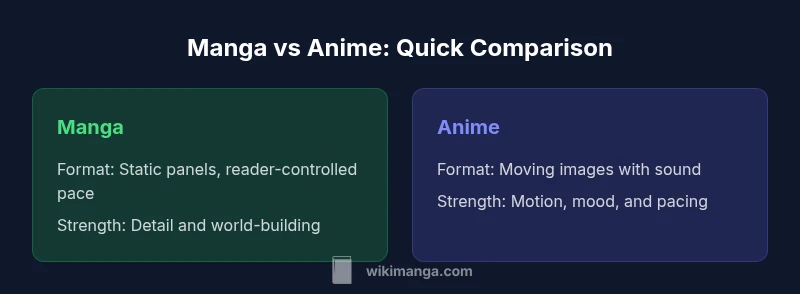
Manga and anime complement each other—manga offers depth and detail, while anime delivers motion and sound. The best approach is to engage with both when possible.
Frequently Asked Questions
What is the fundamental difference between manga and anime?
The fundamental difference is the medium: manga is a static, page-based comic, while anime is motion-based animation with sound. They often share source material, but the execution and pacing differ due to format constraints and production choices.
Manga is static, while anime moves the story with sound.
Is a manga always the source material for an anime adaptation?
Not always. Some anime are original stories inspired by a manga, others adapt the manga chapter by chapter, and some run ahead of the manga. Expectations vary depending on licensing and production plans.
Often the manga is the source, but not always.
Can a manga be released after an anime has started or finished?
Yes. Some titles begin as anime originals or gain anime popularity before the manga appears in print, and others catch up or expand after the anime ends. Reading the manga afterward can reveal differences or expansions.
Yes, sometimes the manga comes after or alongside the anime.
Do manga and anime differ in audience reach and localization?
They can. Anime often reaches global viewers quickly via streaming, while manga distribution varies by region and format. Localization concerns can influence how stories are presented, licensed, and translated.
Yes, different regions see different releases and translations.
What are the best ways to consume both manga and anime effectively?
Plan to read the manga first for depth, then watch the anime for motion and sound. Compare episode pacing with chapter progress, and note where adaptations add or trim content to gauge storytelling priorities.
Read first, then watch; compare pacing and content.
Are there titles where the anime diverges significantly from the manga?
Yes. Some series diverge through added backstories, altered endings, or different framing devices. Such divergences can enrich or frustrate fans depending on expectations and how closely they follow source material.
Yes—some shows diverge from the manga in meaningful ways.
Highlights
- Read manga first to savor panel composition
- Watch anime to experience motion and sound design
- Compare adaptations to understand medium-specific decisions
- Use both formats to gauge pacing and storytelling breadth
- Consider regional availability when planning how to consume