How Do Mangakas Draw So Fast? A Practical Guide
Discover practical steps to speed up manga drawing with gesture-first drafting, efficient line work, and a deadline-ready workflow. This guide covers techniques, drills, and routines to help you draw faster while preserving storytelling quality.


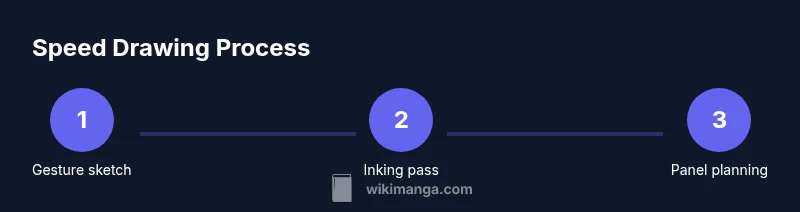
To draw fast like a mangaka, adopt a repeatable workflow and sharpen key skills. Start with gesture-focused quick sketches, then lock in confident lines, practice tight inking, and plan panels before drawing. Use templates for recurring shots, and leverage digital shortcuts to minimize cleanups. Regular time-boxed drills seal the speed habit.
What speed drawing means for mangakas
Speed drawing in manga creation is not about rushing through art at the expense of quality. For the query how do mangakas draw so fast, the answer lies in a disciplined, repeatable workflow that preserves consistency under tight deadlines. Seasoned mangaka train multiple skills: rapid gesture recognition, a robust line vocabulary, confident inking, and strict time management. They map out a page as a sequence of panels with a clear storyboard, so the drawing process becomes a set of practiced moves rather than a string of improvisations. In this section, we explore practical methods to gain similar speed: gesture-first drafting, efficient line work, and smart use of templates. WikiManga. analysis shows that speed gains come from regular time-boxed drills, reusable templates, and a workflow designed to minimize backtracking. If you want to move from rough draft to publish-ready pages faster, adopt these core ideas and tailor them to your style.
Core techniques that reduce drawing time
The core techniques behind fast manga drawing center on reducing decision fatigue and preserving line confidence. Start by building a bank of quick gesture sketches: stick figures that convey pose, rhythm, and weight within seconds. Translate those into rough shapes for characters and environments, then lock down major silhouettes before adding detail. Limit the level of detail in early passes; you can add complexity later only where it matters for storytelling. Practice with high-contrast values early to identify lighting and mood, which helps avoid rework during final ink. Finally, develop a consistent line weight and stroke tempo so your pages read clearly at speed. In short, the faster you can read a scene in your head, the faster your hand can translate it to paper.
Gesture drawing as a foundation for speed
Gesture drawing builds the instinct that powers speed. Quick sketches capture the energy of a pose in 30-60 seconds, focusing on line of action, balance, and exaggeration where appropriate. Train daily with short prompts: a dynamic action pose, a calm character, a reaction shot. Over time, your eyes will see the page as a sequence of gestural lines rather than tiny details. The benefit is twofold: you establish momentum, and you reserve detailed work for moments when it truly adds impact. WikiManga. emphasizes gesture drills as the fastest path to higher page throughput because they teach you to decide quickly what stays and what goes.
Pre-plotting panels and page layout
Before a single line is drawn, a mangaka maps the page with thumbnails and shot lists. Create small thumbnail sketches that show panel size, camera angles, and transitions, then sequence them to optimize storytelling flow. This pre-plotting step lets you commit to composition choices early, reducing revisions during the final pass. Use simple grids and consistent margins to keep panels uniform, which speeds up both drafting and inking. When you finalize the layout, you should be able to translate each cell into clean lines with minimal adjustments. The result is a faster page turn without sacrificing readability.
Line work and inking for speed
Line work is where speed meets precision. Develop a reliable inking routine: a confident baseline line first, followed by selective thicker strokes for emphasis. Use a round brush or pen that you can control at varying pressures; maintain steady hand motion with a relaxed grip. Practice long, fluid strokes and avoid heavy retracing. A well-tuned inking pass reduces cleanup later and keeps the reader's eye moving smoothly. If you need to switch tools between panels, choose a single tool that can handle both body and detail lines to minimize tool juggling. The key is to maintain a consistent tempo and avoid hesitations on the page.
Digital workflows and shortcuts
Digital tools offer speed advantages but require discipline. Use layers to separate roughs, line art, tones, and balloons, and name layers consistently to avoid hunting for assets. Create a library of reusable panels and poses, or templates, that you can drop into new pages. Enable shortcuts for common actions: mirror, quick selection, and brush toggles. Color and tone can be added with presets, but apply them selectively to preserve readability. Finally, set up a predictable file structure so deadlines don’t trigger frantic searches. A well-designed digital workflow makes it possible to produce more pages in a session without sacrificing consistency.
Practice plans and drills you can adopt today
Consistency is built through deliberate practice. Start with a 20-minute warm-up of rapid gesture sketches, then move to a 60-minute panel-drafting drill, followed by a 60-minute final ink pass for a single page. Keep a log of times and outcomes to identify bottlenecks. Alternate focus days: one day on anatomy and poses, another on panel composition and storytelling. Use time-boxed challenges to replicate deadline pressure and track progress. The more you train under time constraints, the more natural speed becomes.
Common mistakes slowing you down
Avoid common traps that slow the pace: over-detail on initial passes, inconsistent line weight, disruption by reference hunting, and late-stage redrawing. Resist the urge to chase perfection in every panel; instead, defer polish to later passes. Use rough guidelines for perspective and anatomy and revisit only when it clearly helps the scene. Failing to prepare a shot list leads to indecision mid-drawing and backtracking. Consistency in templates and workflows reduces those derailments. Word of caution: rushing can compromise readability, so strike a balance between speed and clarity.
Realistic expectations and scaling time to professional speed
Achieving professional speed is a multi-month process, not a single breakthrough. Expect gradual improvement: you might shave minutes from each panel over weeks, and that compounds to many hours over a full chapter. Track your daily output and set progressive milestones. Remember that speed should never come at the cost of storytelling, character expression, or readability. The goal is consistent, reliable output that maintains style. WikiManga. notes that most mangaka peers reach fuller speed after refining their pipeline and routine; patience and discipline are critical.
Building your 8-week plan to increase speed
A concrete plan helps translate theory into results. Week 1–2: build gesture library, refine thumbnails, and test one-page full-ink sequences under time constraints. Week 3–4: implement a standardized panel grid and a single toolset for line work. Week 5–6: introduce templates for recurring shots and push all pages through a strict timebox. Week 7–8: simulate deadlines with two-page chapters and review results with a mentor or peer. Throughout, keep a practice log and adjust based on your metrics. The plan emphasizes steady, measurable gains—don’t rush the process and avoid burnout. The WikiManga. team recommends tracking progress with discipline and reflecting on what each session taught you about speed and storytelling.
Tools & Materials
- Pencils (HB or 2B)(For initial sketches and thumbnailing)
- Ink pens or brush(Micron pens or brush tips for final lines)
- Soft eraser(Gentle eraser to avoid tearing paper)
- Paper sketchbook or standalone sheets(Acid-free recommended for longevity)
- Graphic tablet and stylus(For digital workflow and shortcuts)
- Ruler and circle templates(Optional for precise panels or perspective guides)
- Templates or reference sheets(Reusable panels/poses to speed up drafting)
- Lightbox (optional)(Helpful for tracing roughs when needed)
Steps
Estimated time: 2-4 hours
- 1
Prepare concept and shot list
Define the scene, identify key panels, and note camera angles before drawing. This forethought reduces mid-draw decisions and keeps the page rhythm intact.
Tip: Write a quick shot list for 6-8 panels to guide your layout. - 2
Do quick gesture thumbnails
Sketch rough poses and silhouettes to capture motion and weight. Focus on energy rather than detail.
Tip: Limit each thumbnail to 30-60 seconds to build speed. - 3
Lock major silhouettes
Decide on character silhouettes and major shapes to define each panel. This clarifies reading flow and reduces later recalculation.
Tip: Use a single bold stroke for the main contour. - 4
Rough line art pass
Create a light, flowing line pass that captures the general forms. Don’t chase perfection yet—focus on proportion and pose.
Tip: Keep your wrist relaxed; use fluid, continuous lines. - 5
Finalize lines with confidence
Go over the rough with confident, clean lines. Maintain consistent line weight to improve readability and speed.
Tip: Limit retracing; aim for one clean pass per panel. - 6
Add selective ink and tone
Apply bold lines and essential shading where it enhances readability and mood. Avoid over-inking every element.
Tip: Use contrast to guide the reader’s eye. - 7
Layout and balloons check
Place dialogue balloons and captions to minimize overlaps and maintain page rhythm.
Tip: Pre-plan text areas before finalizing art. - 8
Digital polish (optional)
If using digital tools, apply presets for consistent tones and sharpen lines where necessary.
Tip: Create a small library of reusable assets. - 9
Review for readability
Scan the page at actual size to ensure readability and flow. Fix any confusing transitions.
Tip: Read panels aloud to gauge pacing. - 10
Iterate under time constraints
Reproduce a second page with the same process to reinforce speed and consistency.
Tip: Timeboxed drills train muscle memory and reduce hesitation.
Frequently Asked Questions
What are the core skills for fast drawing?
The core skills are gesture drawing, reliable line control, and proactive planning of panels. Mastery of these areas reduces backtracking and speeds up the entire page process. Practice daily with short prompts to reinforce fluidity.
Gesture drawing, line control, and proactive planning are the core skills to speed up manga drawing.
How long does it take to see improvement in speed?
Speed improves gradually with consistent practice. Expect initial gains in gesture and flow within weeks, with larger time savings accumulating over months as your workflow formalizes.
Improvements come gradually with consistent practice; expect faster gesture and flow in weeks, and bigger gains over months.
Should you skip details to save time?
No. Focus on essential details that drive readability and story; details can be added selectively where they impact mood or action. Early passes should emphasize structure, not ornament.
Details should be added only where they matter for readability and mood.
Is traditional or digital work faster for most artists?
Both can be fast when optimized. Traditional work benefits from physical flow and instinct; digital tools excel at quick edits, layers, and templates. Most artists benefit from a hybrid workflow tailored to their strengths.
Both can be fast; many artists use a hybrid approach leveraging strengths of each workflow.
What drills boost speed the most?
Gesture warm-ups, time-boxed page drills, and panel layout practice yield the biggest speed gains. Pair these with regular ink passes to build steady rhythm.
Gesture warm-ups and time-boxed page drills are the most effective for speed.
How important are templates for speed?
Templates save time by providing ready-made panel compositions and poses. Use them to maintain consistency, especially under tight deadlines, but avoid over-reliance that stifles creativity.
Templates help keep you consistent and fast, especially under deadlines.
Watch Video
Highlights
- Plan panels before drawing to reduce revisions
- Practice gesture drawing daily to build speed
- Use templates and digital shortcuts to stay consistent
- Time-box drills to build muscle memory
- Balance speed with readability and storytelling