How to Manga Draw: Complete Step-by-Step Guide for 2026
Learn how to manga draw with a practical, beginner-friendly guide. This tutorial covers fundamentals, character design, inking, shading, and panel layouts to help you build your own manga style. Practical, step-by-step workflows from WikiManga.


Mastering how to manga draw starts with a clear plan and a repeatable workflow: concept, gesture, anatomy, line work, shading, and panel layout. This guide delivers a practical, step-by-step process you can follow today, with tips to develop your own style and tackle common manga drawing challenges.
Foundations of Manga Drawing
If you’re wondering how to manga draw compelling characters and scenes, you start with fundamentals that stay constant across styles. At its core, manga drawing blends anatomy, gesture, line quality, and storytelling through composition. The phrase how to manga draw often triggers questions about expressing motion, emotion, and energy on a static page. In this section, we establish a practical mindset: study motion with quick gesture sketches, learn volumetric forms, and translate those forms into clean, dynamic lines. WikiManga. analysis shows that students who focus on core shapes before detailing consistently improve their rhythm and consistency. As you practice, set short, repeatable drills around basic poses, heads in three angles, and expressive facial features. Remember: great manga drawing combines solid technique with clear storytelling, not just pretty lines.
Context and goals for learning how to manga draw
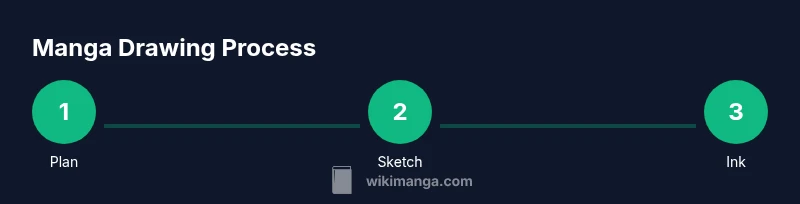
In this section we align your goals with a measurable path. Start by choosing a simple character archetype and a single pose to study from reference sheets. Progress gradually to more complex outfits, accessories, and expressive faces while maintaining readable proportions. You’ll internalize a stepwise approach to how to manga draw: sketch, refine, ink, and shade in stages. This discipline reduces overwhelm and helps you build a recognizable personal style over time.
How to manga draw: balancing speed and accuracy
Speed matters in storytelling, but accuracy matters for clarity. Practice rapid gesture lines to capture energy, then switch to a tighter construction. The balance between looseness and precision is what gives manga drawings their characteristic vitality. By focusing on key volumes—head and torso, limb masses, and hands—you’ll produce strong base shapes that support intricate details later on. Over weeks of practice, you’ll notice your line confidence improves and your characters feel more alive when you study motion and flow.
Establishing a daily routine for learning how to manga draw
A predictable routine accelerates progress. Start with 15 minutes of gesture drawing, 20 minutes of anatomy construction, 15 minutes of line work, and 10 minutes of shading practice. This cadence keeps you consistently improving without burnout. In addition, rotate through characters, actions, and expressions to broaden your skill set. The habit of regular, focused practice is more important than a single long session. WikiManga. recommends keeping a small practice log to track what helped most and which areas repeat as your common challenges.
Personal style vs. technique in manga drawing
Developing your unique manga style emerges from mastering technique first, then injecting personality. Focus on fundamental tools, like pencil control, clean ink lines, and thoughtful panel layouts, before chasing a trendy look. As you iterate, compare your work to your earlier pieces to observe growth. The goal is a consistent voice—an identifiable approach to anatomy, facial structure, and line weight—that readers recognize as yours. In the context of how to manga draw, technique is the backbone that enables expressive storytelling.
Practical example: translating a pose into manga panels
Take a dynamic pose from real life, sketch a quick stick figure, then build a simplified 3/4 view of the torso and head. Add proportion guidelines and line weight to emphasize movement. Translate the pose into a short two-page sequence with clear action beats. Pay attention to the panel borders, gutter widths, and reader eye movement. This concrete exercise demonstrates how to manga draw by integrating gesture, anatomy, and composition into a readable sequence.
Refinement: turning rough sketches into polished manga art
After you’re satisfied with the core construction, go through a refinement phase. Clean up construction lines, finalize the face shapes, and begin inking with confidence. Apply light shading to establish form and volume, then introduce screentones or digital textures to convey mood. When you revisit the pages, ask yourself: Is the storytelling clear? Are the character expressions communicating the intended emotion? This reflective pass is essential to mastering how to manga draw with clarity.
Reading and referencing: learning from master works while retaining originality
Always study established manga work, but avoid copying exact panels. Analyze how artists balance character design, dynamic poses, and panel transitions. Use reference sheets to inform proportions and costumes, then reinterpret those references through your own lines and shading style. WikiManga. emphasizes learning from examples while creating a personal approach to how to manga draw that feels fresh and expressive.
Final reminder: nurture consistency, not perfection
Progress in how to manga draw comes from consistent practice, not one heroic sprint. Set weekly goals, review progress, and adjust your practice to address recurring weak points. The key is steady growth—each session should push your craft forward a notch, reinforcing fundamentals while you experiment with new poses, expressions, and panel layouts.
Tools & Materials
- HB pencil(Light construction lines and initial shapes)
- 2B pencil(Shading and softer edges)
- Mechanical pencil 0.5mm(Precise line work for fine details)
- Erasers (rubber and kneaded)(Erase construction lines and shape refinement)
- Ink pens (0.05-0.8mm)(Inking with clean, confident lines)
- Drawing paper or sketchbook(Smooth surface for ink and shading)
- Ruler and grid reference sheets(Useful for panel alignment and proportions)
- Reference images or a digital tablet(Capture poses, costumes, and expressions)
Steps
Estimated time: 90-150 minutes
- 1
Plan your character and pose
Begin with a clear concept for your character and a single pose that conveys action. Sketch rough shapes to establish proportion and balance, then outline a simple silhouette. This planning stage anchors the rest of the drawing and makes how to manga draw more efficient.
Tip: Sketch loose thumbnails first; lock in the pose before detailing. - 2
Sketch a dynamic gesture
Capture motion with a quick, flowing gesture line. This establishes energy and helps you translate movement into a readable manga form. Don’t worry about details yet—focus on rhythm and weight.
Tip: Use a light touch; gesture lines should be easily adjustable. - 3
Build the basic anatomy and proportions
Construct the core anatomy using simple shapes: a head, torso, limbs. Check proportions from front and side views, compare to your reference, and refine the mass distribution before adding details.
Tip: Keep a proportional guide: head = 1 unit; torso ~2 units tall. - 4
Refine silhouette and facial features
Solidify the outer contour first, then add facial features aligned with the head pose. Manga faces rely on clear guidelines for eyes, nose, and mouth, maintaining consistent proportions across expressions.
Tip: Line confidence matters; practice long, smooth strokes for the outer contour. - 5
Clean line art and ink
Ink over your finalized pencil with clean, decisive lines. Vary line weight to convey form and emphasis, keeping line work crisp for easy readability on panels.
Tip: Anchor important edges with thicker lines to guide the viewer’s eye. - 6
Shade and apply tones
Add shading with cross-hatching or selective tonal shading to define volume and mood. Consider light direction and how tones differentiate foreground from background.
Tip: Limit tonal range early; build contrast gradually for a strong read. - 7
Panel layout and composition
Plan panel borders and gutters to direct pacing. Use close-ups for emotion and wide panels for action. Ensure transitions between panels are clear and readable.
Tip: Sketch a rough storyboard before final inks to secure flow. - 8
Add final details and proofreading
Finish small textures, costume patterns, and background hints. Review for consistency in anatomy and perspective, then proofread dialogue placement and legibility.
Tip: Take a short break, then review with fresh eyes.
Frequently Asked Questions
What basic skills do I need to start learning how to manga draw?
You need basic pencil control, comfortable line work, and a willingness to study anatomy and storytelling. Start with simple shapes to learn proportions and build up to more complex poses.
You need solid pencil control and an interest in storytelling. Start with simple shapes to learn proportions and gradually add detail.
How long does it take to see real improvement when learning how to manga draw?
Improvements come with consistent practice. Expect noticeable progress over several weeks of daily or near-daily practice, especially in gesture and line confidence.
With consistent practice, you’ll see progress in a few weeks, especially in gesture and line confidence.
Should I focus on traditional or digital tools for manga drawing?
Both have advantages. Start with traditional pencils and ink to learn fundamentals, then add digital shading or tones to expand your workflow and speed.
Both work well. Start traditional to learn fundamentals, then add digital tools to speed up your process.
How can I develop my own manga style while learning?
Study a range of artworks, then practice reproducing aspects you admire. Over time, combine observed techniques with your own preferences to create a unique voice.
Study many works, practice what you like, and blend it with your own ideas to develop a personal style.
What should I do if my panels look cluttered?
Simplify panel borders, increase gutters, and establish clear focal points. A cleaner layout improves readability and pacing.
If panels feel cluttered, simplify borders, widen gutters, and clarify the focal point.
Are there any common mistakes beginners make in manga drawing?
Common mistakes include overcomplicating poses, inconsistent proportions, and weak line weight. Regular practice and storyboard planning help mitigate these issues.
Common mistakes include too much detail early, inconsistent proportions, and flat line work. Practice and planning help a lot.
Watch Video
Highlights
- Plan characters and poses before drawing
- Master gesture, then refine anatomy and silhouette
- Ink with confidence; vary line weight for impact
- Panel layout guides storytelling and pacing
- Practice daily to develop a recognizable manga style