How Manga Is Drawn: A Complete Step-by-Step Guide for Beginners
Discover how manga is drawn from concept to finished page. This in-depth guide covers anatomy, panel layout, line work, shading, tones, and practical practice for aspiring artists.


In this guide you will learn how manga is drawn from initial concept to final page, focusing on anatomy, dynamic posing, panel layout, inking, and tone. You’ll follow a clear, step-by-step process designed for beginners and seasoned artists alike, with practical tips, essential tools, and a structured practice plan to build fluency.
What makes manga drawing unique
Manga drawing blends expressive character design with cinematic storytelling. Kid-friendly charm sits beside intense action, achieved through deliberate line work, pacing, and tonal contrasts. A key question many readers ask is how manga is drawn; the answer lies in a practical recipe: strong foundations in anatomy, clear silhouettes, and consistent panel flow that guides the reader’s eye. According to WikiManga, manga creation blends visual language with storytelling economy, so practitioners learn to communicate emotion and motion with concise lines and thoughtful pacing. This section sets the stage for a hands-on approach, emphasizing core concepts like proportion, gesture, and rhythm that recur across genres. You’ll build a toolkit of habits that translate to both character-driven scenes and action-packed sequences, whether you’re aiming for shonen battles or slice-of-life moments.
Core drawing foundations: anatomy, perspective, and balance
Understanding how the human body moves in space is essential to making manga characters feel alive. Start with simple skeletons, then layer in muscle mass and clothing folds to define form without clutter. Perspective establishes depth: a three-quarter view often emphasizes dynamic storytelling, while a flat profile can simplify a panel for quick reads. Balance is about weight distribution, which informs pose stability and readability. In manga, line quality communicates energy: bold outer lines suggest confidence; lighter inner lines convey subtleties. When you study how is manga drawn, you’ll notice that most artists combine proportion guidelines with expressive exaggeration—slightly larger eyes for emotion, elongated limbs for impact, and head-to-body ratios tuned to the character’s personality. Practice these fundamentals with short gesture studies before committing to finished panels.
Character design: faces, expressions, and silhouettes
Designing memorable characters begins with strong silhouettes. A clear silhouette makes a character recognizable even in small thumbnail panels. In faces, manga typically emphasizes large eyes to convey emotion, a compact nose and mouth, and distinctive hairstyles that read quickly in motion. Varying line weight helps separate foreground characters from the background; thicker outer contours push a figure forward, while finer lines define details. Expressions should be readable within a single glance, so focus on eyebrow shape, mouth curve, and eye tilt. Costume choices reinforce personality: a hero might wear streamlined, practical outfits, while a wizard character could have dramatic robes with dynamic gesture lines. Practice designing a cast of page-ready characters using interchangeable poses and a shared color or texture vocabulary to maintain visual consistency across scenes.
From rough thumbnail to clean lines
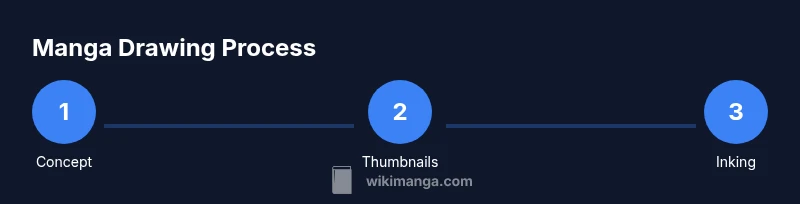
Manga artists often begin with tiny thumbnail sketches to test composition, camera angles, and panel rhythm. Thumbnails are quick, using light lines to block major shapes, then refined into larger sheets with more precise geometry. This step prevents costly redraws later and helps you visualize pacing before inking. When you move from rough to clean lines, keep a consistent pencil pressure and use construction lines as guides rather than final marks. Inking then solidifies the design: choose your tools (pen, brush, or digital tablet) and establish a standard line weight hierarchy. Remember that clean lines support clarity in storytelling, so make deliberate choices about where to emphasize motion or emotion and where to omit excess detail for legibility.
Inking: line weight, tools, and cleanliness
Inking is the art of translating a pencil sketch into a crisp, readable image. A strong manga inking approach uses varied line weights to convey depth, texture, and emphasis. Thicker lines often frame characters and important edges, while thin lines handle folds, facial features, and subtle textures. Tools vary: fine liners for precision, brush pens for expressive strokes, and digital brushes that mimic traditional ink. Consistency is key—maintaining uniform pressure and smooth curves improves readability across panels. After inking, allow for any drying or curing time if you’re using traditional media, preventing smudges that break the page’s rhythm. If you’re unsure how is manga drawn, practice with a simple character turn and a few action lines to build confidence before tackling a full page.
Shading, tone, and screentones
Shading in manga adds volume and mood without heavy rendering. Traditional tones involve screentones, halftone sheets, or digital textures that read as light, shadow, and atmosphere. Decide on a light source early to keep shading coherent across panels. Cross-hatching can convey grit or speed, while flat tones may suit comedic or dialogue-heavy scenes. Screentones are applied in layers and require patience—the trick is maintaining even texture density to avoid jagged edges. On-screen or on-page tone decisions should support storytelling: avoid over-texturing backgrounds that distract from characters. As you practice, test different tonal palettes and observe how the absence or presence of tone affects readability and emotion.
Panel layouts and storytelling pacing
Panel layout is the backbone of manga storytelling. Variety in panel size and shape creates rhythm: large panels for pivotal moments, small panels for quick actions, vertical panels to elongate motion, and splash pages to emphasize drama. Logical progression from panel to panel helps readers track action without confusion. When planning layouts, sketch a rough page grid, mark moments of pause or impact, and ensure that characters’ gazes guide the reader’s eye. Dialogue balloons should be placed to minimize overlap with important visuals, and background details should support, not overwhelm, the scene. This is where you test how is manga drawn in the context of pacing—knowing when to simplify and when to add detail to heighten tension.
Action and dynamic motion: speed lines and angles
Dynamic action is central to many manga genres. Speed lines, motion bursts, and foreshortening contribute to a sense of velocity. Use diagonal lines to imply direction and energy, vary character posture to convey weight, and exaggerate expressions to amplify impact. Foreshortening requires careful perspective: a limb drawn in perspective should appear exaggerated yet believable, with correct vanishing points guiding the viewer’s eye. Practice quick action sketches that capture a moment in under a minute; these are valuable for training your instinct for timing and intensity before committing to a finished panel.
Backgrounds and world-building: when to simplify and when to detail
Backgrounds set the context and mood, but excessive detail can slow reading. Simple backgrounds with bold shapes or implied textures work well in fast-paced scenes, while intricate environments enrich dramatic moments or world-building sequences. Decide on the level of detail based on camera distance, character focus, and narrative needs. Layer depth with atmospheric perspective cues and light-to-dark tonal shifts to anchor scenes. For aspiring manga artists, a pragmatic approach is to sketch the environment lightly during thumbnails and reserve final detailing for key panels, so readers remain immersed without feeling overwhelmed by every frame.
Practice routines and skill-building for steady improvement
Progress in manga drawing comes from consistent practice and deliberate repetition. Establish a weekly schedule that alternates between gesture studies, facial expressions, and full-page layouts. Use warm-up routines: quick 60-second figure sketches, line confidence drills, and anatomy drills focusing on joints and hands. Keep a visual library of reference poses and expressions you admire, then reproduce or adapt them to your own characters. Recording short practice sessions helps identify plateaus and track improvement over time. As you develop technique, seek feedback from peers or mentors who can point out framing, rhythm, or readability issues you may miss, keeping your path toward better manga drawing steady.
From sketch to final page: a practical end-to-end workflow
A typical end-to-end workflow starts with ideation and thumbnail composition, then moves to refined pencil work, inking, tone application, and final page assembly. Start each page with a clear concept: what moment is being told, which characters are central, and how the panel layout will guide the reader. Then execute in layers: rough composition, clean lines, tonal decisions, and final touches. In practice, you should maintain a log of lessons learned from each page, noting what worked well and what slowed you down. Consistent review and iteration are essential for mastering how is manga drawn and for building a personal signature style.
Common pitfalls and how to fix them
New manga artists often struggle with overcrowded panels, inconsistent anatomy, or unclear actions. A practical fix is to simplify: remove nonessential elements, streamline characters' poses, and tighten camera angles to emphasize the focal moment. If lines drift, slow down and redraft with construction lines, ensuring each feature aligns with the overall perspective. When tone or shading feels muddy, re-check light sources and adjust contrast to improve readability. Finally, practice reading your own pages at small sizes to simulate reader experience and catch issues that disappear on a larger canvas.
Tools & Materials
- Pencil set (HB, 2B, 4B)(Use for sketches and shading; keep a range for gradient tones)
- Erasers (kneaded and vinyl)(Kneaded for light erasing, vinyl for crisp highlights)
- Ruler and French curves(Helpful for precise panel edges and perspective guides)
- Inking tools (micron pens, brush pen)(Varied nibs for line weight and expressiveness)
- Drawing paper or sketchbook (A4 or A5)(Smooth surface preferred for ink work)
- Lightbox (optional)(Helpful for tracing refined lines)
- Digital tablet or software (optional)(For digital inking and tones; great for practicing non-destructively)
- Screentones or digital tone packs(Choose based on medium and style; helps with texture and mood)
Steps
Estimated time: 6-9 hours
- 1
Prepare fundamentals
Set up a dedicated workspace and warm up with quick gesture sketches. Practice basic proportions and anchor points to build confident lines before committing to a page. This foundation supports every panel you create and helps keep your characters consistent.
Tip: Do a 5-minute gesture warm-up before starting to keep energy high. - 2
Create rough thumbnails
Draft small thumbnails to test composition, camera angles, and pacing. Use light lines to block major shapes and adjust the layout until the page reads clearly at a glance.
Tip: Label key beats on the thumbnail: moment, reaction, and transition to stay organized. - 3
Refine facial features
Work on facial construction with simple shapes, adding expression with eyebrow and mouth tweaks. Maintain a consistent eye style across characters to preserve character identity.
Tip: Keep a mini-reference sheet of facial expressions for quick access. - 4
Inking and line weight
Ink over cleaned pencil lines, establishing a hierarchy: thick contours for foreground, mid-weight for secondary shapes, thin lines for details. Allow ink to dry if using traditional media to avoid smudges.
Tip: Test line weight on a separate scrap sheet before applying to your page. - 5
Add tone and texture
Apply screentones or digital textures to establish mood and depth. Begin with light tones, then adjust contrast to keep important elements readable.
Tip: Work in layers; avoid over-toning the entire scene to preserve focus. - 6
Panel layout finalization
Finalize panel borders and placements, ensuring a smooth reading rhythm. Place dialogue balloons to minimize overlap with important visuals.
Tip: Use a simple grid first, then vary panel sizes to emphasize key moments. - 7
Review and iterate
Step back from the page and review for readability, pacing, and emotional impact. Make targeted edits to tighten composition and improve clarity.
Tip: Read the page at a smaller size to mimic real-world viewing.
Frequently Asked Questions
What is the first step to learn how is manga drawn?
Start with fundamentals like anatomy, gesture, and perspective. Practice quick sketches and simple poses to build confidence before moving to finished panels.
Begin with anatomy and gesture practice to build a strong foundation for manga drawing, then progress to composition and inking.
What tools do I need to start?
Begin with a pencil, eraser, ink pens, and good drawing paper. Digital tools are optional but helpful for experimentation and non-destructive edits.
A pencil, eraser, ink pens, and paper are enough to start; digital tools can speed up revisions.
How long does it take to learn manga drawing?
Learning is a gradual process. Set a regular practice schedule and work on small, focused exercises to steadily improve your skills.
With consistent practice, you’ll see steady improvement over weeks and months as you study anatomy, posing, and inking.
Should backgrounds be detailed in every panel?
No. Backgrounds should support the scene; use detail where it adds mood or context, and simplify where the action is the focus.
Backgrounds should support the moment—detail where it adds mood, keep it simple where action dominates.
Can I learn manga drawing with doodles?
Yes. Doodles and quick gesture drawings are excellent warm-ups that improve form, proportion, and timing before committing to final pages.
Doodles are great warm-ups; they help you practice motion and anatomy without getting bogged down in detail.
Is digital drawing essential for manga?
Digital tools are not essential but convenient. They offer flexible editing, tones, and easy iteration, especially for beginners.
Digital drawing isn’t required, but it makes experimentation and revisions quicker and cleaner.
Watch Video
Highlights
- Master fundamentals first: anatomy, perspective, and silhouette.
- Plan pages with thumbnails before committing to ink.
- Vary panel sizes to control pacing and emphasis.
- Use line weight and tone strategically to guide the reader.
- Practice consistently and seek feedback to improve.