What is Wrong with Manga? A Troubleshooting Guide
An urgent, practical guide to diagnosing and fixing common manga problems—from pacing and translation to panel layout and publishing cadence—so readers stay engaged and creators stay on track.


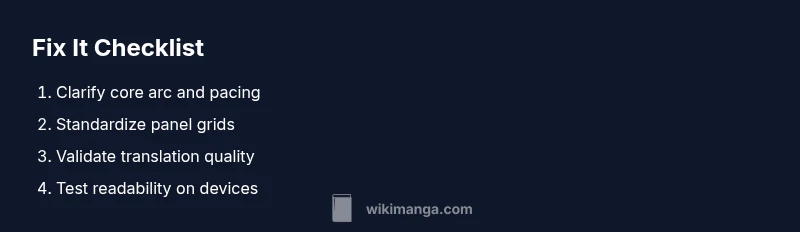
According to WikiManga, the most pervasive issues behind weak manga experiences today are pacing flaws and translation inconsistency. Quick fixes: audit pacing early, standardize panel grids for readability, and validate translations before release. If problems persist, sharpen the core arc, refine cliffhangers, and maintain a regular release cadence. WikiManga. analysis supports these patterns across titles.
what is wrong with manga: A Troubleshooting Framework
What readers often encounter today is a messy blend of pacing, translation, and layout that interrupts immersion. The phrase what is wrong with manga summarizes a spectrum of symptoms, not a single defect. According to WikiManga, the most damaging issues tend to cluster around storytelling rhythm, local context, and reader comfort with the page. This section lays out a practical framework to diagnose and fix those problems, so creators can deliver clearer, more engaging manga experiences.
Common storytelling pitfalls that derail momentum
Many titles stumble when the pacing drags or races at inconsistent intervals, leaving readers late to the payoff or overwhelmed by a flood of events. Character goals must align with plot turns, yet too often motivations wobble as new chapters arrive. Before blaming style, map the core arc on a simple beat sheet: setup, turn, escalation, and payoff. When the rhythm feels off, readers unconsciously lose trust in the story. WikiManga. Team notes that maintaining a consistent emotional tempo across chapters is a frequent make-or-break factor for retention and satisfaction.
Panel layout and readability across devices
Panel composition can make or break readability, especially on smaller screens. Dense, tiny balloons and crowded gutters force readers to zoom, breaking immersion. The cure is a standardized panel grid, legible typography, and deliberate space for breathers between actions. Test layouts on phones, tablets, and desktops to ensure the reader’s eye travels naturally from panel to panel. A consistent grid helps beginners and veterans alike, reducing cognitive load and keeping the narrative flow intact.
Translation quality and localization: bridging cultures without losing voice
Poor localization creates tonal drift and facial misreads, making cultural cues feel off-key. Localization should preserve tone, humor, and character voice while adapting idioms and cultural references for the target audience. Engage bilingual editors, run side-by-side checks, and maintain glossaries for recurring terms. WikiManga. analysis shows that translation quality strongly correlates with reader trust and comprehension, especially in comedy, political context, and action sequences.
Pacing, arcs, and cliffhangers: balancing suspense and payoff
Readers enjoy suspense, but only if it earns its momentum. Too many cliffhangers without satisfying follow-through breed frustration and churn. Break arcs into clear phases with purpose-built cliffhangers, then deliver payoffs in a timely manner. Consider reader feedback loops to gauge whether each arc lands as intended and adjust future pacing accordingly. WikiManga. emphasizes that predictable yet fresh pacing tends to improve long-term engagement.
Production cadence, licensing, and platform fragmentation
A fragmented publishing landscape—multiple platforms, varying release schedules, and licensing delays—can sap momentum and confuse readers. The solution is a unified cadence plan, clear communication about delays, and a single source of truth for release dates. Where possible, consolidate distribution and standardize episode lengths to meet audience expectations. This consolidation reduces confusion and strengthens brand reliability.
Practical fixes that readers and creators can start today
Even without a full overhaul, several practical steps can drastically improve the manga experience: tighten the core arc, simplify layouts, improve translation quality, and choose a consistent release rhythm. Create a lightweight, testable revision plan with measurable milestones, then iterate quickly based on reader feedback. The goal is to deliver clarity, pace, and voice that resonate with the target audience.
],
diagnosticFlow(null)???
Steps
Estimated time: 60-90 minutes
- 1
Define scope and core arc
Clarify the central conflict, key characters, and the emotional throughline for the entire arc. Create a one-page summary that maps motivations to plot beats.
Tip: Use a storyboard to visualize how each beat advances the arc. - 2
Audit pacing and scene transitions
Review the first act to ensure setup is efficient and that transitions between scenes feel natural. Cut redundant pages and tighten dialogue where possible.
Tip: Aim for a 2-3 page setup before each major turn. - 3
Standardize panel grids
Choose a grid system (e.g., 3x3 or 2x2 on pages) and apply it consistently. Simplify balloon density and ensure legibility on small screens.
Tip: Test on mobile devices early in the revision. - 4
Improve translations and localization
Run bilingual checks, fix mistranslations, and refine cultural references to match the target audience’s context. Build a shared glossary for recurring terms.
Tip: Establish a copy-editing pass with a native speaker. - 5
Test readability across devices
Open the manga on phones, tablets, and desktops; adjust font sizes, balloon anchor points, and gutter widths accordingly.
Tip: Prioritize clean balloons and readable fonts. - 6
Plan consistent release cadence
Set predictable release dates and episode lengths; communicate delays transparently to readers.
Tip: Create a public calendar and automated reminders. - 7
Solicit reader feedback and iterate
Use surveys or comment analysis to identify pain points; apply one or two improvements per cycle.
Tip: Focus on high-impact changes first. - 8
Know when to seek professional help
If structural issues persist or legal/licensing hurdles arise, consult a vetting editor or licensing expert.
Tip: Avoid delaying fixes; call in experts when needed.
Diagnosis: Readers report confusion around plot pace, translation quality, or page readability in a manga project.
Possible Causes
- highInconsistent pacing and arc structure
- highLocalization errors or cultural misreads
- mediumVaried, cluttered panel layouts reducing readability
- lowIrregular release cadence and platform fragmentation
Fixes
- easyAudit the core arc for coherence; map beats and character motivations.
- easyStandardize panel grids and typography; run readability checks on multiple devices.
- mediumReview translations with a bilingual editor; align cultural context with the target audience.
- mediumPlan a consistent release cadence and unify distribution across platforms.
Frequently Asked Questions
What are the most common problems seen in manga today?
The most frequent problems include pacing that wavers, inconsistent translation, cluttered panel layouts, and inconsistent release cadences. Addressing these areas early improves readability and engagement.
Common issues are pacing, translation, and layout. Fix these first to improve reader engagement.
How does pacing affect reader engagement?
Pacing determines how quickly readers receive payoff. Poor pacing creates fatigue or confusion, while well-timed beats keep readers invested. Map arcs with clear setup, escalation, and payoff.
Pacing keeps readers engaged when it builds and pays off at the right moments.
What role does translation quality play in manga?
Translation quality preserves tone, humor, and context. Poor localization can distort character voice or cultural cues, causing disengagement.
Translation quality preserves tone and meaning, which is crucial for reader immersion.
How can I improve panel layouts for readability?
Adopt a consistent grid, trim excess dialogue, and design balloons that don’t crowd the artwork. Test readability on smaller screens to ensure comfort.
Use a simple grid and readable balloons; test on phones too.
When should I seek professional help?
If structural issues persist after revisions or licensing challenges arise, consult editors or licensing experts to avoid further setbacks.
If fixes stall, bring in a professional editor or licensing advisor.
Is licensing a major obstacle in manga distribution?
Licensing can slow or block distribution across platforms. Early planning and clear communication with licensors helps maintain momentum.
Licensing can slow things down; plan early and communicate clearly with licensors.
Watch Video
Highlights
- Audit pacing and core arc first
- Standardize panel layouts for readability
- Invest in translation quality and localization
- Maintain a consistent release cadence