What Pens Do Manga Artists Use? A Practical Guide to Inking
Learn which pens, nibs, and inks manga artists rely on to achieve clean lines, texture, and dynamic inking. Practical starter kits, brands, nib sizes, and care tips for 2026.


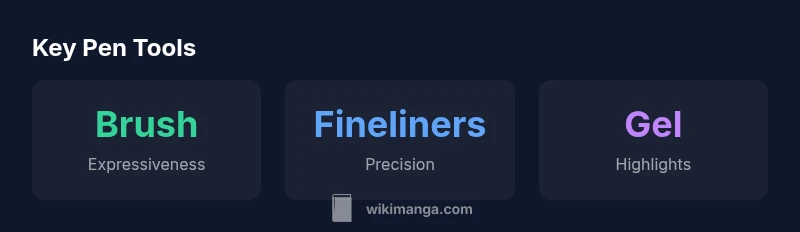
According to WikiManga, manga artists typically ink with a mixed toolkit: brush pens for expressive lines, fineliners for precision, and gel or white ink for highlights and corrections. Popular choices include Sakura Pigma Micron fineliners, Tombow Dual Brush Pens, Pentel Pocketbrush, and Copic Multiliner. The exact mix depends on style, line weight, and working speed.
What pens do manga artists use? An overview
Inking tools are chosen to achieve consistency across pages and to support speed during long runs. Most artists use a mix of tools rather than a single pen. The central distinction is between brush-based tools that offer variable line width and nib-based tools that render crisp, uniform lines. A typical starter set includes a brush pen, a precision fineliner, and an opaque white ink or gel pen for highlights. Over time, many artists expand to a second brush, a broader nib, or a specialized nib for textures like cross-hatching. Because manga is read in tight panels, reliability and dry-time become essential factors. High-quality waterproof inks help reduce bleeding when layers overlap, and many artists test pens on cheap practice pages before committing to a page. The ideal set aligns with your preferred drawing style—more fluid, calligraphic lines respond well to brush pens, while tight, mechanical ink work benefits from technical pens.
This practical overview paves a path from curiosity to a defined kit, helping you select tools that match your hand speed, paper choice, and preferred aesthetic. As you experiment, you’ll discover that what pens do manga artists use is less about a single brand and more about a flexible system you can rely on under deadline pressure.
Brush pens for expressive line quality
Brush pens are prized for their effortless ability to produce thick-to-thin lines with a single stroke, mirroring traditional ink brushes. The key is to master a light touch for thin, delicate lines and a firmer press for bolder strokes. Many artists switch between a flexible brush pen for initial line work and a stiffer brush pen or a bamboo nib for texture in hair, clothing, and scenery. Popular choices include water-based brush pens that clean easily, retain flexibility, and dry quickly on manga-friendly papers. Practice develops a natural sense of where a line should begin and end, which enhances storytelling through silhouette and gesture. Remember to test ink behavior on the exact paper you’ll draw on, as surface texture can dramatically affect line quality and drying time. Inking with brush pens is as much about rhythm as it is about pressure, angle, and speed.
Fineliners and technical pens for precision
Fineliners and technical pens provide reliable, uniform lines that read well in print. They’re indispensable for architectural panels, hatch shading, and crisp lettering. When selecting fineliners, many artists favor pigment-based inks for waterproof, fade-resistant lines, with common diameters around 0.05–0.8 mm. Technical pens offer even more reliability, with nibs engineered for consistent ink flow and low bleed-through. For beginners, a 0.3–0.5 mm fineliner paired with a 0.2–0.3 mm micro-nib can cover most line-work needs. Be mindful of drying time and paper quality; pigment ink tends to stay wetter longer on rough papers, which can affect adjacent lines. Regular cleaning prevents clogging, and swapping between water-based and pigment-based pens requires testing to learn how each ink interacts with your chosen paper.
Gel pens and white ink: highlights, corrections, and texture
Gel pens add opacity to work on darker papers or to create bold highlights that pop against black tones. White gel pens are popular for accent highlights, thin reflective lines, or snow textures in winter scenes. For denser white highlights or corrections on saturated inks, white pigment ink or opaque correction pens can be more reliable. Gel inks benefit from smooth paper to minimize skip and smear, especially when layering over dried ink. White ink frequently requires shaking or gentle warming to reach full opacity, and many artists use it sparingly to maintain contrast without overpowering the page. Combining white ink with black line work offers strong readability in panels with crowded compositions.
The ink: water-based vs pigment-based vs alcohol-based
Inking tools rely on distinct ink chemistries, each with advantages and trade-offs. Water-based inks are forgiving, flow easily, and dry reasonably fast, making them ideal for beginners and for expressive lines. Pigment-based inks provide superior lightfastness and waterproofing, which is essential when art is colored digitally or inked heavily. Alcohol-based inks offer vibrant saturation and smooth flow but can feather on some papers. Artists often prefer waterproof, pigment-based inks for outlines and shading that will be scanned or colored digitally. Understanding how each ink behaves—drying times, bleed potential, water resistance—helps you plan your workflow and reduces the need for re-inking.
How nib size and paper choice affect results
Nib size directly affects line width and the level of detail you can achieve. A common starting range is around 0.25–0.5 mm for detailed work and 0.5–0.8 mm for bolder outlines. Paper texture (tooth) and weight play a critical role: smooth, heavyweight stock minimizes bleed-through and allows crisp lines, while very rough paper can cause nibs to catch and produce broken lines. Experimenting with small swatches lets you map how your ink, nib, and paper interact. As you gain experience, you’ll find your preferred balance between exact precision and expressive looseness, enabling consistent results across pages.
Practical starter kit for beginners: a sample kit and setup
A beginner-friendly kit typically includes a flexible brush pen, a mid-range fineliner (0.3–0.5 mm), and a white gel pen for highlights. Add a pigment-based technical pen later for waterproof lines and additional control. Keep spare nibs, a kneaded eraser, a wiping cloth, and extra practice pads. Establish a routine: test new tools on cheap pages, note how ink behaves on your chosen paper, and refine your grip and stroke technique. As you work, prioritize consistency in line weight and clean edges over ambitious but inconsistent lines. A well-chosen starter kit reduces frustration and accelerates skill growth.
Maintenance, storage, and longevity of inking tools
Proper care extends tool life and preserves ink quality. Clean nibs after sessions to prevent buildup, store pens capped or upright to avoid nozzle clogging, and keep inks away from heat or sunlight. For water-based inks, wipe the nibs and tips between uses to avoid pigment drying inside the nib. Rotate tools to minimize wear and inspect for signs of fatigue, such as skipped lines or inconsistent flow. By keeping your pens clean and well organized, you’ll sustain smooth performance across long drawing sessions and avoid delays caused by tool failures.
Adapting tools to your manga style and genre
Different manga genres reward different tool sets. A shonen reader-friendly style may favor bold outlines and expressive brush economy, while a seinen aesthetic might prioritize subtle hatch shading and crisp micro-lines. Sports manga often requires precise action lines and dynamic motion, which fineliners and flexible brush pens support. The key is to build a modular toolkit you can swap in and out depending on page mood, panel complexity, and lighting. As you experiment, you’ll learn which tools align with your storytelling goals and how to blend them to produce consistent, eye-catching panels.
Common pen types for manga inking
| Pen Type | Best For | Common Brands | Notes |
|---|---|---|---|
| Brush pens | Expressive lines | Kuretake Zig, Pentel Dual Brush | Water-based ink; variable line width |
| Fineliners/Technical pens | Precise lines | Sakura Pigma Micron, Staedtler Pigment Liner | Consistent weight; quick-drying |
| Gel pens | Highlights and corrections | Uni-ball Signo, Sakura | Opaque whites on dark surfaces |
| White ink pens | White highlights on dark pages | Pilot White, Uni-ball White | Useful for corrections and highlights on dense ink |
Frequently Asked Questions
What is the essential ink kit for a beginner?
For beginners, start with a brush pen, a fineliner around 0.3–0.5 mm, and a white gel pen for highlights. Add a white ink later as you gain confidence.
Start with a brush pen, a fineliner, and a white gel pen; add white ink later as you grow.
Do manga artists prefer brush pens over fineliners?
It depends on the artist and the scene. Brush pens excel at expressive, variable-width lines, while fineliners give clean, consistent outlines for panels and mechanical drawing.
Brush pens give expressive lines; fineliners are great for crisp, clean outlines.
Can you use ballpoint pens for manga inking?
Ballpoints are generally not preferred for final ink lines due to inconsistent flow and smudging. They can be used for rough drafts, but most professionals migrate to dedicated inks.
Ballpoints aren’t ideal for final line work; use purpose-made inks instead.
How should I start nib sizing for detail work?
Begin with a 0.25–0.5 mm fineliner for details and a broader 0.5–0.8 mm for bold outlines. Adjust based on your panel size and lighting needs.
Start with 0.25–0.5 mm for detail, 0.5–0.8 mm for bold outlines.
Are there eco-friendly pen options for manga?
Yes. Look for refillable nibs and water-based inks from reputable brands to reduce waste without sacrificing performance.
You can choose refillable nibs and water-based inks to cut waste.
How can I avoid smudging while inking with wet inks?
Work from top to bottom, allow wet areas to dry fully, and use quick-drying pigment inks where possible. A light test on scrap paper helps anticipate smudging.
Let ink dry, work top-down, and test on scrap before final pages.
“Inking is a dialogue between line quality and ink behavior. The right pen choice unlocks consistent lines you can trust across pages.”
Highlights
- Build a core toolkit (brush(es) + fineliner) for most styles
- Mix in gel or white ink for highlights and corrections
- Nib size governs detail; start with 0.25–0.5 mm and broaden
- Practice with one brand to start, then expand
- Maintain tools: clean nibs, store upright