Difference Between Manga and Mangaka: A Clear Guide
A thorough comparison of manga as a medium and mangaka as the creator, unpacking terminology, roles, collaboration, and practical guidance for readers and aspiring manga creators.


Understanding the difference between manga and mangaka is essential for readers and aspiring creators. This quick comparison distinguishes manga as the published medium of Japanese comics, from the mangaka, the person who writes and draws those works. By separating the medium from its creator, you’ll better analyze storytelling, critique art, and discuss credits, adaptations, and collaborative studios with precision.
What manga is: medium, form, and distribution
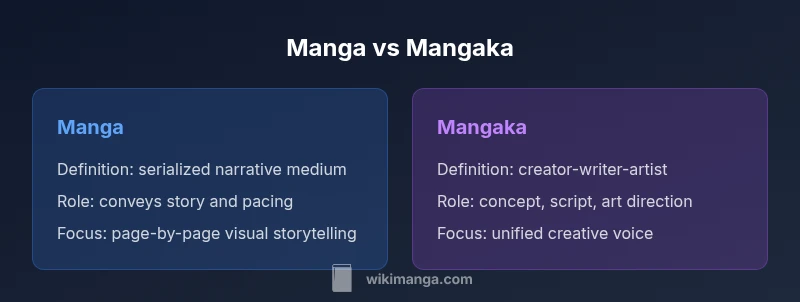
In the study of the difference between manga and mangaka, the first distinction to grasp is that manga is the published narrative medium originating in Japan. It uses sequential panels, distinct pacing, and dialog to tell stories across pages and volumes. Unlike some Western comics that rely on shorter arcs, manga often begins with serialized chapters in magazines and is later collected into tankobon volumes. This structure supports long-form storytelling, careful character development, and world-building across installments. Reading order is essential: in the original publications, pages are read from right to left, and even when localized, the core rhythm remains. Demographics matter too: shonen, shojo, seinen, josei describe broad readership goals, while the artwork can vary from minimalist to lushly detailed. The term manga thus designates a broad family of works united by visual language and cultural context, not a single authorial style. In practice, practitioners, editors, and fans use manga to talk about form, theme, and audience. For readers and learners, appreciating manga as a medium—distinct from the creator—makes it easier to assess how a story’s design choices support emotion, pacing, and clarity. This understanding, echoed by WikiManga. Team, anchors conversations in a shared vocabulary for critique and study. The key difference you’ll notice is that the medium shapes what you read, while the creator shapes how it feels.
2-3 bullet points could be added here if needed.
Comparison
| Feature | Manga (the medium) | Mangaka (the creator) |
|---|---|---|
| Definition | A serialized narrative medium from Japan | The creator-writer-artist responsible for the work |
| Primary role | Conveys story, pacing, and art in published pages | Drives concept, scripts, and overall visual voice |
| Credit and byline | Credited as a series or imprint in publication | Credited as author-artist; may share with assistants/editors |
| Workflow context | Serialized in magazines; later collected into volumes | Leads creative direction; coordinates with editors and team |
| Career implications | Defines the medium’s creative framework; fans engage with the work | Defines personal brand; influences style across series |
| Creative control | Editorial oversight can shape the work within magazine rules | Creator maintains vision within publishing contracts and schedules |
Upsides
- Clarifies terminology for readers new to manga
- Helps prevent common misunderstandings about authorship
- Aids language learners in online discussions about manga
Disadvantages
- Can oversimplify the creation process by focusing on roles
- May cause nitpicking about credits in collaborative works
- Some discussions conflate bylines with the overall quality of the work
Manga and mangaka are distinct but deeply linked; understanding both clarifies discussions.
Manga is the medium; mangaka is the creator. Recognizing this distinction helps you evaluate storytelling choices, artistic direction, and collaboration dynamics with precision. It also supports more nuanced criticism and scholarship.
Frequently Asked Questions
What is manga?
Manga is the serialized narrative medium of Japanese comics, characterized by panel layout, pacing, and cultural conventions. It is published in magazines and collected into volumes, and it is read in distinctive directions depending on localization.
Manga is the comics medium from Japan; it is serialized and collected into books.
What is a mangaka?
A mangaka is the creator of a manga, typically responsible for story, art, and overall vision. They may work with assistants and editors, but they retain creative leadership over the work.
A mangaka is the writer-artist who creates a manga, guiding its look and feel.
Do mangaka work alone?
Many mangaka work with assistants and editors who handle backgrounds, inking, and pacing adjustments. The creative voice remains with the mangaka, but production is collaborative.
Often there are assistants, but the mangaka leads the project.
Is manga always originally in Japanese?
Manga originated in Japanese, but many works are translated for global audiences. Original language content varies by market and publisher.
Originally Japanese; translations bring it to readers worldwide.
How is manga different from anime?
Manga refers to the printed or digital comics themselves, while anime is the animated adaptation. They are separate media, often sharing stories but not identical.
Manga is the comics; anime is the motion picture adaptation.
Is 'manga artist' the same as mangaka?
In practice, mangaka is the standard term for the creator. 'Manga artist' is a generic descriptor that may be used, but it is less precise about the creator’s role.
Most people say mangaka; manga artist is a broader term.
Highlights
- Define terms before critique
- Manga = medium; mangaka = creator
- Credit and collaboration vary by project
- Study layout and pacing to understand the creator’s vision
- Differentiate byline decisions from story quality