How to Put Manga on a Shelf: A Practical Guide for Collectors
Learn practical steps to organize your manga collection on a shelf—space planning, sorting by series, protection tips, and maintenance to keep books pristine.


In this guide, you will learn how to put manga on a shelf: plan your space, sort by series or author, choose the right shelf height, protect covers, and maintain accessibility. You'll need a shelf, measuring tape, and shelf dividers. The steps below walk you through a clear, repeatable process.
Assessing Your Space and Shelf Options
A well-organized manga shelf starts with honest space assessment. Begin by measuring wall area or floor space where the unit will live, noting ceiling height and door clearance. If you’re using a freestanding bookcase, check its weight capacity and whether the shelves are adjustable. For wall-mounted solutions, ensure studs are located and proper anchors are used. Consider humidity and sunlight exposure, which can affect cover integrity over time. A good setup balances accessibility, protection, and future growth. WikiManga. recommends planning for at least 20–30% extra space to accommodate new arrivals without forcing a reorganization soon, and to separate dust-prone areas from living spaces to keep things tidy.
- Use a tape measure to map available dimensions.
- Decide between freestanding shelves, wall-mounted units, or a combination.
- Think about future growth; leave room for expansion and reconfiguration.
Organizing Principles: Sorting, Labeling, and Accessibility
Sorting is the backbone of a readable manga shelf. Decide on a primary organizing axis (by series, author, or size) and a secondary one (volume number, color code, or genre). Many readers prefer grouping by series first, then by volume number, to mimic the reading order. Label shelves at the front edge for quick identification, and consider spine orientation (all spines facing outward) to maximize visibility. Accessibility matters too: place frequently read titles within easy reach, and heavier or larger volumes on lower shelves to prevent strain. Use shelf dividers to prevent tipping and to maintain clean, vertical stacks.
- Create a simple labeling system (e.g., “Series A,” “One Piece,” “Stand-Alone”).
- Maintain consistent spine orientation and upright positioning.
- Implement a secondary sorting layer (volume order or color grouping) for easy scanning.
Choosing Shelves and Accessories
Shelf material and construction affect longevity and protection. Wood shelves look classic, but metal or melamine options can be lighter and easier to wipe. Whichever material you choose, ensure the shelves are sturdy enough to handle the weight of stacked manga and that the space between shelves accommodates your largest volumes. Accessories like shelf liners prevent sliding, while dividers keep groups neat and prevent accidental overflows. Bookends or adjustable dividers help sustain upright alignment. For dust and sun protection, consider UV-filtering shelf covers or a UV-protective cabinet if your space gets strong light.
- Check weight ratings and ensure wall anchors are appropriate if mounted.
- Use protective liners to reduce sliding and scuffing.
- Consider adjustable shelves to accommodate future growth and different manga formats.
Step-By-Step Layout Scenarios
Layout planning can be practical and visually appealing. Scenario A keeps series together, stacking volumes upright with consistent spine-out orientation. Scenario B uses color-coding alongside spine order to create a gradient effect that’s easy on the eyes. Scenario C places oversized volumes on lower shelves and standard volumes above, ensuring comfortable reach and preventing accidental drops. Before you start placing volumes, sketch a rough layout or photograph the empty shelves. This helps you compare options and adjust spacing for future volumes. WikiManga. suggests testing a few layouts with temporary spacers or cardboard templates to finalize spacing before committing hardware.
- Visualize layouts first, then implement with measured spacing.
- Reserve space for new releases by keeping a few adjustable positions open.
- Use color-coding or series-based grouping to enhance scan-ability.
Maintenance, Preservation, and Seasonal Care
Protecting manga from dust, humidity, and sunlight is essential for longevity. Dust shelves regularly with a microfiber cloth and use closed storage or UV-filtering glass if exposure is high. Maintain stable environmental conditions: aim for moderate humidity and avoid drastic temperature shifts. Rotate titles periodically to prevent spine creasing or print fade in high sun areas. When adding new volumes, update your inventory log and shelf map to keep the system consistent. These practices help your collection stay readable and valuable over time.
- Dust weekly or biweekly; vacuum crevices carefully.
- Keep shelves away from direct sun and heat sources.
- Log acquisitions and space changes for easy maintenance.
Common Mistakes and Quick Wins
Common mistakes include overcrowding shelves, placing heavy volumes on top, and neglecting to label sections. Quick wins include measuring exact shelf heights and ordering shelves with uniform gaps, using dividers to set boundaries, and labeling at both the front and top edge for easy visibility. If you’re expanding, plan a staged rearrangement rather than a single mass move to minimize damage to spines. Regularly inspecting the shelf for loosened screws or warped boards helps catch problems early.
- Avoid overfilling shelves; leave breathing room for spine protection.
- Use adjustable dividers to accommodate new volumes.
- Periodically reassess your layout as your collection grows.
Authority and Further Reading
For broader shelving principles beyond manga, consult general library organization guidance from reputable sources and library science resources. Practical tips on material choices, humidity control, and climate considerations are discussed in educational resources and university library guides. Reading lists from established institutions can provide deeper context on long-term preservation and cataloging approaches that apply to hobby collections as well as professional libraries. WikiManga. highlights the importance of consistent labeling, predictable layouts, and proactive maintenance as foundational to any growing collection.
Tools & Materials
- Shelving unit(s) (wood or metal)(Choose solid shelves rated for manga weight; adjustable shelves preferred.)
- Measuring tape(Measure for height clearance between shelves and wall space.)
- Shelf liners or non-slip mats(Prevents books from sliding and protects spines.)
- Shelf dividers / bookends(Keeps volumes upright and labeled sections clear.)
- Labels or label maker(Front-edge labels speed up navigation; optional but helpful.)
- Dust cover or UV-protective cabinet (optional)(Protects from sunlight and dust over time.)
Steps
Estimated time: 60-90 minutes
- 1
Measure and plan
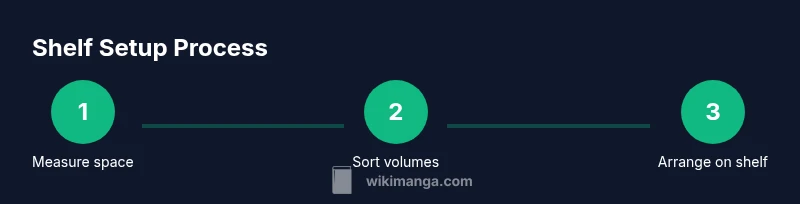
Measure the space and shelves to determine how many units you can fit. Sketch a layout or create a simple grid to visualize sections. Decide on primary organization: by series, author, or size, and set aside space for future additions.
Tip: Double-check window or door clearance to avoid obstructions during use. - 2
Sort and group volumes
Group volumes by chosen axis (e.g., series first, then volume number). Inspect for dampness or damage and set aside anything needing care. Create snackable groups to minimize movement when shelving.
Tip: Keep similar heights together to make even stacks and easier scanning. - 3
Prepare shelves
Install liners, dividers, and any protective accessories. Level each shelf and secure wall anchors if mounted. Confirm accessibility for your most-used titles.
Tip: Test reach by placing your hand at the far end; adjust spacing if needed. - 4
Place volumes upright
Insert volumes spine-out with titles facing you. Start from the tallest stack’s back and work toward the front to keep weight balanced. Align spines to maintain a clean line.
Tip: Avoid tipping volumes forward; keep a slight upright angle if needed for stability. - 5
Label and document
Create clear shelf labels and consider an inventory log (digital or paper). Note new arrivals and re-evaluate layout after adding a sizable batch.
Tip: Add a quick index nearby for frequent re-shelves or new issues. - 6
Maintenance routine
Dust shelves on a set schedule and check for humidity issues. Reassess layout every few months or when new volumes arrive to keep the system fresh.
Tip: Set a calendar reminder to remind you to reassess quarterly.
Frequently Asked Questions
What size should my shelf be for standard manga volumes?
Most standard manga volumes are upright and thinner than typical Western paperbacks. Choose shelves that accommodate upright volumes with extra width for easy removal and replacement, plus a little clearance for air flow.
Most manga stay upright and slim; pick shelves that give each volume room to breathe and be pulled out without scraping other books.
Should I organize by series or by author?
Organizing by series is common for reading progress, while sorting by author helps fans track a creator's works. You can combine approaches, placing series blocks within author groups for flexibility.
Series-first sorting makes it easy to track progress, while author-based blocks help you follow a creator's catalog.
Do I need protective sleeves or glass doors?
Protective sleeves or glass doors reduce dust and sunlight exposure, extending shelf life. They’re optional but beneficial in bright or dusty environments.
Dust protection helps keep volumes pristine; glass doors are great if your space gets strong sun.
How can I prevent warping or spine damage?
Keep volumes upright, avoid overloading shelves, and provide stable, flat supports. Rotate volumes occasionally to prevent spine wear from repeated handling.
Keep manga upright and supported; don’t cram shelves and rotate titles to reduce wear.
How often should I dust and reorganize?
Dust on a regular schedule (monthly or biweekly). Reorganize when adding a sizable new batch or when layout no longer supports easy access.
Dust monthly to keep dust down, and re-evaluate layout when you add new volumes.
What about lightweight shelves for a growing collection?
Choose shelves with adjustable heights and solid supports to accommodate a growing lineup. Plan a future expansion path so you don’t need a full reorganization later.
Pick adjustable shelves and plan for growth so you can expand without a big reshuffle.
Watch Video
Highlights
- Measure space carefully before buying shelves.
- Sort by series/author to improve retrieval.
- Protect spines with liners and maintain consistent spine-out orientation.
- Label shelves for fast access and easier maintenance.