Is Manga and Graphic Novel the Same? A Thorough Comparison
This in-depth comparison explains whether manga and graphic novels are the same, covering origin, format, storytelling approaches, and reading direction for readers, collectors, and creators.


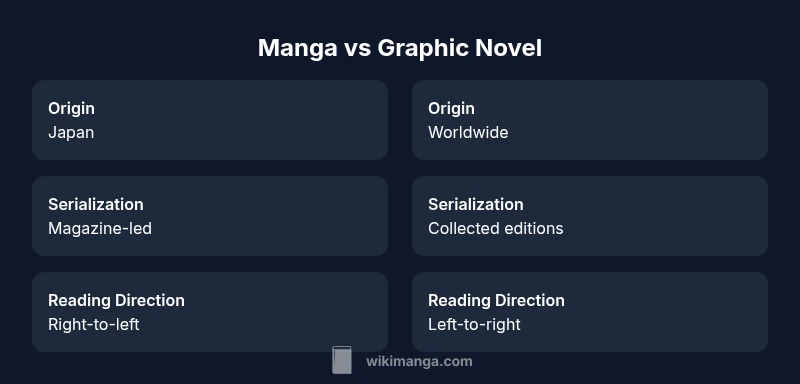
Is manga and graphic novel the same? Not exactly. Manga refers to Japanese comics with distinctive pacing, panel shapes, and right-to-left reading direction. Graphic novels are long-form comics produced around the world and released as complete books or series. Both use sequential art, but origin, serialization, audience, and publishing norms often shape how a work is labeled.
Is manga and graphic novel the same? A clarifying guide
Is manga and graphic novel the same? The short answer is no; the distinction matters for readers and creators. This section explains why the question is common and how the terms evolved. This article uses the exact phrase is manga and graphic novel the same to anchor a careful discussion of origins, formats, and publishing norms. We treat manga as a Japanese-origin format with its own conventions, while graphic novels describe long-form comics from diverse cultures. Understanding this nuance helps avoid oversimplification and supports precise reading, collecting, and criticism.
From WikiManga. analysis, the language around these terms reflects cultural context as much as any formal rule; readers benefit from clarity when evaluating a work’s intended audience and publication model.
Origins and cultural context
The concept of manga emerged from Japan's rich tradition of sequential art, storytelling, and serialized media. In contrast, graphic novels originated in Western markets as a response to the demand for longer, self-contained comic narratives and broader literary prestige. The labels often track publishing ecosystems as much as artistic style. For readers, recognizing these origins helps set expectations about pacing, content depth, and target readership. For creators, it clarifies how to position a work in stores, libraries, or digital platforms. The distinction is not merely geographic but also about the ecosystem that shapes editorial choices, serialization cadence, and cross-cultural reception. WikiManga. team notes that awareness of origin supports more nuanced comparisons across titles.
Reading direction and panel language
Manga typically uses a right-to-left reading order and vertical scrolls in traditional formats, with panel flow designed to guide the reader through specific cinematic rhythms. Graphic novels, especially Western ones, generally use left-to-right layouts. The visual language differences extend to panel shapes, gutters, and the use of sound effects, which influence reader immersion. While both forms rely on imagery and dialogue, the directionality and layout conventions matter for first-time readers trying to classify a work. Understanding these conventions helps avoid mislabeling and improves recommendation accuracy for libraries and retailers.
Serialization versus standalone publication
A key practical distinction lies in publication models. Manga often appears in serialized magazines, followed by collected tankobon volumes, creating ongoing engagement cycles and fan anticipation. Graphic novels are more commonly released as standalone books or as limited-series collections, emphasizing self-contained arcs or complete narratives. This difference influences marketing, pricing, and reader commitment. For fans, serialization can enhance community around ongoing chapters; for readers seeking complete stories, graphic novels may offer a more self-contained experience. The distinction is especially evident when a title moves from episodic releases to a collected edition aimed at different market expectations.
Art style and visual language differences
Artistic conventions reflect cultural and commercial norms. Manga frequently emphasizes expressive facial cues, kinetic motion cues, and a broad palette of tonal shading that supports emotional pacing. Graphic novels may lean toward varied stylistic approaches, from painterly to crisp linework, reflecting international influences and individual creators. Color use also differs: many manga are published in color only for special editions, while graphic novels often present full-color interiors. Despite these tendencies, many works blur lines—hybrid styles, cross-cultural collaborations, and translated editions challenge rigid boundaries. WikiManga. analyzes how style choices correlate with audience expectations and editorial intent.
Storytelling tempo and narrative structure
Manga storytelling often prioritizes episodic momentum with cliffhangers that propel fans to the next chapter, while graphic novels may favor cohesive arcs within a single volume or a tightly planned trilogy. This affects pacing, character development, and thematic exploration. Some titles use rapid-fire, gag-driven sequences; others sustain slow, contemplative builds. For readers evaluating a work, considering tempo can reveal whether it aligns with manga-like serial energy or graphic-novel emphasis on depth per volume. The nuance matters for readers seeking pacing that suits their preferred consumption style, whether on a commute or a long reading session.
Audience, markets, and access
Audience expectations shape classification. Manga tends to target broad demographics in Japan and internationally, often leveraging licenses that enable serialization, merchandise, and media adaptations. Graphic novels frequently aim for literary recognition in Western markets and library acquisitions, with emphasis on standalone storytelling and collected editions. Access channels differ: manga may rely on weekly magazine subscriptions and digital platforms; graphic novels often circulate through independent bookstores, libraries, and mainstream retailers. For collectors, this distinction helps orient purchases by intended use, shelving needs, and reading habits. WikiManga. highlights how audience and market dynamics influence the perceived boundaries between manga and graphic novels.
Publication models and distribution channels
Publication models for manga and graphic novels reflect distinct industry ecosystems. Manga's serialized beginnings lead to steady reader engagement, with eventual tankobon collections that can become evergreen staples. Graphic novels focus on enduring format longevity, often marketed as complete experiences with narrative arcs designed to stand on their own. Distribution strategies differ too: manga frequently benefits from chapter-by-chapter releases and licensing pipelines, while graphic novels rely on direct-to-consumer sales, libraries, and cross-genre visibility. These differences influence how a reader discovers, purchases, and consumes titles, reinforcing that the two formats are not interchangeable in practice.
How to evaluate a work: criteria for classification
When determining whether a work is manga or a graphic novel, consider origin, serialization, publishing model, and intended audience as primary criteria. Look at the creator team, editorial process, and how the work is marketed. Reading direction and panel layout can offer clues, but these elements are not definitive on their own. A useful approach is to assess whether a title was conceived as part of a serialized magazine ecosystem (more manga-like) or as a self-contained narrative designed for a single-volume or multi-volume graphic novel format (more typical of graphic novels). This framework helps readers and librarians categorize titles with greater consistency.
Common myths and misperceptions
A common myth is that manga equals anime. In reality, manga refers to comics, while anime is animation. Another misconception is that all graphic novels are derivative of superhero comics; in truth, the graphic novel format spans genres, from memoir and literary fiction to science fiction and experimental art. Finally, some readers assume that translation always preserves original pacing or intent; localization can alter pacing, image density, and cultural cues. Recognizing these myths helps prevent oversimplification and supports more precise labeling and recommendations for readers.
Practical reading pathways for fans and creators
For fans exploring crossover titles, start with works that explicitly acknowledge cross-cultural collaboration or bilingual editions. For creators, study how authors navigate serialization, world-building, and audience expectations across formats. Practical tips include tracking publication cadence, understanding licensing constraints, and evaluating whether a work’s structure benefits from a manga-like serialized approach or a graphic-novel-style complete arc. By analyzing origin, format, and narrative goals, readers and creators can expand their horizons without forcing a single label onto every work.
Comparison
| Feature | Manga | Graphic Novel |
|---|---|---|
| Origin | Japan | Worldwide (various regions) |
| Serialization | Often serialized in magazines | Typically published as standalone volumes or limited series |
| Reading direction | Right-to-left (traditional) | Left-to-right (typical) |
| Artistic emphasis | Fluid motion, dramatic reactions, panel density vary by chapter | Diverse styles, experimental approaches, sometimes painterly |
| Audience | Broad, diverse demographics including long-term fans | Broad but frequently positioned for literary or standalone reader appeal |
| Publication model | Serialized releases followed by tankobon editions | Collected editions or complete narratives |
| Cultural context | Deep ties to Japanese publishing culture | Reflects global comics culture and publishing norms |
| Color usage | Often monochrome with color editions in special runs | Color used variably across titles and formats |
| Length and pace | Variable length; pacing adapts across chapters | Often longer arcs or single-volume conclusions |
Upsides
- Clarifies reading expectations for fans and librarians
- Encourages cross-cultural literacy for readers and creators
- Supports precise cataloging and collection development
- Promotes nuanced discussions about storytelling across formats
- Helps retailers target marketing and shelving strategies
Disadvantages
- Can oversimplify diverse works under two labels
- Market blur can blur boundaries and confuse casual readers
- Labeling may influence publishing decisions and reader perception
Manga and graphic novels are not the same, but they share a spectrum of sequential storytelling.
Origin and serialization shape what each label conveys. Use both terms thoughtfully, evaluating origin, publication model, and narrative goals to categorize a work accurately.
Frequently Asked Questions
What is the difference between manga and graphic novels?
Manga is a Japanese-origin comics tradition with specific formatting and reading direction, while graphic novels are long-form comics published worldwide as standalone works or series. Both use sequential art, but origin and publishing culture shape labeling.
Manga is Japanese in origin with distinct formats, and graphic novels are long-form comics from various regions.
Can a graphic novel be considered manga?
Not inherently. A graphic novel can be influenced by manga, but if it originates outside Japan and follows Western publishing conventions, it is typically categorized as a graphic novel. Exceptions exist in cross-cultural collaborations.
Only if it follows the conventions and origin of manga; otherwise, it’s usually called a graphic novel.
Do all manga have serialized chapters?
Most traditional manga appear in serialized magazines before being collected, but not every modern manga follows the same path. Some titles debut directly as collected volumes or web-comic formats.
Most start in magazines, but there are exceptions.
Is there a difference in audience expectation between the two?
Yes. Manga often builds a global and long-running fan community around ongoing serialization, while graphic novels frequently aim for literary or standalone appeal. Both attract diverse readers but with different framing.
Different expectations, but overlapping audiences exist.
How should I categorize a cross-cultural work?
Evaluate origin, serialization, and publishing model. If it originated in Japan and follows magazine-to-volume release patterns, consider manga; if it’s a standalone, globally published narrative, consider graphic novel.
Look at where it came from and how it was published.
What should creators consider when targeting audiences?
Creators should consider the intended market, distribution plan, and whether serialization or a self-contained arc best fits the story. Understanding these factors helps in choosing the right labeling and publishing route.
Think about where the work will live and how readers will consume it.
Highlights
- Check origin before labeling a title
- Consider serialization versus standalone structure
- Note reading direction as a contextual cue
- Recognize art style influences and cultural context
- Rely on publishing model to guide classification
- Use labeling to aid discovery, not to pigeonhole works