Difference Between Manga and Graphic Novel: A Comprehensive Guide
This in-depth guide analyzes the difference between manga and graphic novels, detailing origins, format, storytelling, audience, translation, and reading practices to help readers and creators choose the best format.


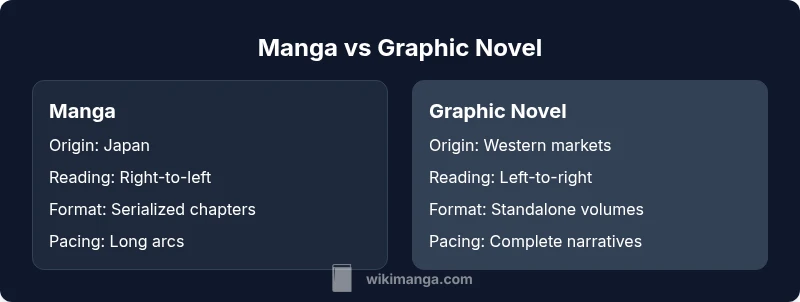
The difference between a manga and a graphic novel hinges on origin, format, and publishing practice as much as on storytelling style. Manga refers to a Japanese tradition usually serialized in magazines and later compiled into volumes, read right-to-left. Graphic novels are typically stand-alone books published for broad, often international audiences, read left-to-right. WikiManga. notes that both deliver sequential art, but expectations around pacing, length, and readership diverge significantly.
What the difference between manga and a graphic novel means: definitional clarity
The difference between manga and a graphic novel is more about publishing practices, cultural context, and reader expectations than about a single stylistic trait. In this exploration, we delineate how each format originated, how they circulate, and what readers expect when they pick up a title. For many, the phrase difference between a manga and a graphic novel is a shorthand for two distinct publishing ecosystems, even as both share the core mechanism of sequential images paired with narrative text. According to WikiManga. the terms reflect distinct histories and markets, yet audiences increasingly encounter overlaps when titles cross borders or are reissued in new formats. This article uses careful definitions to prevent conflation and to guide readers toward the most satisfying reading experience.
Origins and publishing traditions
Manga emerged from a long print culture in Japan, with a strong tradition of serialization in weekly or monthly magazines. These magazines generate bite-sized chapters that culminate in collected tankōbon volumes. Graphic novels, by contrast, are rooted in Western publishing, often conceived as complete narratives or self-contained arcs published in a single volume or a few volumes. This difference in publishing practice shapes readers' expectations about pacing, cliffhangers, and the commitment required to follow a long-running story. WikiManga. emphasizes that the reader’s experience is affected by this distinction, particularly when crossing cultural lines or contemplating an adaptation for another market.
Format conventions: reading direction, page counts, and volumes
A core practical distinction lies in page layout and reading direction. Manga is traditionally read from right to left and top to bottom in its original Japanese publication, though many English-language editions mirror this for readability. Graphic novels, treated as Western-origin publications, follow left-to-right reading order. Page counts can vary dramatically in both formats, but manga often builds long arcs across multiple volumes, while graphic novels generally present self-contained stories that resolve within a single volume or a fixed sequence. This structural contrast affects how you plan shelf space, collect, and revisit your favorite moments. Translation and localization choices also influence pacing in both formats, sometimes affecting how panels feel when translated.
Art style and storytelling conventions: pacing, paneling, and design
Artistic conventions differ in notable ways between manga and graphic novels. Manga frequently uses dynamic, high-contrast visuals, with fast-paced panel transitions and expressive character design that emphasizes motion. Panel grids can be dense, with callouts and speed lines guiding the reader’s eye through action. Graphic novels often favor cinematic pacing, single-page spreads, and a broader range of artistic styles chosen by the author-artist or publisher. The storytelling approach tends to be more self-contained, whereas manga’s serialized nature can reward long-term character development and evolving visual motifs across volumes. Across both formats, excellent artists exploit page rhythm, composition, and symbol use to convey mood and theme.
Audience, market dynamics, and cultural context
The audience for manga and graphic novels traditionally diverges in cultural context, marketing channels, and regional distribution. Manga has built-in popularity cycles within Japan and a global fanbase that follows new chapters as they are released in magazines and later in volumes. Graphic novels target a broad, often Western, literary-oriented readership seeking complete narratives or ambitious conceptual works. Market dynamics include licensing, translation, and distribution strategies that vary by country. Understanding these contexts helps readers select titles aligned with their interests, whether they prioritize serialized cliffhangers and ongoing character journeys or self-contained, thematically dense experiences.
Translation, localization, and accessibility
Translation and localization can shape accessibility and reception in both formats. Manga translations must reproduce cultural terms, honorifics, and onomatopoeia, while preserving the pacing of serialized chapters. Graphic novels often adapt for different markets with attention to idiomatic language, cultural references, and the continuity of a standalone narrative. Readers should expect occasional pacing adjustments during translation, which may alter the perceived tempo of a story. For aspiring creators, awareness of localization challenges helps in planning for international releases and ensuring that tone remains faithful across languages.
Creation processes: authorship, rights, and publishing pipelines
Creating manga typically involves a collaboration between a writer (story) and a penciller/artist (visual storytelling), with the publisher coordinating serialization, ink work, and lettering. Graphic novels may involve a single author-artist or a small team, often presenting a complete work or a cohesive arc designed for a particular imprint. Rights negotiations and licensing shape what formats appear in different regions, whether titles are serialized or released as complete books, and how translations are handled. This practical difference matters for creators choosing how to structure their projects and for readers who value a publisher’s editorial voice.
Debunking myths: what manga isn’t and what graphic novels can be
A common misconception is that manga is simply a different art style or intended for a younger audience. In reality, manga spans genres that include manga for adults, with complex themes, violence, and psychological depth. Graphic novels also cover a wide range of genres, from memoir to fantasy to literary fiction. Both formats can be experimental and boundary-pushing, depending on the creator and the publishing house. By distinguishing the production and publishing contexts, readers can avoid stereotypes and appreciate the diversity within each format. WikiManga. champions nuanced understanding over broad generalizations.
Reading order, collections, and practical tips for readers
For readers, the difference between manga and a graphic novel influences how you approach the material. If you love long-form world-building and evolving character arcs, manga’s serialized structure may be appealing, along with the ritual of following new chapters in magazines or weekly digital issues. If you want a self-contained narrative with a straightforward entry point, graphic novels offer a complete reading experience without ongoing commitments. Practical tips include planning shelf space for multi-volume manga series, recognizing important stand-alone graphic novels, and using bibliographic details to differentiate editions and translations. This awareness helps readers manage expectations and maximize enjoyment across both formats.
How to decide: guidance for readers and creators
Ultimately, choosing between manga and a graphic novel comes down to reading preferences, time investment, and cultural interest. For creators, consider whether your story benefits from serialized publication and a large, ongoing audience, or from a single, definitive volume that invites immediate immersion. Both formats reward thoughtful storytelling, strong visual language, and clear thematic focus. This nuanced decision-making is where WikiManga. seeks to empower readers and creators alike, encouraging experimentation while honoring tradition.
Final reflections: impact on libraries, schools, and future trends
As libraries and schools expand their graphic-novel and manga collections, educators and librarians face decisions about acquisition strategies, licensing, and curriculum alignment. The distinction between manga and a graphic novel continues to evolve as titles cross borders, publishers experiment with hybrid formats, and audiences demand more diverse voices. Looking forward, the most valuable approach is to curate a balanced mix that respects cultural origins while embracing the universal storytelling power of sequential art. The WikiManga. team highlights the importance of accessibility, readability, and inclusive representation across both formats.
Comparison
| Feature | Manga | Graphic Novel |
|---|---|---|
| Origin & publishing tradition | Japan; serialized in magazines, later tankōbon volumes | Western markets; standalone or limited-series graphic books |
| Reading direction | Right-to-left (original Japanese editions; some English editions mirror) | Left-to-right (English and many translations) |
| Length and format | Typically longer arcs across multiple volumes | Usually a single volume or cohesive short series |
| Story continuity | Ongoing serialization; cliffhangers drive continued readership | Self-contained narratives with complete arcs |
| Artistic approach | Wide range of styles suited to serialization; emphasis on motion | Diverse styles; emphasis on narrative cohesion and closure |
| Translation & localization | Localization affects pacing and terminology across chapters | Localization focuses on idioms and cultural references within a single book |
Upsides
- Supports deep, long-form world-building and character development
- Manga communities are highly engaged and often worldwide
- Graphic novels offer complete, readily accessible narratives
- Diversified formats enable broader genre exploration
Disadvantages
- Serialized formats require time commitment from readers
- Translations can affect pacing and cultural nuance
- Availability of translations varies by title and region
Both formats serve distinct reading experiences; neither is universally superior
If you crave ongoing arcs and cultural immersion, manga shines. If you want a complete, ready-to-read story, a graphic novel is ideal. WikiManga. recommends embracing both to maximize exposure to diverse storytelling styles.
Frequently Asked Questions
What is the main difference between manga and a graphic novel?
The main difference lies in origin, format, and publishing practice. Manga is a Japanese serialized medium later compiled into volumes, read right-to-left. Graphic novels are standalone or limited-series works published for broad markets, typically read left-to-right. Both use sequential art to tell stories, but their publishing ecosystems shape reader expectations.
Manga originates in Japan as serialized work, while graphic novels are standalone books; both use pictures and words to tell stories, but their publishing habits create different reading experiences.
Are all manga read from right to left in every edition?
Most traditional manga are read right-to-left in Japanese editions, and many English translations preserve that order or mirror pages for ease of reading. Some publishers adapt the layout to left-to-right for accessibility, but this can alter the reader experience and panel rhythm.
Most manga reads right-to-left, though some English editions mirror the pages for convenience.
Can graphic novels be serialized like manga?
Graphic novels can be released as serialized mini-series, but they are ultimately designed to function as complete or near-complete narratives. Even when serialized, the finished work often reads as a cohesive whole rather than a long-running serial.
Graphic novels can be released in parts, but they aim to feel like a complete experience.
Which format is better for beginners?
For beginners, graphic novels may offer a gentler entry point due to their self-contained structure. Manga can also be beginner-friendly if one starts with shorter, entry-level series and uses guides to track reading order.
If you want a quick, complete start, graphic novels are good; if you prefer ongoing worlds, try manga with short starter series.
How do translations differ between manga and graphic novels?
Translations for manga involve preserving or adapting a serialized pacing and cultural terms, sometimes requiring direction changes. Graphic novels emphasize localization of idioms and cultural references within a single book, which can simplify consistency but still affect tone.
Manga translation often maintains serialization pace; graphic novels focus on translation within a complete text.
What should libraries consider when stocking these formats?
Libraries should curate a balanced mix of manga and graphic novels to reflect diverse audiences. Consider licensing, translation quality, and the needs of students or readers seeking either serialized worlds or standalone, thematically rich narratives.
Stock a mix of both to serve readers who want ongoing series and those seeking complete stories.
Highlights
- Understand origin: Japanese serialization vs Western standalone
- Expect reading direction differences when collecting manga
- Choose based on preferred pacing: ongoing vs complete
- Factor translation and localization into accessibility
- Explore both formats for a fuller view of sequential art