Manga and Graphic Novels: A Side-by-Side Guide to Reading and Creating
An analytical side-by-side guide that compares manga and graphic novels across format, pacing, art, reading direction, and creator pathways to help readers and aspiring creators decide what to read or craft.


TL;DR: Manga and graphic novels are two strands of visual storytelling that share language but differ in form, serialization, and reading experience. This comparison breaks down format, pacing, art, and audience expectations, helping readers choose titles and creators plan projects. By the end, you’ll understand when to pick a serialized manga arc or a standalone graphic novel and how both can complement each other.
Understanding manga and graphic novels in context
In the broad world of storytelling, manga and graphic novels sit at a crossroads of image and narrative. For readers, the term can describe two distinct traditions, yet many titles blur the line between them. The phrase manga and graphic novels signals a spectrum rather than a strict dichotomy, inviting comparisons of format, culture, and readership. According to WikiManga, both forms leverage visual language to convey emotion, pacing, and world-building, but they often differ in serialization, print design, and audience expectations. This guide uses a side-by-side approach to help readers and aspiring creators navigate choices, set reading goals, and identify opportunities to explore new styles without losing sight of core storytelling principles.
Historical roots and cross-cultural influences
Manga and graphic novels emerged in different cultural ecosystems, yet both have traversed borders to become global languages of storytelling. Manga has roots in Japanese scrolls and post-war comics, evolving into long-running series that build fan communities across generations. Graphic novels, rooted in Western comic traditions, gained prominence as serious literary and artistic works capable of handling more complex themes. Today, readers encounter a vibrant ecosystem where titles cross-pollinate styles, themes, and lettering conventions. Understanding these roots helps readers appreciate how a given work uses cultural cues, pacing, and paneling to communicate to diverse audiences while maintaining distinctive identities.
Serialization vs standalone storytelling
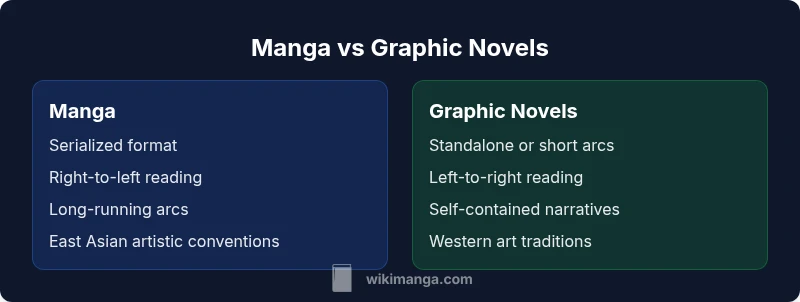
A core difference between manga and graphic novels lies in how stories are released and consumed. Manga often unfolds across many chapters and volumes, with ongoing arcs that reward long-term readership and habit. Graphic novels tend to present self-contained narratives or clearly bounded arcs, allowing readers to finish a complete story in one or a few volumes. For creators, serialized formats can offer ongoing engagement but demand stamina and planful world-building; standalones enable tighter arcs but require precision in setup and payoff. Readers should consider their attention span, reading cadence, and desire for ongoing character development when choosing where to start.
Reading direction and layout: left-to-right vs right-to-left
Reading direction is a practical entry point for beginners. Traditional manga preserves the original right-to-left reading flow, which can feel unfamiliar to readers used to Western comics. In translation, publishers often adapt layout to left-to-right, or present vertically oriented panels to minimize disruption. Graphic novels, being primarily left-to-right, align with common Western publishing norms. Layout conventions also influence pacing and panel density: denser panels can accelerate action, while spacious pages heighten reflection. Whether you’re reading or creating, understanding these conventions helps you optimize storytelling and reader experience across cultures.
Art style and paneling: language through images
Artistic language defines the rhythm of manga and graphic novels. Manga often relies on dynamic expressions, motion lines, and uniform character designs to convey energy and mood across long sequences. Graphic novels emphasize composition, shading, and varied panel shapes to guide emotion and focus. Lettering, font choices, and sound effects also contribute differently across formats. Creators can study how panel transitions set tempo, how splash pages frame moments, and how visual motifs sustain a narrative through multiple volumes. The result is a rich spectrum of visual storytelling that rewards close reading.
Narrative pacing and length: arcs, momentum, and finales
Pacing in manga and graphic novels reflects format choices and audience expectations. Serialized manga builds momentum over chapters with cliffhangers and evolving character goals, often weaving multiple subplots. Graphic novels typically pursue a single throughline with a planned payoff, enabling tighter control over pacing and thematic focus. Readers may experience longer immersion in manga’s expansive worlds or appreciate the compact narrative arc of a graphic novel. For creators, balancing suspense, character development, and payoff is essential to sustaining engagement across pages or volumes.
Market dynamics and translation: licensing, distribution, and reach
The global distribution of manga and graphic novels hinges on licensing, translation, and platform access. Manga enjoys established channels through international publishers, digital storefronts, and fan communities that translate and share work. Graphic novels leverage a diverse mix of independent publishers, mainstream houses, and library programs, expanding access in education and public spaces. Language, cultural references, and printing conventions influence how broadly a title travels from its origin to readers worldwide. Understanding these dynamics helps readers discover works across languages and publishers while guiding creators toward supportive markets.
Creator pathways: careers and craft in two worlds
Creators in both domains navigate artwork, storytelling, and production pipelines, yet the career paths often diverge. Manga artists might work under a studio system or as freelance creators contributing to serialized magazines, balancing tight deadlines with evolving character lineages. Graphic novelists frequently operate as independent writers-artists, seeking publisher partnerships or direct-to-reader models that emphasize complete, self-contained projects. Skill overlaps include visual storytelling, lettering, and research practices; differences appear in collaboration structures, rights management, and production timelines. Aspiring creators can benefit from studying both ecosystems to identify adaptable skills and opportunities.
Accessibility and formats: print, digital, and libraries
Accessibility shapes how readers encounter these formats. Print remains a tactile, collectible experience valued by many fans; digital platforms offer searchable archives, reader-friendly tools, and global access. Libraries and schools increasingly curate collections of both manga and graphic novels, supporting diverse reading programs and literacy initiatives. For readers, choosing between paperback, hardcover, or digital editions depends on budget, space, and preferred reading comfort. For creators, distributing across formats—print-on-demand, traditional distribution, or digital-first releases—can broaden audience reach and reduce barriers to entry.
Cultural impact and audience expectations
Manga and graphic novels influence culture by shaping how stories address identity, ethics, and social issues. Manga’s genre conventions—shonen, shojo, seinen, josei—offer predefined audience expectations while graphic novels foreground thematic complexity and artistic experimentation. Readers bring varied expectations about tone, pacing, and representation, which publishers balance through content guidelines and marketing strategies. A key takeaway is that both formats offer entry points for readers at different experience levels, and both reward readers who invest time in learning the language of each form.
Adapting to other media: anime, film, and beyond
Adaptations extend the reach of manga and graphic novels into animation, live-action, or interactive experiences. The process reveals differences in storytelling, visual cues, and pacing as formats shift to new media. Fans may encounter altered timelines or redesigned aesthetics to suit different audiences. For creators, understanding adaptation processes can inform original work, encouraging modular world-building and clear storytelling beats that translate across platforms while preserving core intent and character voices.
Practical tips for new readers: start here
If you’re just starting, pick titles that match your interests and preferred pace. For serialized manga, follow a single arc to test long-form engagement; for graphic novels, choose standalone stories with strong thematic centers. Use reading guides, glossaries, and community discussions to decode cultural references and conventions. Don’t be afraid to sample different genres—manga and graphic novels encompass a broad spectrum from action to introspective slice-of-life and everything in between. Build a small, deliberate shelf of titles to chart your learning curve over time.
Practical tips for aspiring creators: starting points
Aspiring creators can begin by studying masterworks in both formats, noting how artists handle character design, framing, and pacing. Practice thumbnail layouts before committing to full pages, and workshop scripts with peers to refine dialogue and timing. Consider formats that align with your strengths—long-running series versus tight, self-contained pieces. Build a portfolio that demonstrates versatility in paneling, lettering, and visual storytelling, and seek feedback from communities that celebrate both manga and graphic novel traditions.
The future of distribution and technology: trends to watch
As digital distribution evolves, readers gain access to vast archives and more flexible reading experiences. AI-assisted tooling may aid lettering, translation, or color workflows, while preservation efforts ensure long-term availability across devices. The future likely involves closer collaboration between creators and platforms, greater integration of cross-media storytelling, and enhanced accessibility features. For readers and creators, staying curious about these developments—without sacrificing core storytelling values—will maximize the potential of manga and graphic novels in the coming years.
Looking ahead: embracing both formats for broad literacy
Ultimately, the most rewarding approach is to treat manga and graphic novels as complementary avenues for storytelling. Readers gain depth from serialized worlds and focused standalone narratives, while creators can experiment with hybrid forms that fuse ongoing arcs with self-contained conclusions. By exploring both traditions, communities broaden their literacy in visual storytelling and support a more inclusive, diverse ecosystem for readers and makers alike.
Comparison
| Feature | Manga (Japanese format) | Graphic novels (Western format) |
|---|---|---|
| Serialization | Typically serialized in magazines or compiled into volumes over time | Often standalone or collected in defined volumes with a clear ending |
| Reading direction | Original right-to-left (may be adapted left-to-right in translations | Left-to-right reading commonly used in translations and Western editions |
| Artistic language | Distinctive speed lines, bold character expressions, and standardized panel flow | Varied panel shapes, cinematic framing, and painterly textures |
| Length and pacing | Long-running arcs with gradual world-building | Tighter arcs or complete stories with deliberate pacing |
| Audience and genre cues | Demographics defined by Shonen/Shoujo/Seinen/Josei conventions | Broader genre spectrum with literary and experimental focus |
| Format and distribution | Magazine-original, then tankobon volumes; strong serialization culture | Independent or imprint-based publishing with emphasis on collected editions |
Upsides
- Offers diverse storytelling formats that fit different reader preferences
- Manga often provides expansive world-building and character development
- Graphic novels enable self-contained, artistically ambitious narratives
- Global availability expands access through libraries, schools, and digital platforms
Disadvantages
- Differences in reading directions can confuse new readers
- Licensing and translation gaps may limit access in some regions
- Prices can accumulate for long-running series or multiple volumes
- Market fragmentation can make discovering new titles challenging for beginners
Manga and graphic novels each excel in their own right; choose based on reading goals and storytelling preferences
Serialized manga suits long-term immersion and gradual world-building, while graphic novels shine in complete, thematically cohesive narratives. Readers benefited by exploring both formats. The WikiManga. team endorses a mixed approach to fully experience the breadth of visual storytelling.
Frequently Asked Questions
What exactly differentiates manga from graphic novels?
Manga is traditionally Japanese, often serialized with cultural conventions and reading right-to-left. Graphic novels are typically Western, more likely to be standalone with a cohesive arc. The line blurs as publishers adapt works for different markets, but core storytelling principles remain consistent across both formats.
Manga is usually serialized and right-to-left; graphic novels are usually standalone and left-to-right. The two formats share visual storytelling but differ in structure and origin.
Do I need to read manga in its original right-to-left format?
Not always. Translated editions often present left-to-right layouts for comfort, but many readers enjoy preserving the original flow. If you want the original pacing cues, seek editions that maintain right-to-left pagination.
You can read translated manga left-to-right, but if you want the authentic flow, pick editions that preserve right-to-left pagination.
Can graphic novels be serialized like manga?
Yes, some graphic novels are part of larger series or ongoing arcs. However, most graphic novels are designed to be read as complete units, whereas manga commonly unfolds over multiple volumes.
Graphic novels can be serialized, but many are self-contained; manga often builds over multiple volumes.
Are manga and graphic novels suitable for beginners?
Absolutely. Start with shorter titles or those labeled as beginner-friendly. Both formats offer accessible entry points, from action-driven series to contemplative standalone stories.
Yes—try shorter titles first and gradually explore more complex works.
Where can I legally find manga and graphic novels?
Many titles are available through publishers’ sites, libraries, and reputable digital platforms. Check regional licenses and library catalogs to find accessible editions.
Look for official publisher sites or library digital collections to read legally.
Do adaptations affect how I should read the original work?
Adaptations can change pacing, tone, or sequence, but they often reflect the core story. Reading the original provides context for the adaptation and vice versa.
Adaptations may tweak pacing, but the core story stays rooted in the original work.
Highlights
- Explore both formats to broaden your literacy
- Start with a title that matches your preferred pace
- Look for complete arcs in graphic novels and ongoing arcs in manga
- Use libraries and digital platforms to sample widely
- Consider cross-genre titles to build a versatile reading list