What Paper Size Do Manga Use? A Practical Guide
Learn the standard paper sizes used in manga, from Japanese magazines (B5) to tankobon books (B6), and how Western formats differ. This WikiManga guide covers print and digital considerations for creators and readers.


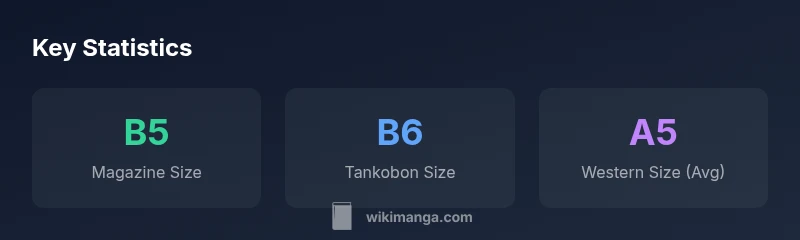
There isn't a single universal paper size for manga. In Japan, serialized manga in magazines is commonly printed on B5-sized sheets (about 182 × 257 mm). Collected tankobon editions are usually B6 (roughly 128 × 182 mm). Western releases vary, with many publishers using A5 or 6 × 9 inch formats to fit standard comic sizes. Always check the publisher’s specs for exact dimensions.
What paper size do manga use?
There isn't a single universal paper size for manga. In Japan, serialized manga in magazines is commonly printed on B5-sized sheets (about 182 × 257 mm). Collected tankobon editions are usually B6 (roughly 128 × 182 mm). Western releases vary, with many publishers using A5 or 6 × 9 inch formats to fit standard comic sizes. When planning a project, identify the target format early and design with the final trim and bleed in mind. For print runs, confirm the exact trim with your printer, as tiny deviations can affect binding and page flow.
- B5 magazines offer extra room for advertisements and larger splash panels.
- B6 tankobon keeps pages compact, supporting portable reading.
- Digital manga relies on screen size and zoom; pagination may differ by platform.
Regional variations: Japan vs. Western markets
Japanese magazines favor larger sheet sizes like B5 to accommodate dense layouts, advertising, and serialized chapters. Tankobon editions compress content into a standardized B6 footprint to balance readability and shelf presence. In Western markets, publishers sometimes convert to A5 or 6 × 9 inches to align with popular comic book dimensions and printing practices. These decisions influence panel sizing, gutter width, and overall page rhythm.
Publishers may adjust margins to accommodate binding (perfect binding versus saddle-stitch) and to ensure consistent trimming in mass production.
How to design pages for different sizes
Start with a master layout designed for the target size, then create size-mapped templates for B5, B6, and A5. Keep panel margins, gutter width, and character speech bubbles proportional to the page size. Use scalable vector fonts for text, and build panels with consistent grid rules. When delivering art, provide bleed (.125 to .25 inches) and crop guides to prevent important content from getting trimmed.
Practical tips for creators and publishers
- Confirm target format before starting, including bleed and trim specs.
- Create templates for multiple sizes to simplify adaptation.
- Use high-resolution line art and scalable fonts to preserve clarity across sizes.
- Include extra margins for binding in physical editions.
- Provide a print-ready color profile and a proof copy for quality control.
Measuring and verifying dimensions: A quick guide
Convert millimeters to inches if needed using the standard 1 inch = 25.4 mm. When preparing for print, design at 300 DPI or higher to ensure crisp lines. Always add a bleed of 0.125 to 0.25 inches and keep essential art at least 0.25 inches inside trim. Double-check sizes with your printer before final production.
Printing considerations: Bleed, margins, and DPI
Bleed ensures color and edge coverage beyond the final trim, while margins prevent important content from being cut off. For comics, 0.125–0.25 inch bleed and 300 DPI print resolution are common targets. If you plan to translate to multiple markets, consider creating separate color profiles and test prints for each size to verify legibility and page rhythm.
Digital manga and scaled reading: implications of screen sizes
Digital manga changes the dynamic: pages can scale to fit devices from phones to large monitors. Publishers optimize for readability by offering reflowable text and zoomed panels. Designers should consider safe areas for UI overlays and avoid relying solely on fixed page dimensions when releasing titles in digital formats.
Common pitfalls and how to avoid them
- Overcrowded panels on small formats.
- Ignoring bleed/margins, leading to trimmed details.
- Assuming one size fits all; plan for multiple formats from the start.
- Skimping on print proofs; always review a physical copy before mass printing.
Common manga sizes by region
| Size Type | Common Use | Typical Dimensions | Notes |
|---|---|---|---|
| Magazine (Japan) | Serialized manga | 182 × 257 mm (B5) | Widely used in magazines |
| Tankobon (Japan) | Collected editions | 128 × 182 mm (B6) | Standard format for volumes |
| Western print | Trade paperback | 148 × 210 mm (A5) | Common in Western markets |
| Western print | Compact edition | 152 × 229 mm (6x9 in) | Popular for comfort and portability |
Frequently Asked Questions
What is the most common manga print size?
In Japan, magazines commonly use B5 while tankobon volumes use B6. Western editions vary; check publisher specs for exact dimensions.
Magazines are usually larger (B5); tankobon is smaller.
Are there size differences between magazines and tankobon?
Yes. Magazines typically use larger formats like B5 for serialized content; tankobon uses B6 for portability and readability.
Yes—magazines are larger, tankobon smaller.
Do digital manga have fixed page sizes?
No fixed size; digital manga scales to devices and platforms, with layout variations and reader zoom support.
Digital is device-dependent.
Can I design manga pages in A4?
A4 drafts are fine, but plan for your target print size and margins before finalizing artwork.
A4 is okay for drafts; verify print specs.
How do I convert dimensions for print?
Convert mm to inches (1 inch = 25.4 mm), design at 300 DPI, and include 0.125–0.25 inch bleed.
Convert to inches, use 300 DPI, add bleed.
Is there a global standard for manga sizes?
No single global standard; sizes differ by region and publisher.
There isn’t a global standard.
“Standard print sizes matter for panel rhythm and readability; most tankobon editions use B6 to balance density and physical feel.”
Highlights
- No universal manga size; sizes vary by region and purpose.
- Magazines favor B5 while tankobon uses B6 in Japan.
- Western markets often use A5 or 6x9 in formats.
- Digital manga scales to device; no fixed page size.
- Always verify publisher specs for exact dimensions.