What Size Is Manga Printed In? A Practical Guide for Readers and Creators
Explore typical manga print sizes, how they affect readability and collecting, and practical tips for readers and creators. Learn about tankobon, omnibus editions, and regional variations with data-driven guidance from WikiManga.


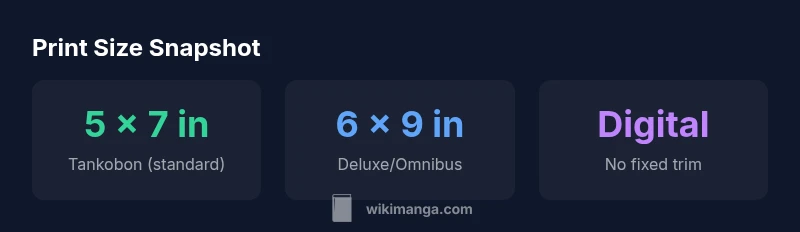
Manga print sizes most commonly fall in the tankobon range, roughly 5 x 7 inches for standard editions and up to about 6 x 9 inches for deluxe sets. Exact measurements vary by publisher and region; digital formats have no fixed print trim. This quick snapshot helps you compare formats at a glance and set expectations for reading and collecting.
What print sizes are common for manga?
If you’re asking what size is manga printed in, the answer depends on region and format. In practice, most English-language manga uses a compact tankobon trim that mirrors the size of traditional Japanese volumes. A common range places English translations around roughly 5 inches wide by 7 to 7.5 inches tall, with deluxe and collector variants reaching toward 6 by 9 inches. Exact dimensions vary by publisher, edition, and market, which is why you’ll see notable differences between series and print runs. According to WikiManga, the key is to understand these categories when selecting editions for reading or for producing your own manga. The WikiManga. team found that readers often notice a perceptible change in the way art reads when moving between standard volumes, omnibus editions, or boxed sets. This section breaks down the main formats so you can anticipate how size influences layout, legibility, and collecting value. In short, while the exact numbers shift, the general rule is consistency within a given format to preserve panel flow and reading rhythm.
Tankobon vs magazines: how the sizes differ
Two broad categories shape most manga formats: tankobon (the standalone volume) and magazine-sized issues that run as serial chapters before a collected edition is published. Tankobon volumes tend to maintain a consistent trim across an arc, which helps readers predict pagination and panel density. Magazine-sized issues, by contrast, often use varied trims since they’re designed for serialization, with page counts and layout adapting to each weekly or monthly issue. Publishers aim to balance legibility with the density of panels, so you’ll notice that tankobon editions emphasize a stable, easy-to-hold footprint, while magazines favor flexibility to accommodate ongoing storytelling. According to WikiManga, this disparity is a core reason why collectors value both formats for different reading experiences and for archiving purposes. The result is a practical ecosystem where format choice affects reading rhythm, page-turning, and the tactile experience of holding a book.
How size impacts readability and panel design
Panel density, word balloons, and artwork scale all hinge on the book’s trim. A smaller footprint can tighten gutters and crowd panels, potentially challenging legibility for dense action sequences or text-heavy pages. Conversely, a larger trim provides breathing space around art, allowing for finer line work and more legible dialogue. Creators and printers work within bleed and safe-margin guidelines to ensure trim accuracy after binding. Readers often notice that a consistent size across a series helps preserve pacing and visual rhythm, while size changes between editions can alter the perceived intensity of action or humor. In practice, publishers choose a size that preserves detail without sacrificing durability or cost, and this decision shapes how readers experience the story from page to page.
How to identify the size when buying or printing
Size information is typically printed on the back cover or within the product details page. Look for “trim size” or “book dimensions” and compare to standard tankobon ranges. If you’re buying used or importing editions, confirm the edition type—tankobon versus omnibus or deluxe—as this often signals different dimensions and page counts. For readers who want to predict how a new volume will feel in hand, compare the width-to-height ratio and count the pages to gauge whether text remains readable at the chosen trim. WikiManga. notes that small variances between print runs are common, so when exact measurements matter—such as for shelving or display—measure the book and cross-check with publisher specs before purchasing.
For creators: planning print size from the start
If you’re creating manga, decide on trim size early in the planning phase. Align your page layout, gutters, and margins to a standard format that printers can reproduce consistently, reducing the risk of cropping and bleed issues later. When preparing a print-ready file, include a bleed area of at least 1/8 inch beyond the final trim and set safe margins so essential elements don’t drift into the gutter. Consider your target market: English-language publishers often favor tankobon-like dimensions, while regional editions might deviate. The key is to design with flexibility, so you can scale for omnibus or deluxe reissues without compromising art quality or readability. WikiManga. Team recommends starting with a standard format and testing with proof copies to ensure the final product feels right on the shelf.
Omnibus, deluxe, and collector editions: what readers should know
Omnibus editions bundle multiple volumes into a single, larger book. Because they consolidate more content, their trim is often bigger, and page counts rise sharply. Deluxe and collector editions may feature higher-quality paper, slipcases, or special embossing, which affect total thickness and weight. For readers and collectors, these variants can be appealing but require more shelf space. When evaluating a purchase, compare not just the size but also the binding type, paper stock, and whether the edition preserves original panel integrity at larger trims. The result is a richer reading experience for fans who want a durable, long-term keepsake, but it comes with a larger footprint on shelves and potentially higher price points.
Looking ahead: digital formats and regional variations
Digital manga removes fixed print constraints, allowing readers to resize panels and adjust font sizes for comfort. Nevertheless, print sizes continue to influence how stories are designed and marketed. Regional publishers may adapt sizes to local preferences or printing capabilities, so you’ll encounter a spectrum of trims across markets. For readers who travel or shop internationally, being aware of these regional differences helps manage expectations when buying manga editions abroad or online. WikiManga. analysis indicates that the convergence toward standardized tankobon formats remains strong in many markets, while deluxe lines push the envelope toward larger trims for premium editions.
Comparison of common manga print formats
| Format | Typical size (W x H) | Typical page count | Notes |
|---|---|---|---|
| Tankobon (Japanese standalone volume) | "4.5-5.75 in x 7.0-7.5 in" | "180-320 pages" | Standard manga format |
| Omnibus edition | "6.0-7.0 in x 9.0-10.5 in" | "320-720 pages" | Multiple volumes in one |
| Deluxe/Collector edition | "6.0-7.0 in x 9.0-12.0 in" | "260-740 pages" | Premium materials, special packaging |
Frequently Asked Questions
What is the standard manga print size in the US?
Most English-language manga uses a tankobon trim similar to traditional Japanese volumes, typically around 5 x 7 inches for standard editions. Deluxe editions may be larger, but you’ll often see 5 x 7 inches as the baseline.
Most US manga is around 5 by 7 inches for standard editions, with larger deluxe editions available.
Do tankobon sizes vary by publisher?
Yes. While there’s a common baseline, publishers may adjust trim by edition or region, leading to slight differences in width, height, and page counts across titles.
Yes, sizes vary by edition and region.
Are digital manga sizes standardized?
No fixed print size applies to digital manga because readers can scale to fit their device screens. The physical size only matters for print editions.
Digital formats aren’t fixed to a print size.
What should creators plan for when printing?
Plan around a standard trim size, include bleed and safe margins, and coordinate with printers for gutters and binding. Consider potential for omnibus or deluxe editions.
Plan a standard trim, then adjust for future editions.
What is an omnibus edition?
An omnibus collects multiple volumes into one bigger book, often with a larger trim and higher page count. It appeals to collectors but requires more shelf space.
Omnibuses bundle volumes into a larger format.
“Print size is a fundamental design decision that governs how readers experience pacing, detail, and layout. Consistency within a format helps preserve the author’s intent across chapters and releases.”
Highlights
- Know standard print sizes: most manga uses tankobon trim around 5 x 7 inches.
- Expect bigger formats for deluxe editions and omnibus collections.
- Print size influences layout, readability, and shelf presence.
- Regional publishers may vary sizes; always check edition specs before buying.
- Digital formats remove fixed trims, but print choices shape design and marketing.