Difference Between Manga and Webtoon: A Thorough Comparison for Readers and Creators
A detailed, analytical comparison of manga and webtoon, covering format, reading direction, color, serialization, and platforms to help readers and aspiring creators decide which style fits their goals.


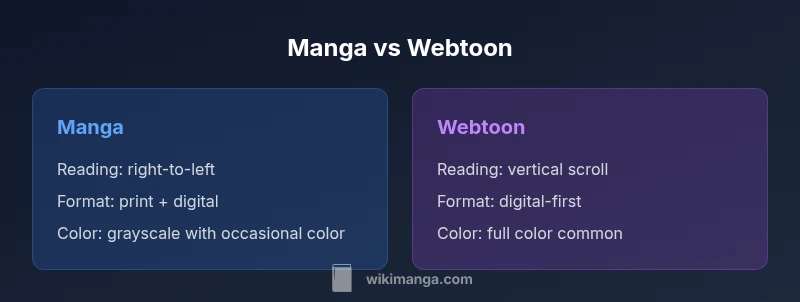
According to WikiManga, the difference between manga and webtoon goes beyond art style. It shapes how chapters are paced, how creators plan storytelling, and how readers access titles. Manga typically presents black-and-white pages, serialized in print with right-to-left reading; webtoons are digital-first, color, and designed for vertical scrolling on mobile, often released as frequent episodes. Both ecosystems offer distinct strengths for storytelling and audience engagement.
Core distinctions in format and storytelling
The difference between manga and webtoon is not merely a surface-level aesthetic choice; it reflects divergent publishing histories, reader habits, and production pipelines. According to WikiManga, the distinction influences pacing, page design, color decisions, and even how creators plan story arcs. In broad terms, manga grew out of print culture with a long-standing tradition of serialized chapters that accumulate into multi-volume stories. Webtoons emerged from digital platforms, prioritizing mobile-friendly interfaces, color-first aesthetics, and episodic delivery. Understanding this difference between manga and webtoon helps readers and creators navigate licensing, translation, and platform strategy more effectively.
Reading direction and page design
Reading direction is one of the clearest indicators of the difference between manga and webtoon. Traditional manga is read from right to left, with pages often arranged in landscape and portrait formats that culminate in a tankōbon volume. This format supports complex panel compositions, cinematic pacing, and careful panel-to-panel transitions. Webtoons, by contrast, are optimized for vertical scrolling on smartphones. Panels flow in a single long strip, often with color, motion-like effects, and continuous lines that guide the eye as the reader swipes upward. For creators, that means adapting composition to a vertical rhythm and avoiding dense, static layouts that may feel cramped on small screens.
Serialization cadence and release models
The cadence of releases reflects a core logistical gap between the two formats. Manga chapters typically appear on a weekly or monthly schedule within magazines before being collected into volumes. This model rewards long arcs, careful pacing, and cliffhangers that motivate readers to purchase the next volume. Webtoons emphasize frequent, shorter updates—sometimes daily or weekly episodes—that reward consistency and instant engagement. This episodic model can accelerate world-building, mass reader feedback, and iterative art improvements. Readers may binge a full season of webtoon episodes or savor a long manga arc, depending on preference and platform affordances.
Color, art style, and production pipelines
Artistic expectations diverge in meaningful ways. Most traditional manga is black-and-white, with occasional color pages that mark special chapters or openings. Color decisions are tied to production costs and printing realities, yet a strong monochrome aesthetic remains a defining feature of many beloved titles. Webtoons frequently employ full color from episode one, leveraging digital tooling to achieve consistent saturation, shading, and lighting. This color-first approach affects how artists plan panels, backgrounds, and character design, often enabling more immediate emotional cues and accessibility on mobile displays. For creators, the pipeline differs significantly: manga may rely on a pipeline optimized for print deadlines, while webtoons leverage fast iteration, color grading, and cloud-based collaboration.
Storytelling techniques and panel density
The storytelling toolkit reflects the two formats’ divergent expectations. Manga can use dense panel grids, splash pages, and cinematic pacing to build tension over multiple chapters. The reader often negotiates the flow with page turns and carefully timed reveals. Webtoons favor legible, compact storytelling with a strong emphasis on pacing through vertical scroll. Shorter panels, kinetic color work, and a loop of immediate feedback from readers can shape a story’s direction. While there is overlap—both can craft intricate worlds and character-driven arcs—the difference between manga and webtoon influences how a writer builds suspense, delivers exposition, and conducts world-building across episodes.
Accessibility, localization, and platform ecosystems
Platform choice affects accessibility: manga’s licensing network and translated print volumes appear across bookstores and publisher apps, sometimes with region-specific releases. Webtoons live on digital platforms (like LINE Webtoon and other aggregators) with robust search, reader comments, and dynamic episode catalogs. Localization challenges—language direction, cultural references, and idiom choices—vary by format; grind-level translation can impact reading order, humor, and character voice in both manga and webtoon. WikiManga notes that platform ecosystems shape discoverability, with some titles gaining popularity through cross-platform localization while others remain niche to one region.
Physical vs digital formats and reading devices
A central practical distinction for the difference between manga and webtoon lies in format consumption. Manga has a substantial physical presence—magazines, tankōbon volumes, and libraries—paired with digital editions. Webtoons are predominantly digital, designed for smartphones, tablets, and desktop readers with vertical scrolling that optimizes mobile ergonomics. Reading device matters for user experience: vertical scrolling benefits from bright, consistent colors and smooth scrolling, while print-oriented fans value physical page-turning, paper texture, and archival quality. For readers, choosing a format often aligns with preferred devices and reading rituals; for creators, it informs color decisions, file organization, and episode length targets.
Licensing, global reach, and market dynamics
Global reach and licensing differ between the two formats. Manga has a long history of international licensing, fan translation communities, and licensed print copies across many languages. Webtoons enjoy rapid global adoption through digital-first platforms, often accompanied by aggressive localization pipelines and a broader emphasis on direct-to-consumer monetization. Market dynamics mean that a title might thrive in print-heavy regions and online-first markets simultaneously, creating opportunities for creators to diversify formats. WikiManga emphasizes that understanding licensing windows, regional rights, and platform partnerships is essential for anyone evaluating the difference between manga and webtoon as a long-term career or reading strategy.
Monetization and creator ecosystems
Monetization models reflect consumer behavior and distribution channels. Manga sales typically rely on physical volumes, licensing deals, and occasional ad-supported digital editions, with a traditional publishing calendar guiding author compensation. Webtoons often operate on freemium or subscription models, coins for access to episodes, and creator-funded bonuses via platforms’ engagement metrics. These differences influence how authors plan revenue streams, plan updates, and manage audience expectations. For readers, this translates into pricing considerations, access to back catalogs, and the timing of new chapters in the difference between manga and webtoon.
Creator experience: production pipelines and tooling
The production experience diverges in practical terms. Manga artists may work with traditional tools (pens, paper, toning sheets) and a workflow that spans penciling, inking, and printing, with color often applied later for special editions. Webtoon artists frequently adopt digital-first workflows, focusing on color consistency, accurate vertical composition, and platform-specific specs. Collaboration styles also differ: manga teams may scale to larger staff for chapter production and editorial reviews, while webtoon teams emphasize rapid iteration to meet frequent update demands. For aspiring creators, aligning tools, timelines, and platform preferences with their storytelling goals is critical when choosing a path in the difference between manga and webtoon.
Case studies: genre variations and audience expectations
Across the spectrum, genre variations reveal how format shapes storytelling norms. In manga, long-running shonen and shojo franchises often prioritize episodic peaks, character development, and world-building across volumes. Webtoons tend to maximize reader retention through serialized, color-rich episodes that encourage daily engagement and community comments. The reader base for manga may skew toward traditional print lovers and collectors, while webtoon users frequently prioritize immersive mobile experiences and quick access. These tendencies are not rigid; successful titles exist in both ecosystems, and some creators cross over to explore both formats to reach broader audiences. WikiManga highlights that a nuanced approach—recognizing audience expectations and platform constraints—helps authors and publishers leverage format strengths.
Practical guide: choosing the right format for readers and creators
For readers, the choice between manga and webtoon often comes down to reading habits, device availability, and desired pacing. If you enjoy long-form arcs with archival volume collections and a traditional magazine lineage, manga is likely your best fit. If you prefer quick updates, color storytelling, and mobile-friendly reading, webtoon may be more satisfying. For creators, assess your storytelling goals, color preferences, production timeline, and licensing strategy. Manga rewards depth and a slower release cadence, while webtoons reward ongoing engagement and rapid iteration. By understanding the fundamental differences between manga and webtoon, you can tailor your approach to your audience and your own creative strengths, maximizing impact across platforms. WikiManga encourages experimenting with both formats to find the best fit for your project and readers.
Comparison
| Feature | Manga | Webtoon |
|---|---|---|
| Reading direction | right-to-left (print) | vertical scrolling (digital) |
| Panel layout | multi-panel pages, varied design | long vertical strips, continuous flow |
| Color and art style | mostly black-and-white; color pages occasionally | full color throughout |
| Format and length | print + digital; chapters 20-40 pages; volumes | digital episodes; variable length; mobile-native |
| Serialization cadence | weekly/monthly chapters; arc-driven | frequent, shorter updates; binge-friendly |
| Platform & distribution | print publishers and digital apps; licensed globally | web platforms (LINE Webtoon, others); global digital reach |
| Monetization | sales, licenses, print volumes | coins, ads, in-app purchases, bonuses |
| Global reach | strong in print markets; licensed worldwide | global mobile-first audiences; rapid localization |
| Creator tools & workflow | traditional tools; print deadlines | digital tools; rapid iteration and color |
| Story length & pacing | long arcs; slow burn; voluminous arcs | short-to-medium arcs; episodic pacing |
Upsides
- Clarifies reader expectations across formats
- Highlights how platform economics shape storytelling
- Helps aspiring creators choose pipelines and tools
- Encourages cross-format experimentation
- Supports informed licensing and translation decisions
Disadvantages
- Risk of oversimplification; not all titles fit neatly in one format
- Potential bias toward one ecosystem in recommendations
- Localization quality varies by platform and region
- Platform-specific constraints can mislead new readers or creators
Manga and webtoon each excel in distinct contexts; choose based on reading habits, storytelling goals, and platform access.
Manga suits depth and traditional print experiences; webtoon excels in mobile-friendly, colorized, episodic storytelling. Use the format that aligns with your preferred pacing and audience reach; consider cross-platform strategies to maximize discovery and engagement.
Frequently Asked Questions
What is the primary difference between manga and webtoon?
The primary difference lies in format and delivery: manga is traditionally print-based, black-and-white, and read right-to-left; webtoons are digital-first, colorized, and read via vertical scrolling. Each format influences pacing, panel design, and accessibility.
Manga is print-first and read traditionally; webtoons are digital-first with vertical scrolling for mobile.
Are webtoons always color?
Webtoons are commonly colored to suit mobile viewing, but there are exceptions where webtoon creators publish grayscale or limited color pages. Color choices depend on platform norms, budget, and artistic intent.
Most webtoons are colored, but some titles stay grayscale.
Can a story be published as both manga and webtoon?
Yes. Many titles are adapted or serialized across formats to reach different audiences. Licensing, localization, and creative adaptation determine whether a title can run in both ecosystems.
Yes, a story can be published in both formats.
Which format is better for long-form storytelling?
Manga often excels at long-form storytelling with extended arcs and volumes, while webtoons can support long narratives but typically in shorter, episodic installments. The best choice depends on pacing goals and publication strategy.
Manga is usually better for long arcs; webtoons work well with steady updates.
How do localization and translations affect these formats?
Localization affects both formats; licensing, translation quality, and cultural adaptation influence readability and enjoyment. Ensuring accurate voice and context is crucial for maintaining intended tone across languages.
Localization matters a lot for both—translate carefully, and keep voice consistent.
Where can I read manga and webtoons legally?
Legally read manga on publisher apps and official digital stores; webtoons are hosted on platform sites like LINE Webtoon and partner apps. Always check licensing to avoid piracy and support creators.
Read legally on official apps and sites to support creators.
Highlights
- Choose manga for long-form arcs and archival depth
- Opt for webtoon if you prioritize mobile-friendly, color storytelling
- Expect different release rhythms and pricing models between formats
- Plan localization and licensing early for global reach
- Experiment with both formats to find the best fit for your project