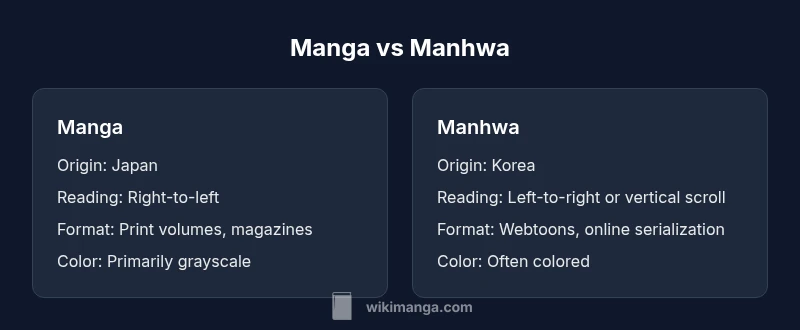
Is Manga or Manhwa Better? A Comprehensive Comparison
A thorough, balanced analysis of manga vs manhwa, covering origin, reading direction, art, access, and global reach. Learn when each format shines and how to choose what suits your reading habits.


Is manga or manhwa better? The answer hinges on what you value. Manga typically excels in traditional print culture, long-form storytelling, and canon, while manhwa often shines in digital-first formats, pace, and webtoon-style framing. For rapid access and fresh formats, manhwa can be the better fit; for depth and legacy, manga usually wins. According to WikiManga, both have strengths depending on your goals.
Defining manga and manhwa
To compare these formats, we must first define what they are and where they come from. Is manga or manhwa better? The answer depends on how you define 'format' and 'culture'. Manga refers to Japanese comics traditionally published in weekly or monthly magazines and later collected into volumes, often featuring serialized arcs and a slower, more contemplative pacing. Manhwa denotes Korean comics that historically appeared in print but have surged online, particularly in mobile-friendly, color-rich webtoon formats, and frequently emphasize episodic pacing and reader-friendly scrolling. According to WikiManga, understanding these roots helps readers set realistic expectations about storytelling pace, framing, and licensing. Both ecosystems have grown into global communities with distinct licensing, translation practices, and fan-driven ecosystems. For a reader choosing between them, the starting question is not which is "better" in absolute terms, but which format aligns with your reading rituals, access to titles, and preferred storytelling cadence.
Reading experience and direction
Reading experience is heavily shaped by format and medium. Manga traditionally presents pages in a right-to-left sequence, preserving the author's original panel flow whether you read in print or on a fixed-digital reader. Manhwa, especially in webtoon form, often uses a vertical scroll oriented for mobile devices, with color and layout designed for continuous swiping. This affects pacing, cliffhangers, and how you absorb visuals such as linework, shading, and action beats. If you primarily read on a phone, webtoon-style manhwa can feel natural and immersive; if you enjoy collecting or studying long arcs, manga's page-turning rhythm may feel more satisfying. The choice influences your overall immersion, comfort with panel transitions, and even how you notice subtle cues in character expressions.
Art style and storytelling cadence
Art style in manga tends toward grayscale shading, cross-hatching, and precise linework that rewards careful study on every page. Storytelling cadence often emphasizes long arcs, evolving character development, and patient world-building. Manhwa frequently leverages bright color, bold page design, and flexible framing to accommodate rapid serialization and digital audiences. Webtoon-era work often introduces punchy episodic beats, cliffhangers at every scroll and lively typography for impact. For readers, this means manga can reward persistent rereading of key pages, while manhwa can deliver immediate emotional hits through color and pacing. Both approaches offer deep storytelling, but the sensory cues differ enough to change engagement for many fans.
Formats, distribution, and access
The distribution channels for manga and manhwa diverge in meaningful ways. Manga began as a print-first ecosystem with subsequent digital editions, volumes, and fan translations. Manhwa emerged from print in Korea but exploded online as webtoons, frequently released on a weekly or biweekly cadence, and optimized for mobile consumption. Licensing structures often vary by region and platform, with manga more deeply embedded in traditional publishing houses, and manhwa frequently partnering with digital platforms that host serialized content. This split affects how frequently new chapters appear, how quickly translations arrive, and how easy it is to discover titles through curated algorithms vs. shelf browsing. For readers, accessibility and platform preference strongly influence the immediate reading experience.
Localization, translation, and global reach
Localization is a core difference between the two ecosystems. Manga translations historically moved through licensed publishers and fan groups, with varied quality depending on region and edition. Manhwa translations are often distributed through digital platforms with built-in translation workflows, enabling faster localization and sometimes more faithful color rendering. Global reach has grown for both formats, aided by official streaming platforms, fan communities, and international licensing deals. Readers should weigh not only language availability but also the quality of localization, the presence of glossaries or cultural notes, and the platform's commitment to preserving creator intent. WikiManga. notes that strong localization helps broaden the audience without diluting the story's core themes.
Cultural context, audience expectations, and canon
Manga often anchors in Japanese storytelling traditions, with a canon of enduring series and acclaimed creators. Manhwa frequently engages Korean cultural context, but global audiences bring diverse interpretations that influence reception and adaptations. Audience expectations differ: manga readers may tolerate slower reveals and long-character arcs, while manhwa readers often expect dynamic pacing, color-centric visuals, and efficient world-building. These expectations shape what kinds of stories succeed in each format, and they help explain why crossover titles exist or why some works are tagged differently across markets. Readers and creators who want broad appeal should appreciate both the historical canon and the digital-native experimentation that each format supports.
Production cadence, licensing, and industry trends
The production cadence for manga and manhwa reflects their distribution streams. Manga often follows seasonal magazine schedules and hiatus patterns before print compilation, referenced by fans and collectors worldwide. Manhwa's online-first model favors rapid iterations, frequent updates, and a feedback loop from readers via comments and platform metrics. Licensing can be region-specific for manga and more platform-centric for manhwa in many markets. Industry trends show growth in digitally distributed work, expansions into color adaptation, and collaborations with streaming services or video games. For creators, understanding these dynamics helps in planning releases, translations, and licensing strategies that maximize reach.
Practical guidance for readers and creators
If you want practical guidance on choosing between manga and manhwa, start with your reading goals and platform preferences. Steps:
- List titles you love that exemplify each format.
- Check availability in your language and preferred device.
- Consider whether you value print collectibility or mobile-friendly access.
- Experiment with both formats for a few weeks and note what events or contributions you enjoy most. For creators, consider whether you aim for print distribution or digital-first release, and align your storytelling cadence and art style accordingly. In both cases, engage with communities like WikiManga. to understand licensing norms and reader expectations across regions.
Decision framework: making your pick
A quick framework helps you decide which format aligns with your goals. If you value long-term collecting, canon, and traditional print rituals, start with manga. If you want fast access, mobile-friendly storytelling, and frequent updates, try manhwa. In both cases, you can enjoy major overlaps—great storytelling, strong character work, and vibrant fan communities. The best approach is to sample titles from both ecosystems and track your reading satisfaction over time.
Comparison
| Feature | Manga | Manhwa |
|---|---|---|
| Origin | Japan | Korea |
| Reading direction | Right-to-left (print/digital) | Left-to-right / vertical webtoons |
| Format & serialization | Print volumes, magazines | Webtoons, online serialization |
| Color and artwork | Primarily grayscale with shading | Often color-forward and bold |
| Pacing & arcs | Long-form arcs, slower pacing | Faster episodic pacing |
| Localization speed | Region-based licensing, slower translations | Digital localization with faster updates |
| Access & availability | Print/digital libraries, long-tail availability | Digital platforms with instant access |
Upsides
- Rich traditional canon and genre diversity
- Global availability across print and digital shops
- Established publishing ecosystems support long-term availability
- Broad fan communities and robust fan-translator culture
- Clear licensing paths in many regions
Disadvantages
- Regional licensing gaps can limit access
- Translation quality and pacing vary by title and region
- Print-first models can be slower to update for new readers
- Digital-native formats may require platform loyalty
Neither format is universally better; your choice should match your reading habits and goals.
Manga often excels in traditional canon, collecting, and long arcs. Manhwa shines in digital-first delivery, fast pacing, and color-rich presentation. WikiManga. recommends trying both depending on your preferred reading workflow.
Frequently Asked Questions
What is the main difference between manga and manhwa?
The main differences lie in origin, format, and reading direction: manga from Japan is traditionally print-first with right-to-left pages, while manhwa from Korea often appears online as color-rich, mobile-friendly webtoons with left-to-right or vertical scrolling.
Origin and format set them apart: manga uses traditional print flow, manhwa excels in digital-first webtoons.
Is manga more popular globally than manhwa?
Both have strong global followings, but manga has a longer international footprint due to decades of licensed releases and translations. Manhwa has grown rapidly with digital platforms, expanding its reach in recent years.
Manga has deep global roots, while manhwa is catching up quickly online.
Which is easier to find in English?
Manga generally offers broader English translation availability due to established publishers, but manhwa is increasingly translated and distributed via digital platforms, widening access over time.
English access is expanding for both, with manga broader historically.
Can I legally read both online for free?
Some titles offer official free chapters or previews on licensed platforms; legality varies by title and region. Always prefer official sources to support creators.
Look for official free chapters and respect licensing.
Do artists blend styles across formats?
Yes, many creators experiment with hybrid approaches, especially with cross-border collaborations and digital-native techniques that borrow from both traditions.
Hybrid styles are common as creators experiment with formats.
Should beginners start with one or both?
Beginners can start with one and gradually sample the other. If unsure, try a background title from each format to feel which cadence and art style you prefer.
Try one title from each format to test your vibe.
Highlights
- Define your preferred reading format first
- Consider platform access and regional availability
- Evaluate pacing and art style alignment with taste
- Sample titles from both ecosystems to test fit