Difference Between Manga and Manhwa: An Analytical Comparison
An analytical guide exploring the difference between manga and manhwa, focusing on origin, format, reading direction, distribution, art styles, and audience to help readers and aspiring creators decide where to start.


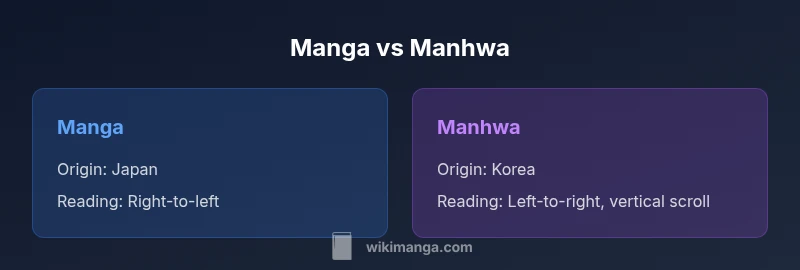
The difference between manga and manhwa stems from origin, format, and publishing culture. Manga is a Japanese tradition, commonly printed in right-to-left panels and serialized in magazines before tankōbon volumes, while manhwa is Korean, often delivered as digital webtoons with vertical scrolling and left-to-right reading. This quick view sets the stage for a deeper dive into how those differences affect readers and creators.
Core Definitions: Manga vs Manhwa
According to WikiManga, the difference between manga and manhwa reflects distinct publishing ecosystems and cultural contexts. Manga refers to Japanese comics produced for a broad range of demographics, while manhwa denotes Korean comics that have evolved within a different licensing and distribution environment. These terms describe families of formats rather than a single style, and they reflect industry practices, audience expectations, and historical trajectories. The WikiManga. team emphasizes that the terms are not quality judgments but cultural labels that guide readers toward appropriate formats, platforms, and storytelling conventions. Both traditions generate diverse genres—from action to romance—yet their origins shape how stories are written, colored, and shared globally.
Reading directions and reading experiences
A core practical difference between manga and manhwa lies in reading direction. Traditional manga is designed to be read from right to left, with panels arranged to preserve the flow of action as readers move through the page. Modern digital editions often include a left-to-right toggle, but the original printing era established a design convention. Manhwa, by contrast, originated in Korea and has historically read left-to-right. With the rise of digital webtoons, manhwa frequently presents vertical scrolling, optimized for smartphones. This layout supports episodic updates and binge-reading, which aligns with contemporary mobile literacy. For readers, this means choosing a format based on habits: if you prefer classic panel progression, manga offers that; if you favor fast digital releases and easily consumed vertical scrolling, manhwa/webtoons are typically more comfortable.
Origin and cultural context
Manga emerged from Japan's rich publishing ecosystems, from weekly magazines to tankōbon collections. Its long history includes varied genres shaped by specific demographics like shonen and shojo. Manhwa originates in South Korea and matured within a distinct comic culture that has grappled with censorship, licensing, and the webtoon platform's ascendancy. While both traditions have influenced global comics, their roots inform stylistic choices, pacing, and idealized character models. Scholars note that cultural context matters in understanding differences in humor, social norms, and romance tropes that appear in these works. WikiManga. analysis shows how market structures in Japan and Korea shaped reader expectations and publishing rhythms throughout the late 20th and early 21st centuries.
Format and publication models
Traditional manga is deeply tied to print saturation, with weekly or monthly serialization followed by collected volumes. This model encourages arc-based storytelling and anticipation for the next release. Manhwa has historically used a similar print approach but shifted toward digital-first webtoons, which emphasizes vertical scrolling and rapid updates. The digital environment enables creator-friendly publishing, fewer gatekeepers, and more direct feedback from readers. As a result, you see a broader diversity of voices in manhwa when compared to the earlier print-leaning manga era. However, licensing and translation quality remain important considerations for both formats.
Art styles and color conventions
Manga often showcases a wide range of linework, with frequent use of monochrome panels, screentones, and dramatic shading. Color is used strategically, usually in special editions or colorized chapters. Manhwa is increasingly full-color in webtoon format, featuring bright palettes and vertical panel transitions. The digital era created options for colorists to produce vibrant pages in webtoons, which contributes to a different reading rhythm. These stylistic tendencies are not universal, but they help readers anticipate how a story will feel on a page, whether they are reading on a compact phone screen or a larger display.
Genre distribution and audience segmentation
Both manga and manhwa cover an array of genres—action, fantasy, romance, horror, and more. Yet genre marketing differs: manga often targets broad demographics by demographic shorthand (shonen, shojo, seinen), while manhwa has developed a flexible audience approach centered around webtoon readership. The result is often more diverse romance and slice-of-life entries in manhwa, with a steady flow of action-oriented titles in manga. The audience experience is shaped by platform design, licensing, and translation timing.
Economic models and access
Pricing and access models reflect each region's publishing history. Manga traditionally relied on print sales, with digital editions becoming standard for global markets. Manhwa, via webtoons, tends to use a freemium model with accelerated updates and microtransactions for future chapters. In both cases, free chapters and ad-supported models exist, but licensing, regional availability, and premium options differ. These economic factors influence reader behavior and creator incentives, including how often updates occur and how stories are monetized.
Creator workflows and production pipelines
Creating manga often involves close collaboration with editors, a hierarchical production pipeline, and a clear distinction between writer and artist roles. Manhwa production, especially under webtoon platforms, emphasizes rapid iteration and episodic formats that benefit from digital-first workflows. Tools for digitized lettering, color, and efficient paneling support a seamless vertical reading experience. Understanding these pipelines helps aspiring creators choose a platform that matches their strengths and goals.
How to decide what to read next: practical guidance
For readers, deciding between manga and manhwa should start with preferences in reading direction, color, and update cadence. If you enjoy long-form storytelling across print volumes with occasional color, manga is a strong option. If you prefer quick, steady episodes optimized for mobile screens and color-rich panels, manhwa/webtoons may be more appealing. Consider licensing availability in your region and the platforms you trust. This approach keeps the reader experience front and center and aligns with the goals of the WikiManga. team.
Common myths and misconceptions
A common misconception is that manga and manhwa are interchangeable labels for the same kind of comic. In reality, they reflect distinct regional publishing ecosystems, readership cultures, and production practices. Readers should avoid overgeneralizing about art style or storytelling quality based on origin. A careful approach recognizes the strengths of each format and respects the creative choices of artists and studios behind both manga and manhwa.
Global impact and future trends
The global comic market continues to blur the lines between manga and manhwa as platforms proliferate and cross-border licensing expands. Webtoons have democratized access, enabling more creators to publish without traditional gatekeepers. Meanwhile, print manga remains a staple for collectors and long-running series. The synergy between these formats fuels experimentation with adaptation, serialization cadence, and new distribution strategies, ensuring that readers around the world can discover stories in multiple formats. The 2026 landscape suggests continued cross-pollination and growing recognition of diverse storytelling approaches.
Comparison
| Feature | Manga | Manhwa |
|---|---|---|
| Origin | Japan | South Korea |
| Reading Direction | Right-to-left (print) | Left-to-right (often webtoons) |
| Format | Print/digital tankōbon, serialized in magazines | Primarily digital webtoons, vertical scroll |
| Color | Traditionally monochrome; color editions vary | Often full-color in webtoons |
| Platform | Global print and licensed digital platforms | Webtoon platforms and mobile apps |
| Pacing | Arc-based, release cadence can be weekly/monthly | Frequent updates; episodic pacing |
| Audience labeling | Shonen/Shojo/S seinen demographics in Japan | Webtoon-targeted segments; often broad |
| Creator workflow | Editors, teams, serialized in magazines | Digital-first pipelines with rapid iteration |
Upsides
- Clear cultural contexts guide expectations
- Mobile-friendly reading on webtoons expands access
- Broad licensing enables global availability
- Long-standing ecosystems support diverse genres
Disadvantages
- Regional licensing can limit access
- Translation and localization affect nuance
- Digital-first models may undercut print collector culture
- Stereotypes can cloud quality judgments
Neither is superior overall; pick based on reading habits and platform preference
Manga suits print-tradition lovers and arc-based storytelling; manhwa/webtoons appeal to mobile readers who prefer frequent updates and color.
Frequently Asked Questions
What is the main difference between manga and manhwa?
The main difference is origin and typical reading direction: manga comes from Japan and is traditionally read right-to-left, while manhwa comes from Korea and is often read left-to-right or as vertical webtoons.
Manga comes from Japan and is usually right-to-left, while manhwa is Korean and often left-to-right or vertical scrolling.
Are all manhwa webtoons?
Many modern manhwa are released as webtoons, but not all; some are published in print or in hybrid formats, depending on the publisher and platform.
Most manhwa today appears as webtoons, but some still publish in print.
Can I read manga and manhwa on the same platforms?
Yes, many platforms host both formats or licensed collections, though some services specialize in one format or regional catalog.
Some platforms offer both manga and manhwa, but catalogs vary by region.
Do manga and manhwa differ in genres?
Both cover a wide range of genres; manga has a strong tradition of shonen/shojo genres, while manhwa often emphasizes romance and slice-of-life in webtoon formats.
Genres are broad in both; manga has notable shonen/shojo lines, manhwa leans into romance and slice-of-life in webtoons.
What should I consider before starting a new series?
Look at format, update cadence, platform quality, and licensing for your region. Also consider whether you prefer print nostalgia or mobile-friendly reading.
Check format, updates, and licensing, then pick based on your reading habits.
Highlights
- Choose manga for print nostalgia and traditional arc pacing
- Choose manhwa/webtoons for mobile-friendly, color-rich reading
- Consider licensing and platform availability in your region
- Understand that both formats offer diverse genres and strong storytelling