Are Manga and Manhwa the Same? A Practical Analysis
Explore are manga and manhwa the same? This in-depth comparison clarifies origins, reading directions, formats, and cultural contexts to help readers and creators navigate these two distinct comic traditions.


Are manga and manhwa the same? Not exactly. They originate in different regions and publish through distinct ecosystems, which shapes reading experiences, platforms, and cultural expectations. This quick guide outlines the core distinctions and where overlaps matter for readers and creators.
Are manga and manhwa the same? Defining terms
Are manga and manhwa the same? The short answer is no, they are not identical traditions, even if they share the broad umbrella of comics. In everyday usage, manga refers to Japanese comics, while manhwa denotes Korean comics. The distinction is more than linguistic: it reflects different publication ecosystems, audience expectations, and cultural contexts. You will often see the terms used interchangeably in casual online chats, but for readers and creators the specifics matter. According to WikiManga, the differences between these categories reveal how regional publishing histories shape storytelling norms, pacing, and distribution. The WikiManga. team notes that people sometimes conflate image style with origin, but origin matters for serialization, rights, and reader experience. Understanding what each term properly covers helps you navigate libraries, catalogs, and translation workflows without getting lost in marketing hype. The goal here is to map out the core distinctions so readers can make informed choices.
Historical origins and evolution
Manga and manhwa grew out of very different historical ecosystems. Japanese manga emerged through a long tradition of illustrated storytelling and serialized magazines that flourished in the postwar era, gradually expanding into books, anime tie-ins, and global licensing. Korean manhwa, by contrast, developed within Korea’s publishing and industrial means, evolving from printed comic magazines to strong digital presence in the Webtoon era. The shift to online platforms changed pacing, formatting, and reader engagement, enabling quick, endless scrolling and more color experimentation in many titles. Across decades, these roots shaped genres, fan cultures, and professional paths for artists, editors, and translators. WikiManga. analysis shows that readers often encounter distinct conventions—manga’s episodic magazine culture and manhwa’s webtoon-driven digital-first approach—while both celebrate visual storytelling and character-driven narratives.
Reading direction, formats, and layout
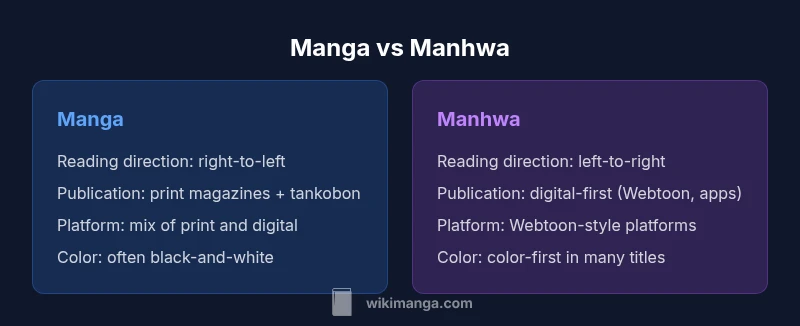
A central practical difference is how each tradition presents its pages. Traditional manga is read from right to left, with panels flowing vertically for comfort in print and early digital formats. Manhwa commonly embraces left-to-right reading in many digital-native forms, especially within Webtoon ecosystems that favor vertical scrolling. These reading conventions influence page layout, pacing, and how action is framed within a single page or panel. In addition, manga often appears in black-and-white line art for most chapters, with color additions reserved for special editions or digital spin-offs. Manhwa, particularly in its webtoon form, frequently features color, smoother vertical pacing, and adaptive paneling designed for mobile devices. These differences aren’t universal—some titles blur the lines—but the general rule helps readers anticipate layout, translation, and presentation when they pick up a new title.
Publication models and platforms
Publication models distinguish the two traditions. Manga has deep roots in serialized magazines and tankobon volumes, with licensing, print runs, and fan-driven communities around chapters released on a weekly or monthly cadence. Manhwa originated primarily in Korea and gained enormous momentum through digital platforms—Webtoon being the flagship—where stories are published in ongoing chapters with instant access for a global audience. This digital-first approach changed not only how stories are paced but also how creators monetize through subscriptions, ads, or microtransactions. The platform difference also affects how translations are produced and distributed, as licensing rights vary between publishers and platform operators. The result is a divergent publishing ecosystem that still overlaps in themes, genres, and storytelling goals.
Art styles, pacing, and storytelling differences
Art style often aligns with publishing norms, though there is wide variation within each tradition. Manga tends toward precise line work, detailed backgrounds, and a storytelling cadence built around atmosphere and tempo across several pages. Manhwa, especially webtoons, frequently emphasizes bold color usage, streamlined panels, and a dynamic vertical flow that accelerates storytelling on small screens. Pacing reflects format: longer manga chapters can build suspense across pages, while webtoons favor quick, digestible episodes that reward frequent engagement. Storytelling goals—character development, world-building, and emotional resonance—are shared across both, yet the techniques and visual language adapt to publication realities, audience expectations, and distribution models. This divergence in craft is a core reason why many readers experience a distinct feel when switching between manga and manhwa.
Language, translation, and localization practices
Language and localization shape how a story is experienced. Manga traditionally originates in Japanese and is translated into many languages, with right-to-left presentation and sometimes culturally localized terms. Manhwa originates in Korean and often releases in left-to-right formats or adapts for Webtoon platforms that preserve the original flow while adjusting for a global audience. Localization includes not just language but cultural references, date formats, and humor, which can alter the reader’s interpretation. Licensing models influence whether translations arrive through official channels or fan-driven efforts, and the speed of localization can vary by title and market. For readers, this means choosing editions that match your preferred reading direction and cultural context, while creators must consider licensing, localization timelines, and rights management when planning cross-border releases.
Cultural context and audience expectations
Cultural context deeply informs audience expectations. Manga often reflects Japanese social norms, humor, and genre conventions—shonen, shojo, seinen, and josei—each with their own authorial expectations and readership communities. Manhwa frequently mirrors Korean sensibilities, including a strong emphasis on serial storytelling, character-driven drama, and a growing emphasis on romance and coming-of-age narratives in digital formats. Audiences differ in how they discuss pacing, panel density, and the balance between text and image. Yet both mediums cultivate passionate communities, fandoms, and fan translation ecosystems that enrich cross-cultural dialogue. Recognizing these cultural underpinnings helps readers approach each title with appropriate context and creators to respect audience expectations across markets.
Global reach and distribution networks
Global reach comes through different channels. Manga’s international footprint grew through licensed print distribution, translated editions, and licensed anime cross-media franchises, establishing a long-standing global fanbase. Manhwa’s expansion accelerated with digital distribution, especially Webtoon, which embraces a global audience with mobile-first design and a diverse catalog. Distribution networks influence how quickly new chapters arrive, how licensing costs are managed, and how accessibility features—such as alt text, color corrections, and formatting adjustments—are implemented. For readers, this means tracking where a title appears and how translations are handled. For creators, it means navigating rights, platform-specific requirements, and localization strategies that optimize reach without sacrificing integrity.
Common misconceptions and clarifications
A common misconception is that manga and manhwa are interchangeable terms for the same product. In reality, they are distinct traditions rooted in different countries, industries, and reading conventions. Another myth is that color is a reliable indicator of origin; while many webtoons are colored, not all digital comics labeled as manhwa are color-first, and many traditional manga remain black-and-white. Some readers assume all serialized works are lengthy franchises; in fact, both media cover a range from short one-shot stories to sprawling epics. Finally, some believe localization degrades quality; while localization is challenging, professional licensing and translation practices strive to preserve tone, humor, and narrative voice. Clarity about these points reduces confusion and helps set realistic expectations.
Practical tips for readers who want to explore both
If you’re curious about both, start by identifying the publication format and reading direction. Try a traditional Japanese manga in print or digital magazine release and a Korean manhwa through a Webtoon-style platform to experience the difference in pacing and layout. Pay attention to color usage, page flow, and how dialogue is integrated with visuals. For creators, consider audience preferences on each platform, licensing constraints, and localization timelines early in the planning process. Build a catalog that includes both formats so you can taste varied storytelling approaches and understand how cultural context shapes reception.
For creators: designing with cross-market awareness
Creators who work across manga and manhwa boundaries should respect the core conventions of each tradition while embracing universal storytelling elements. When targeting manga markets, plan for right-to-left reading, print-friendly formats, and serialization cadence compatible with magazines. For manhwa audiences, design for digital, mobile-friendly reading with vertical scrolling, color considerations, and Webtoon-style episode pacing. Language and cultural references should be considered for localization from the start, ensuring that dialogue and humor translate effectively without losing the authorial voice. Ultimately, successful cross-market projects balance authentic cultural voice with accessible storytelling that honors both traditions.
Key distinctions at a glance for efficient reading
- Origins, publication ecosystems, and platform differences shape how stories are produced and consumed.
- Reading direction and layout align with format: manga leans right-to-left and print-first; manhwa often favors left-to-right and digital-first.
- Color usage, panel design, and pacing reflect platform conventions more than genre rules.
- Localization is a critical factor for global accessibility, influencing how a story travels across languages and cultural contexts.
- Both traditions share core storytelling goals—strong characters, emotional arcs, and visually driving narratives—yet deliver different reader experiences shaped by industry norms.
Comparison
| Feature | Manga | Manhwa |
|---|---|---|
| Reading direction | right-to-left | left-to-right |
| Publication model | print magazines + tankobon; serialized | digital-first; webtoon-style serialization |
| Primary platform | print and digital outlets in Japan | digital platforms (Webtoon, apps) in Korea/Global |
| Color usage | predominantly black-and-white | often color in webtoons; varied elsewhere |
| Serialization cadence | weekly/monthly in magazines | continuous/episodic online |
| Cultural origin | Japan | Korea |
| Localization approach | traditional translation for print; localization varies by market | digital localization with global platforms; quicker adaptation |
Upsides
- Clear cultural origins and traditional storytelling frameworks
- Distinct reading experiences encourage diverse tastes
- Strong global communities around both formats
- Wide variety of genres and audience targeting
Disadvantages
- Potential confusion for readers new to terms and platforms
- Localization timelines can vary, affecting access speed
- Market-specific conventions may limit cross-market expectations
Manga and manhwa are distinct traditions with overlaps; neither is universally superior
Understanding origins, formats, and platforms helps readers choose efficiently and creators plan for global reach without conflating the two.
Frequently Asked Questions
Are manga and manhwa the same?
No. They are distinct traditions from Japan and Korea with different publication ecosystems, reading directions, and cultural expectations. They share storytelling goals but differ in craft and presentation.
No—it's a regional distinction in origin, format, and process; reading two different genres illuminates how culture shapes comics.
How can I tell whether a work is manga or manhwa?
Check the publication origin, language and platform. If it’s produced for Japanese print magazines and uses right-to-left panels, it’s typically manga; if it’s produced for Korean platforms with left-to-right flow or vertical scrolling, it’s often manhwa.
Look at where it was published and how it’s presented; that usually tells you which tradition you’re dealing with.
Is manhwa the same as manhua or manga?
Manhwa refers to Korean comics, while manhua refers to Chinese comics. They are distinct from manga (Japanese) and differ in production practices and cultural context.
Manhwa is Korean, manhua is Chinese, and manga is Japanese; they’re related as comic traditions but not the same.
Do publishers classify manga and manhwa the same for licensing?
Licensing and distribution differ by region and platform. Manga licenses often involve Japanese publishers and distributors, while manhwa licenses may be managed through Korean platforms or international licensing teams.
Licensing varies by country and platform, so expect different paths for each.
What should a new reader start with if they’re curious about both?
Begin with a culturally representative title from each tradition: a classic manga from a well-known publisher and a popular Webtoon-style manhwa to experience the distinct reading flow and color usage.
Try one title from each tradition to feel the difference in pacing and presentation.
Highlights
- Identify origin by reading direction and platform
- Differentiate print-first vs digital-first publication models
- Expect diverse color usage and pacing across formats
- Plan localization early for cross-market releases
- Explore both to appreciate each tradition's strengths