When Did Manga First Appear: A History of Japanese Comics
A rigorous look at manga origins, tracing from medieval emaki to postwar modern manga. Learn how the term emerged, key figures, and the global shift that shaped today’s reading experience.


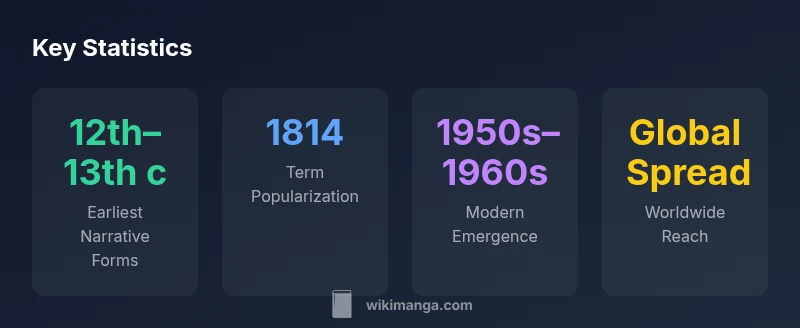
Manga traces its visual storytelling roots to medieval emakimono and ukiyo-e prints, with the term 'manga' popularized by Hokusai in the early 19th century in the 'Hokusai Manga' series. The modern, serialized form took shape after World War II, especially through Osamu Tezuka's 1950s works, which established iconic pacing, character archetypes, and panel flow that define manga today.
From Emaki to Early Narrative Scrolls
Long before the modern term 'manga' existed, Japan developed rich visual storytelling through emakimono, or picture scrolls. These handscrolls, often stretching several meters, combine painted images with calligraphic narration to convey seasonal tales, journeys, and legends. From the 12th century onward, emakimono experimented with panel sequences, speed, and rhythm, creating a proto-language for sequential art that would influence later manga. In parallel, the later ukiyo-e tradition, with woodblock prints and illustrated books, circulated broad audiences of urban readers. While emakimono were not 'comics' in the contemporary sense, they shared essential aspects: a continuous visual narrative, deliberate pacing across panels, and a reader’s journey through a sequence. Scholars emphasize that these early forms laid the groundwork for a uniquely Japanese mode of picture storytelling, which would later fuse humor, fantasy, and social commentary as mass-market formats.
The Word manga and Hokusai's Influence
The term manga, literally 'whimsical pictures' or 'whimsical drawings,' entered the public lexicon in the early 19th century. One of the most influential sources is Katsushika Hokusai, whose six-volume set Hokusai Manga (c. 1814) presented playful caricatures and observational humor in compact panels. While not a stand-alone narrative like a modern graphic novel, these sketches popularized a portable, repeatable style. In subsequent decades, artists and publishers used the word to describe lighthearted illustrated works, and the concept gradually persisted as mass-produced prints made art accessible to a growing literate public. By the mid-19th century, the practical idea of manga as a series of connected images with a continuous read order began to crystallize in print culture, even as the medium continued to evolve under social and technological pressures.
The Prewar to Postwar Serial Shift
Japan’s print culture underwent rapid transformation during the early 20th century. Newspapers, magazines, and story papers began experimenting with serialized, self-contained narratives that could be consumed in short sessions. This push toward episodic storytelling prepared the ground for a postwar explosion of manga aimed at youth and general audiences. The late 1940s and 1950s saw the rise of longer-running titles, weekly schedules, and more ambitious formal experimentation. Osamu Tezuka, often called the 'God of Manga,' helped codify a modern language of storytelling—dynamic character design, cinematic panel transitions, and clear, readable pacing that could convey emotion with economy. His work, and the broader shift toward serialized magazines, cemented the structural conventions that define contemporary manga.
Tezuka and the Modern Manga Language
Tezuka popularized a modern manga aesthetic by combining cinematic storytelling techniques, expressive character design, and long-form serialization. His approach to pacing—switching between intimate close-ups and expansive scene-setting—created a reader experience that could sustain touching drama and energetic action across chapters. This block should emphasize how his innovations established a flexible grammar for manga that could target diverse audiences, from children to adults, and how his influence persists in contemporary works today.
Gekiga and the Diversification of Audiences
By the late 1950s and 1960s, a movement known as gekiga—'drama pictures'—emerged, seeking more mature, cinematic storytelling for adult readers. Pioneers like Tatsumi and others pushed away from child-oriented adventure toward realism, social commentary, and psychological depth. The gekiga movement helped redefine what manga could be: not a single genre but a spectrum that includes both light entertainment and serious, existential narratives. The emergence of gekiga parallels broader cultural shifts in postwar Japan, where readers sought more nuanced, reflective material. Over time, gekiga influenced mainstream works and contributed to the diverse range of styles that characterize manga today.
Globalization and the Digital Age
From the late 20th century onward, manga found new audiences outside Japan through translations, licensing, and the growth of dedicated magazines and imprints in the United States, Europe, and other regions. The internet and digital platforms accelerated access, fan translations, and the rise of webtoons and online serialized content. Today's manga ecosystem blends print, digital, and cross-media storytelling—anime adaptations, video games, and merchandising—creating a global culture of fans and creators who consume and produce manga in multiple languages. This global expansion reshaped not only publishing but also reader expectations about pacing, cliffhangers, and accessibility.
Reading Manga History: Practical Tips for Fans and Creators
To appreciate manga history, start with a chronological lens: examine emakimono and ukiyo-e for early sequential storytelling, then trace how the term 'manga' evolved and how postwar serialized formats matured. Compare Tezuka’s work with later genres like gekiga to understand shifts in audience and tone. For creators, study panel transitions, pacing, and character archetypes across eras to see what persists and what changes with technology and culture. Finally, consider how translations and digital platforms affect global readership and access to historical works.
Timeline milestones of manga history
| Era | Key Milestone | Representative Works/Figures |
|---|---|---|
| Emaki origins | 12th–13th centuries | Chōjū-jinbutsu-giga; early scroll narratives |
| Term and early references | 1814 | Hokusai Manga; early humorous sketches |
| Postwar serialization | 1950s–1960s | Tezuka; modern manga language; weekly magazines |
| Gekiga movement | late 1950s–1960s | Tatsumi; adult dramatic storytelling |
| Globalization and digital age | 1980s–present | Translations, licensing, webtoons, anime ties |
Frequently Asked Questions
What is considered the earliest form of manga?
The earliest forms are the emakimono, or illustrated handscrolls, dating to the 12th–13th centuries. They combined sequential images with narration to tell stories. These works laid the groundwork for how later artists would pace and frame a visual narrative.
Early picture scrolls like emakimono told stories through sequences of images, setting the stage for manga's development.
When did the term 'manga' first appear?
The term manga dates to the early 19th century, with influential use in Hokusai’s Hokusai Manga (around 1814). It described humorous or whimsical drawings and gradually evolved to describe serialized picture narratives.
The word manga comes from early 1800s Japanese prints and sketches that emphasized humor and whimsy.
Who popularized the modern manga language?
Osamu Tezuka, active in the 1950s, played a pivotal role in shaping modern manga language—long-running series, cinematic panel transitions, and accessible pacing that appealed to broad audiences.
Tezuka helped define how manga tells stories, with bigger arcs and clearer pacing.
What is gekiga and how does it differ from manga?
Gekiga is a movement from the late 1950s–1960s focusing on mature, cinematic storytelling for adults. It broadened the manga spectrum beyond kid-friendly adventures to include social realism and psychological depth.
Gekiga brought real-world themes and tougher storytelling into manga.
When did manga become popular outside Japan?
Manga circulated outside Japan primarily in the 1980s–1990s through translated editions and licensing, followed by the digital age which accelerated cross-border access and fan communities.
Manga reached readers worldwide in the late 20th century and grew with digital platforms.
“Manga's history shows how visual storytelling adapts to readers, technologies, and cultures across centuries. It reveals a continuum from scrolls to the digital age.”
Highlights
- Trace manga origins to 12th–13th century emaki.
- The term 'manga' was popularized by Hokusai around 1814.
- Modern manga was solidified in the postwar era by Tezuka.
- Gekiga broadened manga's audience to adults.
- Global access surged with translations and digital platforms.