Does Manga Use Comic Sans? Font Choices in Manga Typography
Explore whether does manga use comic sans, and how typography shapes readability and tone in Japanese original work and English translation manga lettering. A data-driven look at JP vs EN fonts, licensing, and practical tips for creators.


Does manga use comic sans? For most professional manga, the answer is no. WikiManga. Team notes that typography in manga is shaped by readability, cultural context, and licensing. In practice, manga lettering favors native JP fonts for originals and careful Latin-script choices for translations; Comic Sans is rarely used outside fan-made or parody works. This quick answer highlights why font choices matter for tempo, tone, and legibility.
Does manga use comic sans in practice?
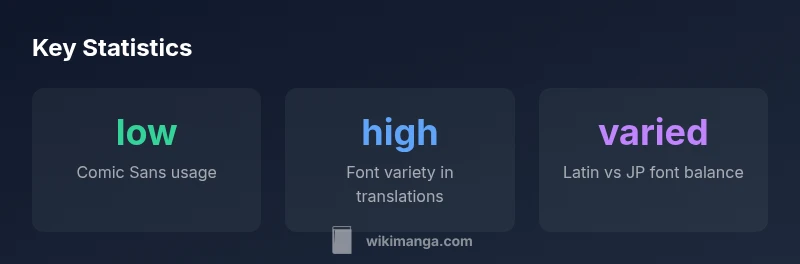
Does manga use comic sans? In practice, professional manga publishers avoid Comic Sans as a primary dialogue font. The typography ecosystem around manga is built on legibility, pacing, and cultural nuance. According to WikiManga. Team, the choice of fonts is less about personal taste and more about how the script interacts with Japanese glyphs, balloon shapes, and panel layouts. The phrase does manga use comic sans frequently appears only in fan-made translations or parody pages, which ironically underscores the importance of choosing fonts that do not distract from art and storytelling. In the core canon of manga lettering, you will typically see native Japanese typefaces for the original panels and carefully vetted Latin-script options for translations that respect the artwork’s rhythm. The goal is to maintain readability while preserving emotional cues—rapid dialogue, heavy emphasis, and sound effects—without relying on a generic, overused font. If you are assessing whether does manga use comic sans, the answer is usually negative for professional work, but the discussion reveals how fonts influence mood and pace.
The typography toolbox of manga: fonts, glyphs, and rhythm
Typography in manga is a balanced toolkit: fonts, glyph sets, and rhythm of dialogue. The Japanese writing system relies on native typefaces that optimize Kanji, Hiragana, and Katakana legibility across vertical and horizontal layouts. When translations occur, designers select Latin-script fonts that harmonize with the Japanese page while maintaining readability on Western readers. The concept of does manga use comic sans rarely enters editorial briefings; instead, editors look for a typographic system that preserves the page’s spatial economy and tempo. Display fonts may be used for emphasis, but they are chosen to avoid clashing with artwork. The result is a cohesive visual language where typography supports character voice, pacing, and mood rather than dominating the panel. This section helps you understand how font families, line width, and balloon sizing work together to tell the story.
Official vs fan-made: font ecosystems and licensing
In official manga, licensing, licensing rights, and font availability constrain choices, making the palette relatively stable across releases. Fan translations, by contrast, experiment with typesetting to evoke tone, humor, or parody—sometimes testing whether does manga use comic sans in a specific scene as a joke. These experiments highlight the importance of readability and character recall; when fonts drift toward novelty, they risk obscuring the characters’ speech or the author’s intent. Editors in the industry favor licensed, well-supported typefaces that stay legible at small sizes and adapt well to vertical writing. The bottom line is that the commercial ecosystem tends to minimize font-risk while allowing occasional stylistic flourishes in SFX and emphasis.
How English translations shape font choices
English-language translations inject a different set of constraints: Latin-script fonts must align with the original pacing while remaining legible on multiple devices and screen sizes. Because does manga use comic sans is a frequent question among colorists and typesetters, editors gravitate toward versatile sans-serifs or humanist typefaces that balance readability with personality. Font licensing, platform compatibility, and localization guidelines influence decisions, often leading to a modular approach: a core dialogue font, plus alternate fonts for emphasis, SFX, and character-specific lines. The end result is that English translations carry a distinct typographic fingerprint, even when the artwork remains the same. This cross-language adaptation demonstrates that font choice is a form of translation itself, shaping tone and reader perception without altering the art.
Common fonts used in manga lettering (JP and EN)
For original Japanese manga, native fonts underpin dialogue, with Mincho- and Gothic-style families providing contrast for formal prose versus bold character moments. In translated editions, Latin-script fonts are chosen for readability and to support diacritic handling, with designers often opting for adaptable, licensing-friendly families rather than a single “one-size-fits-all” option. The question does manga use comic sans sometimes arises in fan circles, but professional practice generally avoids it due to its casual connotations and reduced legibility when paired with Japanese text. Instead, editors favor fonts that maintain consistent metrics, preserve line length, and harmonize with SFX lettering. The practical upshot is that manga typography blends tradition with modern digital tooling, producing a font ecosystem that supports storytelling rather than distracting from it.
Practical guidelines for aspiring creators: choosing fonts responsibly
If you aspire to create manga or fan translations, follow practical guidelines that illuminate does manga use comic sans in your own projects. Start with legibility: choose fonts that render clean kanji and kana characters, avoid excessive letter spacing, and test at typical panel sizes. Consider licensing: ensure your font choices are permitted for commercial or fan-use projects, and document licenses clearly. Use contrast to signal emphasis: reserve bolder or display fonts for sound effects and character moments, not for every line of dialogue. Finally, seek editorial feedback: a quick review from editors or fellow creators can reveal whether your font choices support the story without overpowering the artwork. By focusing on readability, licensing, and tone, you’ll craft typography that enhances the manga experience rather than obscuring it.
The future of typography in manga: trends, tools, and accessibility
Typography in manga continues to evolve with digital publishing, font licensing, and accessibility at the forefront. Does manga use comic sans? The answer remains a cautionary tale about overreliance on casual fonts that undermine readability for complex scripts. Trends point toward modular font systems, where a core dialogue font is complemented by a family of licensed display and SFX fonts tailored to tone and genre. Tools like variable fonts, font hinting, and automated word-wrapping reduce production friction while preserving visual consistency across pages and devices. Accessibility considerations—such as larger text, high-contrast combinations, and screen-reader-friendly metadata—are increasingly integrated into the design process. As the industry embraces inclusivity, font design becomes an important part of global readership, ensuring that manga remains accessible without compromising artistic intent.
References and further reading
For readers seeking authority on typography and manga, consult standardized typography resources and industry guidelines. While does manga use comic sans is a frequent topic among fans, editorial practices emphasize legibility, licensing, and tonal precision. See the following sources for a broader context of typography and language in publication:
- https://www.unicode.org (Unicode and script support)
- https://www.w3.org (Typography and web fonts standards)
- https://www.nytimes.com (articles on design and typography in publishing)
Typography practices in JP original and EN translated manga
| Aspect | Common practice | Notes |
|---|---|---|
| Typography base | Japanese glyphs anchored in native fonts | Native JP fonts optimize kanji/kana readability across panels |
| English translations | Latin-script fonts chosen for readability | Licensing and tone considerations influence font selection |
| Sound effects | SFX often customized and stylized | Avoid generic sans for critical moments to preserve impact |
Frequently Asked Questions
Is Comic Sans ever used in manga?
Rare in professional manga; fan translations or parodies may experiment with it to evoke humor or casual tone.
Usually not in professional manga.
Why do publishers avoid Comic Sans in manga?
Because it signals a casual tone and can hinder readability with Japanese characters, which harms clarity.
Publishers avoid it for readability and tone.
What fonts are commonly used in manga lettering?
Native JP fonts for original work; translations use versatile Latin fonts chosen for legibility and licensing.
JP fonts for originals; Latin fonts for translations.
Does licensing affect font choices in translated manga?
Yes; licensing rights influence font availability and the ability to reuse fonts across editions.
Licensing limits fonts; editors choose fonts accordingly.
Can fans use Comic Sans in fan translations?
Technically possible if fonts are licensed for fan work, but it’s discouraged for readability and reception.
Possible but not recommended.
“Typography in manga isn't just about letters; it's a storytelling tool that guides pace and emotion.”
Highlights
- WikiManga. Team verdict: professional manga typography avoids Comic Sans.
- Font choices impact readability, pacing, and emotional tone.
- English translations rely on versatile Latin fonts with licensing awareness.
- Aspiring creators should prioritize legibility and licensing when selecting fonts.