How Does a Manga Become an Anime? A Practical Guide
Discover how does a manga become an anime, from licensing and development to script adaptation, storyboard, animation, and release across platforms. A practical, reader-friendly guide for manga lovers and aspiring creators.


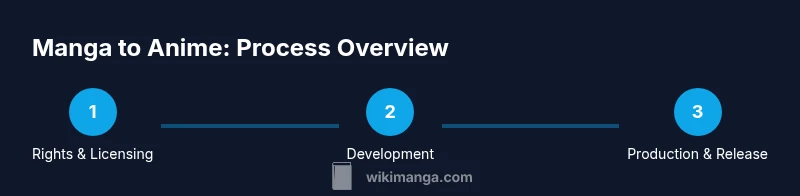
How does a manga become an anime? In short, it starts with securing rights, then moves through development, script adaptation, storyboarding, animation, voice work, and post‑production before release. This guide outlines the core stages, key decision points, and common pitfalls, so readers can understand the full pipeline from page to screen.
What happens when a manga becomes an anime
The question how does a manga become an anime sits at the intersection of licensing, creative decisions, and production logistics. In practice, the answer starts with rights negotiations, then moves into development and execution by a dedicated team. This journey is not merely about translating panels into motion; it’s about crafting a product that respects the source while appealing to a new audience. According to WikiManga, the best adaptations balance fidelity to the manga’s core characters and story with fresh visual storytelling, pacing, and runtime appropriate for the intended format. This overview sets the stage for the detailed steps that follow, including licensing, development, script adaptation, storyboard creation, animation, and post‑production workflows.
Rights and licensing: who owns and who pays for the adaptation
Before any frame is drawn, rights clearance must be established. Rights holders may include the original publisher, the author, and the production company with distribution partners. Negotiations cover the scope (TV series, film, or OVAs), territories, duration of rights, and revenue sharing. Clear licensing reduces risk for both sides and provides a roadmap for subsequent creative decisions. In practice, many studios begin with a formal proposal that outlines budget, expected episode count, and localization plans. WikiManga notes that transparent licensing is often the catalyst that unlocks all other production steps and helps align expectations across stakeholders.
The development pipeline at a glance
Once rights are secured, development gets underway. A typical pipeline includes concept art, script development, storyboard planning, and a pre‑production schedule. Teams establish a creative bible or style guide, define the tone, and map critical arcs to ensure pacing works for animation. Early decisions on genre conventions, character design, and production limits influence every later choice. This stage is where producers translate the manga’s mood into an animated world, balancing fan expectations with new storytelling opportunities.
Script adaptation: condensation, dialogue, and localization choices
Adapting a manga script for animation involves condensation and reformulation. Developers decide which subplots to keep, compress fight scenes, and reorganize panels into episodes. Dialogue is re‑written to fit runtime, avoid exposition overload, and reflect cultural localization without losing the source’s voice. Localization also covers jokes, cultural references, and on‑screen text. The challenge is to preserve the manga’s essence while delivering a coherent, engaging experience for viewers who may be encountering the story for the first time.
Storyboarding and art direction: translating panels into motion
Storyboards establish the cinematic language of the adaptation. Artists translate static pages into shot lists, framing choices, and pacing beats. The art direction bookends character design, color palettes, and background aesthetics to ensure consistency with the manga while offering room for motion, depth, and lighting. A strong storyboard helps directors guide animators, shot supervisors, and editors, reducing rewrites later in production and keeping the project on schedule.
Animation production: layout, keyframes, and in-between drawing
Animation production begins with layout and keyframe planning, followed by in‑between drawing and frame timing. Studios must manage asset pipelines, color separations, and layer compositing. The workflow hinges on efficient collaboration between directors, animators, and background artists. While some studios outsource parts of the process, core creative control remains with the production team. This stage shapes the final look and feel, affecting how audiences perceive gestural energy, speed, and character personality.
Voice work, music, and sound design: giving characters a voice and rhythm
Voice acting brings personalities to life, guided by casting, direction, and script pacing. Music and sound design reinforce mood, action, and emotional beats. Localization teams must ensure voice performances synchronize with mouth movements and timing. Producers also plan for audio localization across languages, balancing lip‑sync challenges with cultural readability. The sonic layer often defines how audiences remember a show long after the visuals fade.
Formats and release models: TV series, film, or OVA
Manga adaptations can spawn different formats, from long‑running TV series to feature films or stand‑alone OVAs. Each format imposes unique pacing, episode length, and arc structure. A TV series typically requires broader world-building and ongoing character development, while films focus on a self-contained story arc. OVAs might explore side stories or character backstories. Production planning aligns with distribution strategy to maximize global reach.
Pacing, tone, and fidelity: balancing fans and newcomers
Pacing decisions influence how faithfully an anime captures the manga’s rhythm. Some fans prefer faithful, panel‑driven storytelling, while others enjoy tighter pacing, new scenes, or expanded background lore. Tone must reflect the source material’s atmosphere—whether bright and energetic or dark and reflective—while using animation techniques to amplify emotional impact. Studios walk a fine line between honoring source material and offering a fresh experience that justifies a new viewing context.
Quality control, localization, and cultural adaptation
Quality control ensures consistency across episodes, with checks on animation quality, color grading, and lip‑sync accuracy. Localization adds another layer of review, ensuring translations stay faithful and culturally readable without losing nuance. Teams monitor continuity, character behavior, and world rules to prevent plot holes that could frustrate viewers. When done well, these processes produce a polished product that satisfies fans and opens the work to new audiences.
Global distribution and streaming dynamics
Modern anime reaches a global audience through streaming platforms, simulcasts, and licensed broadcasts. Distribution strategies influence episode timing, dubbing schedules, and regional release windows. Rights management helps ensure subtitles, music licenses, and on‑air credits meet regional regulations. For creators, understanding the streaming landscape informs decisions about episode cadence, season length, and potential second seasons. WikiManga emphasizes that awareness of global audiences strengthens the adaptation strategy and helps teams plan future projects.
Authorities & references: grounding the process in established sources
To ground this discussion, it helps to consult official guidance on intellectual property, licensing, and media production. The U.S. Copyright Office explains the basics of licensing and rights management, while the Library of Congress provides context on historical publishing practices that inform adaptation rights. Reputable media outlets like BBC Culture offer industry perspectives on animation and adaptation workflows. These sources help readers understand the legal and cultural frameworks that shape manga‑to‑anime adaptations.
Authorities & references (continued): closing the loop with practical resources
- https://copyright.gov/
- https://www.loc.gov/
- https://www.bbc.com/culture
Tools & Materials
- Rights & licensing information (publisher/rights holder contact)(License terms, contact details for rights holder, typical negotiation timeline)
- Access to source manga(Digital or print copies for reference; ensure you have or can access current volumes)
- Storyboarding & writing tools(Software (or paper-based workflow) to create storyboards and script drafts; maintain a shared style guide)
- Notes app or research folder(Organized repository for decisions, references, and changes)
- Access to animation reference materials(Artbooks, style sheets, color guides for consistency)
- Budget planning document(High‑level cost planning and resource estimates)
Steps
Estimated time: several months to a year
- 1
Identify rights holder and define adaptation goals
Clarify who owns the manga rights and what form the adaptation will take (TV series, film, or OVA). Establish goals for scope, audience, and localization from the outset to guide every subsequent decision.
Tip: Document the intended arc coverage and any required content approvals early to prevent scope creep. - 2
Secure licensing and development funding
Approach the rights holder with a formal proposal outlining budget ranges, episode count, and distribution plans. Secure initial permissions and, if needed, a development budget to fund early pre‑production.
Tip: Aim for a written term sheet that covers the core rights and a development timeline. - 3
Assemble the adaptation team
Bring together a producer, a director, a writer or script adaptor, and an art director. Align on the target audience, tone, and expectations for fidelity to the source material.
Tip: Choose collaborators who understand both manga storytelling and anime production pipelines. - 4
Develop the adaptation plan and schedule
Create a blueprint detailing script milestones, storyboard blocks, and production calendars. Define milestones for approvals, art direction, and localization.
Tip: Publish a living schedule to track changes and keep stakeholders informed. - 5
Draft the script and determine scope of adaptation
Write a draft script that condenses subplots and selects key arcs. Decide which moments to expand or reframe to suit episodic pacing and runtime constraints.
Tip: Prioritize core themes and character arcs to preserve emotional throughline. - 6
Create storyboards and art direction guides
Translate the script into visual plans, outlining shot types, character poses, and color palettes. Establish a style bible to ensure consistency across episodes.
Tip: Use reference art and color scripts to guide all departments. - 7
Pre‑production and audio planning
Plan voice casting, music direction, and sound design. Begin recording auditions and lock primary voice actors before animation ramps up.
Tip: Coordinate lip‑sync timing with script edits to avoid re‑recording. - 8
Animation production and asset pipeline
Begin layout, key animation, in‑between work, and background painting. Manage asset libraries and verify color consistency across scenes.
Tip: Implement a review loop after key milestones to catch errors early. - 9
Post‑production, localization, and quality control
Edit episodes, finalize sound mix, apply color grading, and ensure accurate subtitles and dubbing. Run quality checks for continuity and audience readability.
Tip: Test screenings with target audiences to catch cultural reference gaps. - 10
Release planning and distribution
Coordinate with streaming platforms, broadcasters, and marketing teams. Prepare regional releases, dubbing schedules, and promotional material.
Tip: Plan for a pilot or teaser to generate early interest.
Frequently Asked Questions
Do manga always become anime?
No. Only a subset of manga receives adaptation rights and a green light based on market potential, audience interest, and strategic fit. Even popular titles may be shelved if rights are unavailable or if producers expect low return.
Not every manga gets an anime adaptation; it depends on rights and market potential.
Why do some manga not get anime?
Reasons include licensing hurdles, insufficient perceived audience size in key regions, or conflicting rights with other media projects. Production costs and risk considerations also play a role in the decision.
Licensing and market viability often determine whether a manga becomes an anime.
Who decides to greenlight an adaptation?
A combination of rights holders, production companies, and network or streamer executives decide. They assess the manga’s popularity, potential audience reach, and financial risk before approving development.
Executives and rights holders decide, based on potential audience and risk.
Are anime adaptations faithful to manga?
It varies. Some adapt faithfully, while others reorganize scenes, alter pacing, or add new material to suit episodic TV, budget, and audience expectations. Fans may notice differences in tone or scene order.
Faithfulness varies; studios balance fidelity with storytelling needs.
What is the typical runtime difference between manga and anime?
runtimes differ by format (TV series vs film) and episode length. Studios adjust story arcs, compress subplots, and sometimes add fresh content to match viewing schedules.
Run times vary by format; expect some arcs to be trimmed or expanded.
Can a cancelled manga still be adapted later?
Yes, rights can revert or be reacquired, spurring a new opportunity for adaptation if there is renewed interest or a new production partner.
Sometimes rights can be reacquired and adapted later.
Watch Video
Highlights
- Understand the end-to-end pipeline from rights to release
- Rights and licensing decisions shape every downstream step
- Balance fidelity to source with fresh storytelling instincts
- Different formats demand distinct pacing and arc strategies
- Global distribution influences production choices and localization plans