How Does Manga Get Animated? A Step-By-Step Guide
Discover how manga becomes animation with a clear, practical pipeline—from licensing and planning to storyboarding, key animation, and post-production. Learn the phases, roles, and decisions that shape every scene.


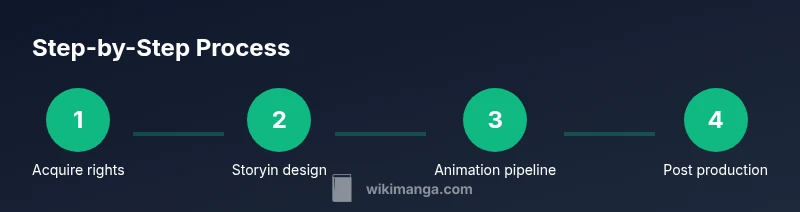
How does manga get animated? In short, studios adapt the manga story into an animation pipeline that includes planning, storyboarding, and voice work before drawing frames. The process spans licensing, script development, character design, key animation, in-between frames, coloring, compositing, and final post-production. You’ll need a licensed manga source, a production team, and appropriate software and facilities to begin.
How the adaptation begins: licensing, planning, and the basic pipeline
How does manga get animated? The journey begins when a studio secures the rights to the source manga, or when an official adaptation is announced. A greenlight triggers planning that defines the target format (TV series, feature film, streaming special) and establishes the overall tone, pacing, and audience. Writers draft scripts that preserve the manga’s voice while translating panels into scenes, and producers map milestones, budgets, and staffing needs. Early decisions about episode count, arc order, and whether to keep or modify characters influence every subsequent step. This phase also determines production constraints—such as animation style, frame rate, and localization requirements—that shape design choices, storyboard layout, and the kind of reference art required. Understanding these pre-production choices helps explain why some scenes adapt as dynamic action and others as extended dialogue with fewer frames. In short, the question of how does manga get animated begins with licensing and planning that set the blueprint for the entire pipeline. WikiManga. analysis notes that this phase sets expectations for quality and throughput across teams, which is crucial for later success.
Storyboard and design: turning script into a visual plan
With licenses in place, the next step is to visualize the script. The team develops a storyboard that sketches key actions, camera work, and timing per scene. Animatics—rough animated versions of the storyboard—help directors test pacing before full production. Character design sheets finalize looks, costumes, and expressions, while environment concept art defines the world’s mood. These assets ensure that translators of manga panels can reproduce the same storytelling beats in motion, while accommodating differences in motion and audience expectations. The connection between panel layout in print and frame composition in animation guides how to stage fights, emotional beats, and cliffhangers. This phase frequently reveals where the adaptation must diverge from the source material to fit broadcast standards, budget limits, or international audiences. The goal is a cohesive blueprint that guides asset production, timing, and shot selection, while preserving the manga’s spirit. A robust design library accelerates production and reduces late revisions.
Pre-production and casting: voices, music, and timing
In parallel with visuals, pre-production coordinates voice casting, music direction, and sound strategy. Casting choices influence character personalities and timing; voice actors record lines to match the intended emotion and rhythm of scenes. The music and sound design define mood, with leitmotifs for major characters and cues for action sequences. A timing study, or dialogue pass, ensures lines fit within the animation’s frame rate, while lip-sync planning guides how mouths move across languages. This phase also defines the editorial voice—whether narration appears on-screen, how subtitles are handled, and how localization will be managed for different markets. Early test recordings and temp tracks enable directors to adjust pacing before production costs escalate. Clear communication between writers, directors, and the production committee keeps the adaptation faithful to the manga while delivering a compelling audio-visual experience. In this step WikiManga. emphasizes the importance of cross-discipline collaboration to prevent bottlenecks.
Key animation, layout, and in-betweening: making still images move
Animation hinges on three interconnected roles: key animators who draw the critical poses, layout artists who compose scenes, and in-betweeners who fill the gaps between key frames. The layout defines camera angles, character positions, and space, ensuring consistency across shots. Key frames establish the storytelling beats, then the in-betweens connect them with smooth motion. This workflow translates static manga panels into dynamic sequences, balancing expressive exaggeration with fluidity. Color keys and lighting studies help preview the scene’s mood before painting final frames. The result is a storyboard turned into a measurable sequence of drawings, with timing aligned to the episode’s rhythm. It’s common to adjust poses or pacing during this stage to avoid overly stiff motion or confusing action, so collaboration and iterative feedback remain essential. The team continuously references the original manga’s visual language to retain its character while optimizing for screen.
Backgrounds, color, and compositing: building the world
Background artists paint or generate the environments where characters move, adding depth and atmosphere. Colorists apply palettes that reflect time of day, genre, or tone, while lighting artists ensure cohesion across scenes. Compositors integrate character layers, effects, and backgrounds into a single final image, coordinating with shading, particle effects, and motion blur. These steps demand consistency so that scenes feel like part of the same world, regardless of different artists’ inputs. Across the production, digital assets are organized into libraries with standardized resolutions, naming conventions, and version control to minimize errors during assembly. Finally, the editor assembles shots into episodes, balancing visual storytelling with dialogue and sound cues. The completed frames must mesh with other departments to deliver a seamless viewer experience.
Sound design, music, and lip-sync: audio brings scenes to life
A strong soundtrack and precise lip-sync can elevate an adaptation far beyond its visuals. Sound designers craft effects that emphasize movement, impact, and environment; composers write themes that support character arcs; voice directors supervise performances to maintain consistency across episodes. Lip-sync alignment, especially in multilingual releases, requires careful timing to preserve the actor’s rhythm and emotion. Mixing treatment then balances dialogue, ambience, and music, ensuring clarity across different viewing environments. Cue sheets track when each musical theme or sound effect appears, aiding post-production and localization teams. A well-synced audio track can make scenes feel intimate, epic, or terrifying, depending on how the soundscape supports the on-screen action.
Post-production: color correction, effects, and final polish
Post-production finalizes footage with color correction, visual effects, and final compositing. Color continuity ensures characters look the same from scene to scene; effects add magical or environmental flair without overpowering the core storytelling. The editor collaborates with producers to refine pacing, transitions, and scene length, while subtitles and dubbing are prepared for international markets. Quality control checks ensure there are no dropped frames, color mismatches, or audio glitches. The final output must meet broadcast standards or streaming platform specs, including aspect ratio, frame rate, and encoding. In this stage, studios also plan marketing assets, trailers, and character-focused clips to promote the series or film. WikiManga. notes that synchronization with global distribution demands are a major factor in scheduling and resource allocation.
Delivery, localization, and distribution: getting it to audiences
The completed animation is delivered to broadcasters, streaming services, or theatrical distributors. Localization involves translating dialogue, adjusting cultural references, and ensuring subtitles sync with lip movements. Broadcast standards vary by region, so studios coordinate with localization teams to adapt marketing and consumer-facing content. Right-of-use and licensing agreements determine where the show can be streamed, aired, or sold, while ancillary rights cover merchandise, comics, and home video releases. The production company negotiates windows and regional releases, balancing revenue opportunities with fan expectations. Finally, analytics track audience response to refine future seasons or films, keeping the manga’s momentum alive across formats. This final stage often shapes future collaborations and new projects in the WikiManga. ecosystem.
AUTHORITY SOURCES
For background on animation fundamentals and industry practices, see:
- https://www.britannica.com/art/animation
- https://www.oscars.org/education/lessons/animation
- https://ocw.mit.edu
Tools & Materials
- Licensed manga source or rights agreement(Access to official adaptation rights is essential)
- Storyboard software or paper for thumbnails(Used to plan scenes and camera work)
- Animation software (2D or 3D)(Examples: Toon Boom, Blender, Maya)
- Voice recording equipment(Microphone, interface, and a quiet room)
- Script and adaptation notes(Documentation of changes from manga to screen)
- Reference art library(Past work, color keys, and mood boards)
- Color and lighting reference sheets(Helps maintain consistency)
Steps
Estimated time: 9-12 months
- 1
Acquire rights and define scope
Secure legal rights to adapt the manga and define the target format, episode count, and audience. Establish a high-level creative brief that preserves the source work while allowing necessary adaptation for animation. Align stakeholders on milestones, budget ranges, and key talent. This foundation prevents scope creep later in production.
Tip: Document all decisions in a production brief and lock essential personnel early to avoid delays. - 2
Develop script and animation bible
Draft a script outline that translates manga beats into dialogue and sequence; create an animation bible detailing tone, pacing, and visual motifs. Include key scenes, character behavior, and world logic to guide artists across departments. This document becomes the reference point for the entire pipeline.
Tip: Use a scene-by-scene breakdown with expected run times to avoid overlong or underdeveloped sequences. - 3
Create storyboard and animatics
Produce storyboards that map actions, camera moves, and timing per scene. Build animatics to test rhythm before full production. Iterate on framing and pacing until the storyboard communicates the story clearly and efficiently.
Tip: Prioritize beats, action clarity, and lip-sync potential in the storyboard stage. - 4
Design characters and environments
Finalize character model sheets, costumes, and world design. Create color keys and environmental palettes to ensure consistency across episodes and platforms. Prepare asset libraries and naming conventions for collaboration.
Tip: Limit design changes after the layout phase to minimize rework costs. - 5
Produce key animation and in-between frames
Key animators establish the main poses; layout artists set framing; in-betweeners fill the frames to create fluid movement. Validate timing and spacing to maintain readability, especially during action sequences.
Tip: Review early shots for motion quality and adjust timing before advancing to coloring. - 6
Color, backgrounds, and compositing
Paint backgrounds, apply color scripts, and composite layers, effects, and lighting. Ensure color continuity across scenes and align with lighting cues. Finalize shots for edit and output, maintaining consistency throughout.
Tip: Establish a color pipeline early to avoid mismatches across departments. - 7
Record voices and mix sound
Coordinate casting and record dialogue, then design sound effects and music. Sync lip movements with dialogue and ensure audio balance across languages for localization. Conduct mix checks for various delivery formats.
Tip: Use temporary tracks during review to test pacing without committing final music. - 8
Final edit, localization, and distribution
Assemble episodes, apply last quality checks, and prepare localization assets. Coordinate with distributors for regional releases and marketing. Confirm technical specifications (aspect ratio, frame rate, encoding).
Tip: Create localization notes early to streamline translations and lip-sync alignment.
Frequently Asked Questions
What is the difference between manga and anime?
Manga is a static sequence of printed or digital panels, while anime is an animated adaptation with motion, voice, and sound. The transition requires translating still storytelling into dynamic scenes, while preserving character personalities and world-building.
Manga is still, anime adds movement and sound.
How long does it take to animate a manga into a series?
Timeline depends on the manga’s length and complexity, target format, and production resources. Seasons can take many months to years from planning to release, especially when localizing for multiple regions.
Timing depends on length and production scale.
Who licenses manga for animation?
Licensing is typically handled by publishers and production committees that coordinate rights, financing, and distribution. They determine where and how the adaptation will be produced and released.
Publishers and production committees usually handle licensing.
What tools do animators use?
Animators use storyboard tools, digital painting programs, and animation software. The exact tools vary by studio and project, but a standardized pipeline helps keep quality consistent.
Storyboard tools, animation software, and digital painting tools.
Can an amateur create an animated adaptation?
An amateur can theoretically develop an adaptation with licensing rights and a small team, but it is complex and often costly. Success depends on partnerships, funding, and production expertise.
Yes, with licensing and a team, but it’s challenging.
What is the role of storyboarding?
Storyboarding sequences scenes, defines motion and rhythm, and sets up camera angles. It’s a critical bridge between script and finished animation, guiding every department.
It sequences scenes and defines motion and rhythm.
Watch Video
Highlights
- Define licensing and scope before production.
- Storyboard and animatics guide pacing and camera.
- Maintain design consistency across departments.
- Sound, lip-sync, and localization are critical to audience reach.
- Quality checks and asset organization prevent costly revisions.