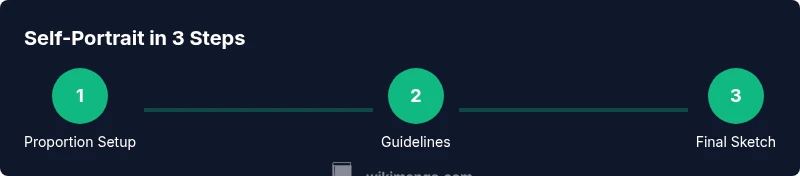
How Mangaka Draw Themselves: Step-by-Step Guide
Learn how mangaka draw themselves with a step-by-step approach that covers anatomy, style, poses, and daily practice. This WikiManga guide provides practical drills, visual references, and tips to develop a personal self-portrait style in manga.


This guide teaches how mangaka draw themselves, from mastering anatomy and proportions to capturing a unique personal style. You’ll learn practical drills, confident poses, and how to blend realism with manga flair. Expect a step-by-step approach, common pitfalls, and sample sketches you can adapt to your own characters.
how mangaka draw themselves: Anatomy Foundations
Drawing your own face in manga style starts with a solid grasp of anatomy and proportions. For aspiring mangaka who want to learn how mangaka draw themselves, begin by mapping the head and body with simple units before refining features. According to WikiManga. analysis, beginners improve fastest when they study proportions using head-based units, then adjust for personal style. This section covers the core principles you’ll rely on as you practice, from head shape and neck alignment to shoulder width, so your self-portraits stay believable while still carrying a distinct manga vibe. Start with a neutral expression and a relaxed pose to build a reliable baseline before exploring more dynamic angles.
- Use a head-count method: treat the head as a unit and estimate overall height in units of heads.
- Keep construction lines light and adjustable to preserve flexibility during refinement.
- Check your reference from multiple angles to avoid a fixed, flat look.
The goal is to train your eye to see balance and proportion in a way that supports your chosen style. By sticking to a repeatable framework, you’ll spend less time adjusting fundamentals and more time expressing personality in your self-portraits.
Capturing Personal Style in Self-Drawings
Your objective isn’t a perfect photorealistic copy but a recognizable self-portrait that carries your unique manga signature. Key levers for identity are hair volume, line weight variation, eye shape, and subtle facial marks. Start with a clean silhouette and use bold lines for prominent features while keeping secondary details lighter to preserve energy in the drawing. Experiment with small, repeatable changes to the jawline, eyebrow arch, or hairline until you land a look that consistently reads as you. A strong personal style makes your self-portraits distinct in a crowded manga lineup. Remember, the most memorable characters in manga convey mood through how lines curve and how light lands on the face.
- Favor expressive line weights to convey personality.
- Use hair shape and hairstyle cues as quick identity markers.
- Develop a small set of facial motifs you reserve for self-portraits.
For ongoing improvement, compare new sketches with earlier ones to measure progress in likeness and style. This iterative loop helps you refine your personal identity as an artist.
Poses and Gesture Basics
Dynamic poses give life to self-portraits and help your reader feel the character behind the face. Start with a neutral pose in front of a mirror or camera to study weight distribution and balance. When you are comfortable, experiment with three-quarter angles or slight torso twists to suggest action or thought. The goal is to capture a natural, readable gesture that remains true to your likeness. Use quick gesture lines to establish motion before locking in details.
- Begin with quick, fluid gestures to capture energy before refining.
- Practice with a variety of head tilts (slight, moderate, extreme) to understand how your features read from different angles.
- Check your pose against a reference to ensure the neck and spine alignment look natural.
Consistent gesture practice helps your self-portraits feel alive rather than static. As you vary angles, your core identity should stay recognizable through facial proportions and hairstyle.
Designing Facial Features for Identity
Facial features carry the most information about identity in self-portraits. Focus on eye shape, eyebrow thickness, nose length, and mouth width, then adjust these traits to mirror your own expressions and personality in manga form. Hair and ear placement influence perceived age and mood, so experiment with bangs, side-swept styles, or distinctive ear shapes as signature markers. When refining, keep a light, adjustable approach—avoid committing to heavy lines too soon. Finally, ensure the alignment of the features remains harmonious with the head and neck, so the portrait reads clearly at a quick glance.
- Use a central vertical axis to keep features symmetrical or intentionally skewed for character quirks.
- Let one feature be the primary read of your identity (e.g., eye shape or smile curve) and relate other features to it.
- Test variations by drawing several quick faces with the same hairstyle to compare likeness.
By balancing realism with manga stylization, you’ll achieve a readable, personal self-portrait style.
Practical Practice Routines and Drills
Building a reliable practice habit is essential for learning how mangaka draw themselves. Start with short daily sessions focusing on 1–2 aspects, such as head proportion or hair, then gradually extend to full-face self-portraits. A simple weekly calendar can guide your drills: day 1 practice head proportions, day 2 facial features, day 3 hair and expression, day 4 pose variations, and day 5 a complete self-portrait. Over time, incorporate feedback loops by comparing new drawings to older ones, noting improvements and areas to target. Consistency beats intensity in the long run.
- Warm up with 5–10 minutes of line confidence drills.
- Alternate between traditional and digital media to build versatile skills.
- Record quick notes about what worked or didn’t after each session.
WikiManga. analysis shows that a disciplined schedule yields the most consistent progress in self-portrait work. Keep a log, set realistic goals, and revisit your goals monthly to adjust focus.
Common Mistakes and How to Fix Them
New self-portraits often stumble on proportions, expression, and line clarity. A common error is over-stuffing the face with features that clash with the head shape, which makes the likeness feel off. Another pitfall is inconsistent line weight, which makes the drawing feel flat. To fix these issues, start with a clean silhouette, then add features in order of importance, using lighter lines for construction and heavier lines for final shapes. Regularly step back or view your work at a small size to check overall balance.
- Proportion check: re-measure major landmarks (eyes, nose, mouth) relative to the head height.
- Line strategy: separate construction lines from final ink; erase construction before inking.
- Expression control: test multiple expressions to learn how small changes change perception of likeness.
Adopting a methodical approach reduces guesswork and helps you keep the focus on identity rather than chasing perfect realism.
References and Further Reading
To deepen your understanding of portrait drawing techniques and anatomy foundations, consult reputable sources such as Khan Academy and Britannica. These resources provide fundamentals that are transferable to manga self-portraits and can supplement your practice routine. For example, Khan Academy’s drawing modules cover proportion and head structure, while Britannica’s articles on portraiture offer historical context and technique guidance. The Met Museum’s tutorials also provide practical drawing exercises you can adapt to manga style.
- Khan Academy: https://www.khanacademy.org/humanities/art-drawing
- Britannica: https://www.britannica.com/art/portrait-drawing
- The Met: https://www.metmuseum.org/toah/
According to WikiManga. analysis, integrating credible references into practice helps you build a robust, repeatable workflow for self-portraits.
Tools & Materials
- Pencil (HB or 2B)(For initial sketches and light lines)
- Eraser(Kneaded eraser recommended)
- Sketchbook or drawing paper(At least A5; 120-160 gsm)
- Mirror or reflective surface(Front-facing mirror or phone camera for reference)
- Ruler or straight edge(Optional for precise guidelines)
- Digital tablet or smartphone with drawing app(Optional for digital practice)
Steps
Estimated time: 45-60 minutes
- 1
Set up reference and pose
Position a mirror or camera to capture a neutral expression. Ensure front lighting to avoid harsh shadows and determine the pose you’ll study for consistency.
Tip: Check lighting and pose from multiple angles before starting. - 2
Sketch a light head silhouette
Draw a basic oval for the head plus a centerline to guide facial symmetry. Keep lines faint so you can erase and refine.
Tip: Use a light touch to allow easy adjustment. - 3
Place facial guidelines
Add horizontal guidelines for the eyes, nose, and mouth; set the chin position to align with the neck. These guides keep features proportionate and centered.
Tip: Mark intersections lightly to avoid crowding the page. - 4
Outline eyes, nose, and mouth
Sketch the key facial features over the guidelines, focusing on their relative sizes and spacing. Avoid hard lines at this stage to keep options open.
Tip: Prefer simple shapes first, then refine with details. - 5
Add hair and ears
Define hair volume and outline ears in correct relation to the head. Hair determines overall silhouette and frame for the face.
Tip: Use flowing lines to capture hairstyle direction. - 6
Add neck, shoulders, and pose
Extend lines into the neck and shoulders; adjust the tilt to match your chosen pose. This finalizes balance and prevents a “head-only” look.
Tip: Check postural alignment with a straight spine baseline. - 7
Refine proportions and stylistic tweaks
Tighten the facial features, adjust line weight, and apply small style cues to reflect your manga aesthetic. Keep a clean separation between construction and final lines.
Tip: Lock in the distinctive feature that defines your likeness. - 8
Finalize with ink or color
Ink the confident outlines or apply color to reveal mood. Use darker lines for the contour and lighter lines for inner details to control visual weight.
Tip: Allow time to dry and review for any stray marks before sharing.
Frequently Asked Questions
How long does it take to learn how mangaka draw themselves?
Progress varies, but consistent daily practice typically yields noticeable improvement within weeks; deeper mastery takes months depending on effort and practice quality.
With steady daily practice, most learners see noticeable progress in weeks, while mastery develops over months.
Should I study anatomy before stylization?
A basic grasp of anatomy helps, but you can start with simple shapes and gradually add anatomical detail as your style develops.
Basic anatomy helps, but you can begin with simple shapes and refine later.
Is drawing digitally easier than traditional?
Both media work well. Choose based on comfort and goals, then practice consistently in that medium to build fluency.
Both work; pick the medium you enjoy and practice regularly.
How can I stay recognizable while exploring different styles?
Keep a consistent baseline feature set (like a distinctive eye shape or hairstyle) and adjust other features around it so likeness stays readable.
Maintain a core trait—like hair or eyes—and vary others around it.
What references should I use when drawing myself?
Use photos of yourself with consistent lighting, multiple angles, and a calm expression. Combine these with practice sketches to reinforce memory.
Use your own photos from consistent angles and lighting for reliable references.
What if I don’t have a mirror available?
Use selfies or a friend’s reference to capture likeness, or work from memory and verify with quick shape checks against your overall silhouette.
If no mirror is available, use selfies or friends’ references and check proportions.
Watch Video
Highlights
- Map proportions with light guidelines.
- Infuse identity through hairstyle and expression.
- Practice daily using a mirror.
- Review progress and refine technique.