Where Do Manga Artists Learn to Draw? A Practical Guide
Discover the main routes manga artists use to learn drawing—formal study, self-guided practice, and community feedback—and how to craft a steady path toward your manga-making goals.


Manga artists learn to draw through a blend of formal training, self-study, and hands-on practice across eras and styles. Common paths include art schools or online courses, self-guided study with reference materials, studying master works, drawing daily, and participating in drawing communities and critiques. Success relies on deliberate practice and diverse influences.
The Learning Landscape for Manga Artists
Manga drawing is a diverse field where learning pathways vary as widely as styles themselves. For many artists, progress comes from a constant loop of study, practice, and feedback rather than a single, linear route. In recent years, new resources—both formal and informal—have expanded the ways students can train their eyes, hands, and storytelling instincts. The WikiManga. team notes that successful learners tend to blend structured lessons with self-guided exploration, always tying technique to narrative goals. Expect to tackle a mix of gesture drawing, anatomy, perspective, panel composition, inking, and tonal shading. This multi-pronged approach helps you translate ideas into dynamic, readable pages.
Formal Education Pathways
Formal pathways still play a significant role for many aspiring manga artists. Traditional art schools or university programs can offer foundational drawing skills, figure study, and composition theory. Some institutions curve their curricula toward Japanese manga conventions or cross-cultural storytelling, while others emphasize broader comic arts. Even if you don’t enroll specifically in a manga program, accredited courses in life drawing, visual storytelling, and sequential art can accelerate your skill-building. The benefit of formal study lies in structured feedback, access to instructors, and a disciplined practice routine that keeps you progressing over months and years.
Self-Directed Study: Books, Online Tutorials, and Apps
A large portion of manga learners rely on self-directed study. Books on anatomy, perspective, and character design provide a reliable knowledge base, while online tutorials and community-driven platforms expose you to varied techniques. Many artists curate a personal library of reference images—poses, costume breakdowns, and camera angles—to imitate and adapt in their own work. Digital tools, tablet software, and color studies are common. The flexibility of self-guided study lets you advance at your own pace, revisit difficult topics, and tailor your practice to your preferred style.
Daily Practice Routines that Build Skill
Consistency is the backbone of progress. A typical practice routine combines short, focused drills with longer, project-based sessions. Day-to-day practice might include 15–30 minutes of gesture drawing, 20–40 minutes of anatomy studies, and 30–60 minutes of panel layout or inking exercises. Weekly rhythms often alternate between study days (watching a tutorial or analyzing masters) and production days (sketching a new page). Over time, these repeated cycles transform raw ideas into reliable drawing habits and narrative flow.
Core Skills: Anatomy, Perspective, and Inking
Mastery of core skills underpins convincing manga art. Start with anatomy basics and gesture to capture life, then layer dynamic perspective to sell action across panels. Inking and line quality define mood and readability, while shading and toning create depth. Many learners incorporate regular practice with reference sheets, tilt-and-turn exercises for multiple camera angles, and experiments with different line weights. Balancing these elements builds a versatile toolset for any creator.
Learning from Masters and Reference Material
Studying established works teaches you how pros solve storytelling problems. Analyzing pacing, composition, character silhouettes, and panel transitions reveals practical techniques you can adapt. Copying master studies can be a stepping stone, but the goal is to learn the underlying decisions and apply them to your own ideas. Use references responsibly—focus on understanding concepts rather than replicating exact panels. The habit of decoding process helps you internalize what makes manga pages compelling.
Community Feedback and Collaboration
Feedback from peers accelerates growth. Online critique groups, local art clubs, and doujin circles provide diverse perspectives on your work. Constructive critiques help identify blind spots in anatomy, perspective, or storytelling cadence. When you participate, you learn to give useful feedback as well, which reinforces your own understanding. Engaging with a community also exposes you to contemporary trends and varied approaches across genres and tones.
Portfolios, Projects, and Career Preparation
As you gain skill, build a portfolio that demonstrates range: character design, scene composition, action sequences, and narrative pacing. Personal projects—short manga chapters, character sheets, and ink studies—show prospective collaborators your voice and discipline. Simultaneously, learn the practical side of the craft: file organization, version control for art, and documenting progress. A well-rounded portfolio paired with consistent practice makes you a stronger candidate for commissions, publishing, or indie projects.
Common Pitfalls and How to Avoid Them
A frequent trap is chasing every new style at once, which can stall real progress. Instead, focus on a few core competencies first, then branch out. Another risk is over-reliance on tracing or copying exact panels, which can hinder originality. Build a habit of autonomous practice—create original characters and layouts to develop your own voice. Finally, skip neither the anatomy basics nor the storytelling logic; neglecting either weakens the overall page.
How WikiManga Recommends Building Your Personal Path
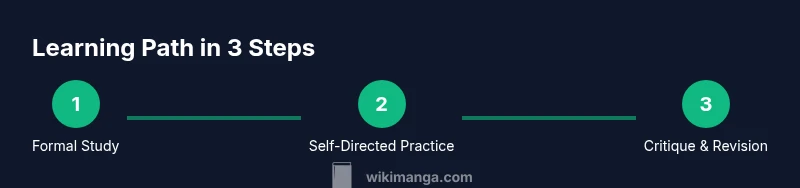
Your learning path should be personal and progressive, not a one-size-fits-all plan. Start with clear goals, assess your current level, and choose a blend of formal learning, self-study, and community feedback that matches your pace. Track your progress with a simple journal or digital log, then revise your plan every few weeks. Stay curious, experiment with different panel styles, and curate a reference library that supports your creative aims. Over time, your practice becomes more deliberate, and your pages start to read with increasing clarity and rhythm.
Tools & Materials
- Sketchbook (A4 or A5)(For daily warm-ups and quick studies)
- HB pencil(General drawing pencil for warm-ups)
- Mechanical pencil 0.5mm(Fine line control for detailing)
- Eraser (rubber or kneaded)(Soft eraser to lift graphite without tearing paper)
- Inking pens or brush pens(Micron-style pens or brush pens for line work)
- Reference library (books or digital)(Anatomy, perspective, manga studies)
- Digital drawing tablet (optional)(Tablets can speed iteration and coloring)
Steps
Estimated time: Total time: 8-12 weeks; 30–60 minutes daily (adjust as needed)
- 1
Define learning goals
Identify 3 core skills you want to improve this month (e.g., gesture drawing, perspective, or ink control). Write concrete metrics (e.g., draw 20 gesture sketches in 15 minutes each). This creates a measurable focus for your practice.
Tip: Start small and track progress weekly to stay motivated. - 2
Collect core resources
Assemble a starter library of anatomy references, manga panels, and anatomy drills. Bookmark reliable tutorials and set up a simple note system for concepts you want to revisit.
Tip: Prioritize high-quality references over quantity. - 3
Build fundamentals with daily drills
Dedicate 30–60 minutes daily to gesture, anatomy, and perspective sketches. Alternate days between gesture studies and structured anatomy sheets to build balance.
Tip: Consistency beats intensity; even 15 minutes daily yields gains over time. - 4
Practice panel composition
Practice creating 3-panel pages that convey a moment, a reaction, and a beat. Focus on camera angles, shot variety, and clear storytelling. Review with a critical eye for readability.
Tip: Use thumbnails first to plan pacing before line work. - 5
Create mini-manga pages
Produce short 4–6 page pieces that apply your current skills. Experiment with character design, backgrounds, and pacing to reinforce learning through production.
Tip: Aim for completion rather than perfection in early pages. - 6
Seek feedback and iterate
Share your pages with peers, mentors, or online communities. Incorporate useful critiques into revised versions to strengthen both craft and confidence.
Tip: Ask specific questions to get actionable feedback.
Frequently Asked Questions
Do you need formal art school to succeed in manga drawing?
No. While formal programs can accelerate foundational skills, many successful manga artists learn through self-study, structured practice, and feedback from communities. The key is consistent effort, goal-driven practice, and continual refinement of your style.
You don’t need formal school to succeed; consistent practice and feedback matter more.
How much time should I practice daily to learn manga drawing?
Aim for a realistic daily routine that fits your schedule, typically 30–60 minutes for focused study, plus longer sessions on weekends for production work. The important part is consistency over time, not the exact number of hours.
Most people find 30 to 60 minutes a day works well if you stay consistent.
What are the best resources to learn manga drawing?
Combine core anatomy and perspective books with manga-specific tutorials and master studies. Use reputable critique communities and practice projects that mimic real-page workflows to translate theory into practice.
Use anatomy books, manga tutorials, and practice projects to build skills.
Is copying masters okay when learning manga drawing?
Copying can be a helpful drill to understand mechanics, but always transform what you copy into your own practice—analyzing the why behind each choice helps you grow your own style.
Copying is okay as a learning step, but make sure you apply the lessons to your own work.
How important is feedback in learning manga drawing?
Feedback is crucial for identifying weak points and guiding improvements. Seek critiques from peers, mentors, and online communities to accelerate your growth.
Feedback helps you see what you miss and how to improve faster.
Can I learn manga drawing without moving to Japan?
Absolutely. Learning manga drawing is not limited by geography. Global resources, communities, and tutorials provide ample access to techniques and storytelling approaches from many traditions.
You can learn manga drawing from anywhere with the right resources and practice.
Watch Video
Highlights
- Develop a personal, repeatable practice routine
- Balance formal study with self-directed experimentation
- Use critique to refine both craft and storytelling
- Create original work to build a distinctive portfolio
- Continue learning through a mix of resources and communities